
Newsroom
HKU SMASH Team Wins Silver at World Humanoid Robot Games with World-First Autonomous Humanoid Table Tennis System
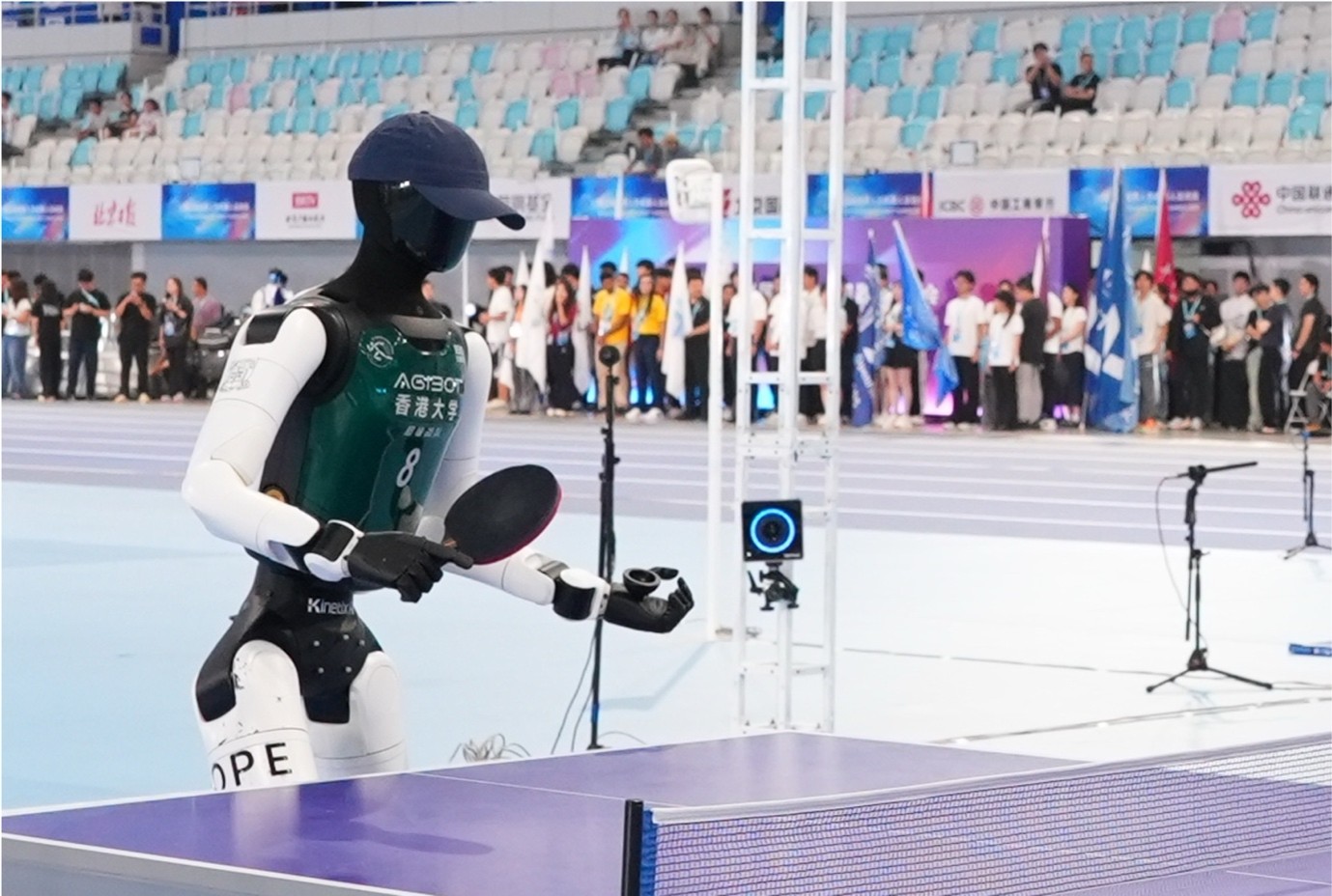
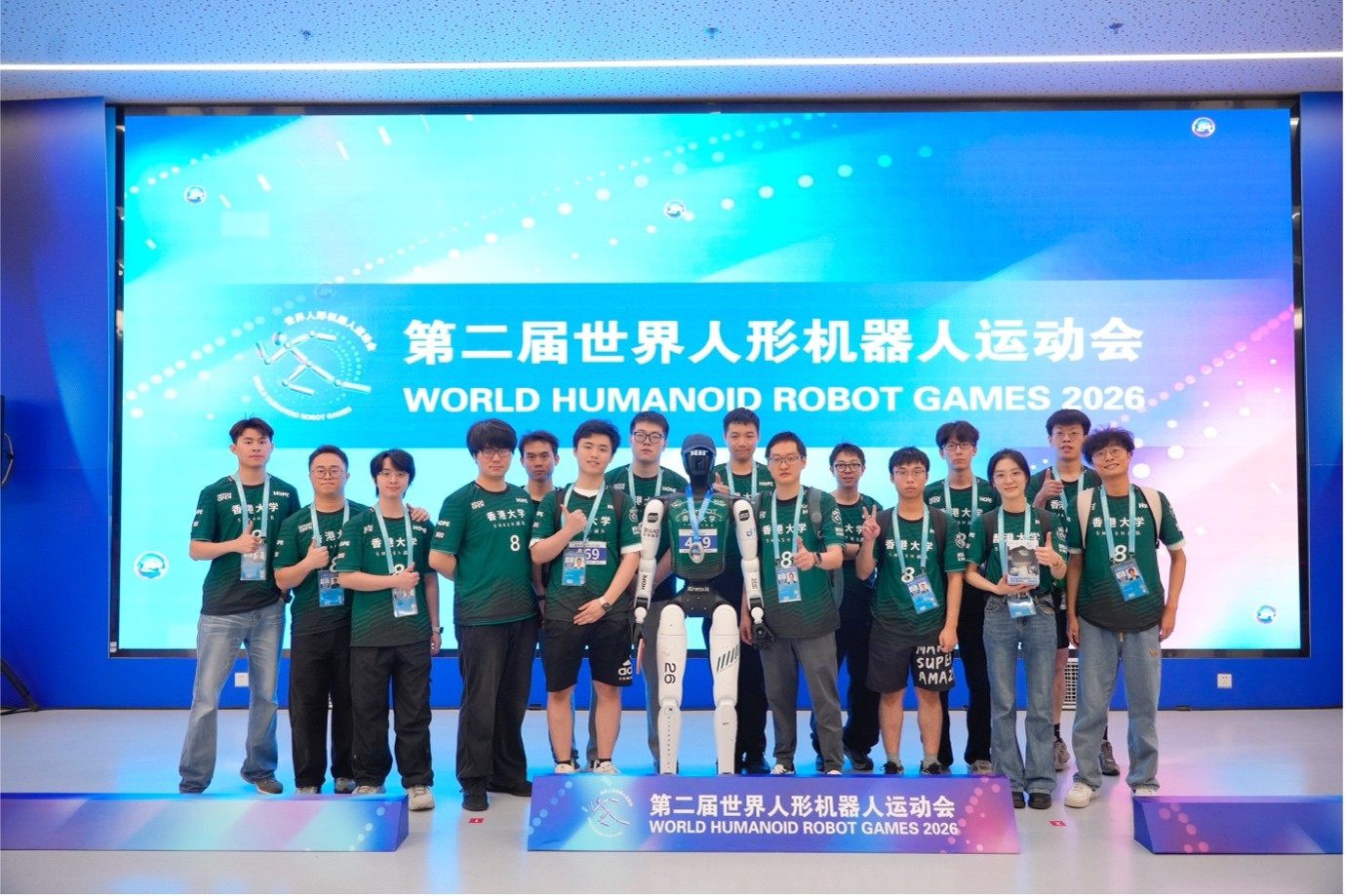
Led by Professor Ping LUO, Associate Director (AI Research and Tech Transfer) of the School of Computing and Data Science (CDS) at The University of Hong Kong (HKU), the SMASH Team won the silver medal in robot table tennis at the 2nd World Humanoid Robot Games, held recently in Beijing.
Competing against 11 teams from across China and overseas, SMASH advanced to the final after defeating a joint team from Shanghai Jiao Tong University and the Shanghai Innovation Institute, as well as Shenzhen University, ultimately securing the silver medal.
One of the Games' most technically demanding events, robot table tennis requires humanoid robots to compete autonomously under official match rules, without remote control or manual ball feeding. Robots must perceive, predict and respond to every shot in real time, testing the limits of embodied AI, motion planning and whole-body control.
The SMASH Team is a young research group specialising in embodied AI, with members comprising primarily HKU PhD students. Its SMASH system integrates visual perception, ball trajectory prediction, motion planning and whole-body control, while supporting autonomous serving for complete robot-to-robot matches.
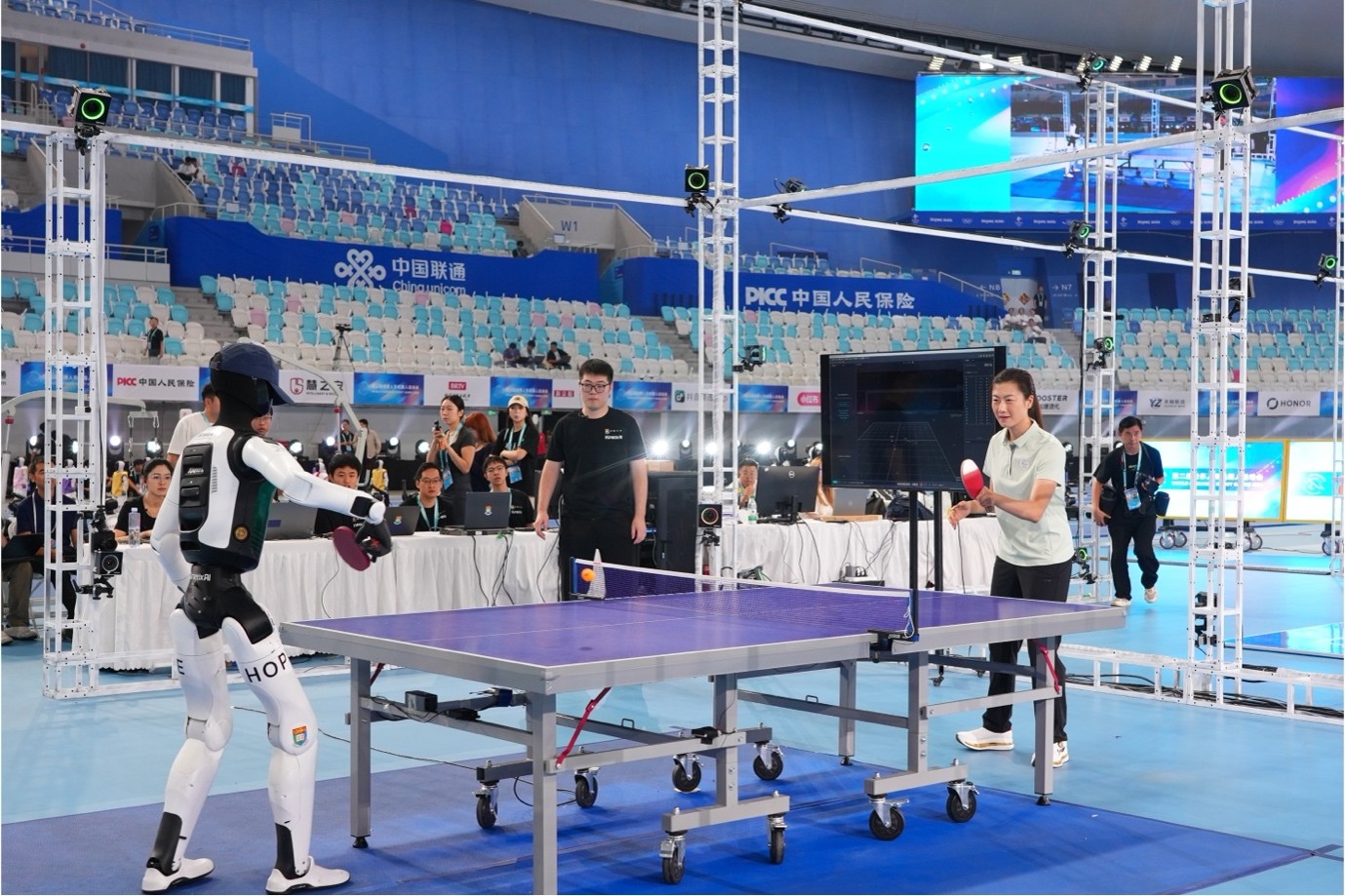
Using onboard sensing alone without external cameras or motion-capture systems, SMASH is, to the team’s knowledge, the world’s first humanoid table-tennis system capable of consecutive strikes through onboard perception. It has also achieved rallies of more than 100 consecutive shots with human players and leverages large-scale human motion data to produce more natural, coordinated movements.
The team was also invited to perform at the Games’ opening ceremony, where its robot rallied with Olympic and world table tennis champion DING Ning, showcasing SMASH’s capabilities in highly dynamic human–robot interaction.
Professor Luo said, “Hong Kong provides fertile ground for the development of artificial intelligence, supported by a strong concentration of talent. I hope HKU students will continue to lead and advance the development of embodied AI technologies across the Greater Bay Area.”
The team will continue to advance humanoid robotics through high-dynamic interaction research, using table tennis as a testbed to explore broader real-world applications and future deployment.
Media Enquiries:
Please contact the School of Computing and Data Science (email: cdsnews@hku.hk).
About Professor Ping LUO
Professor Ping LUO is an Associate Director (AI Research and Tech Transfer) of the School of Computing and Data Science (CDS), The University of Hong Kong, and a principal investigator of HKU MMLab. His research focuses on computer vision, machine learning and embodied intelligence, with particular interests in developing intelligent systems that can perceive, understand and interact with complex physical environments.
Related Topics
Related News