
People
The Meaning Behind the Medicine
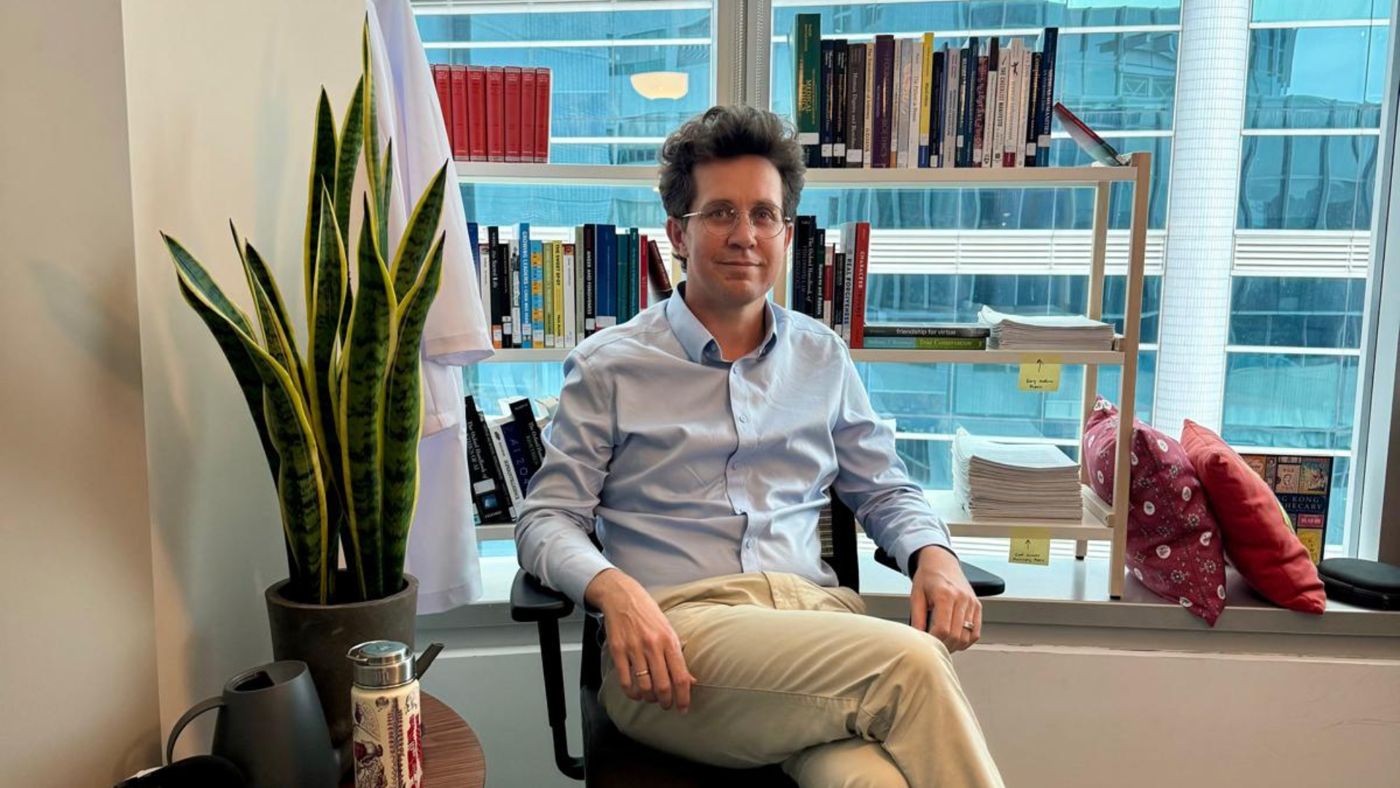
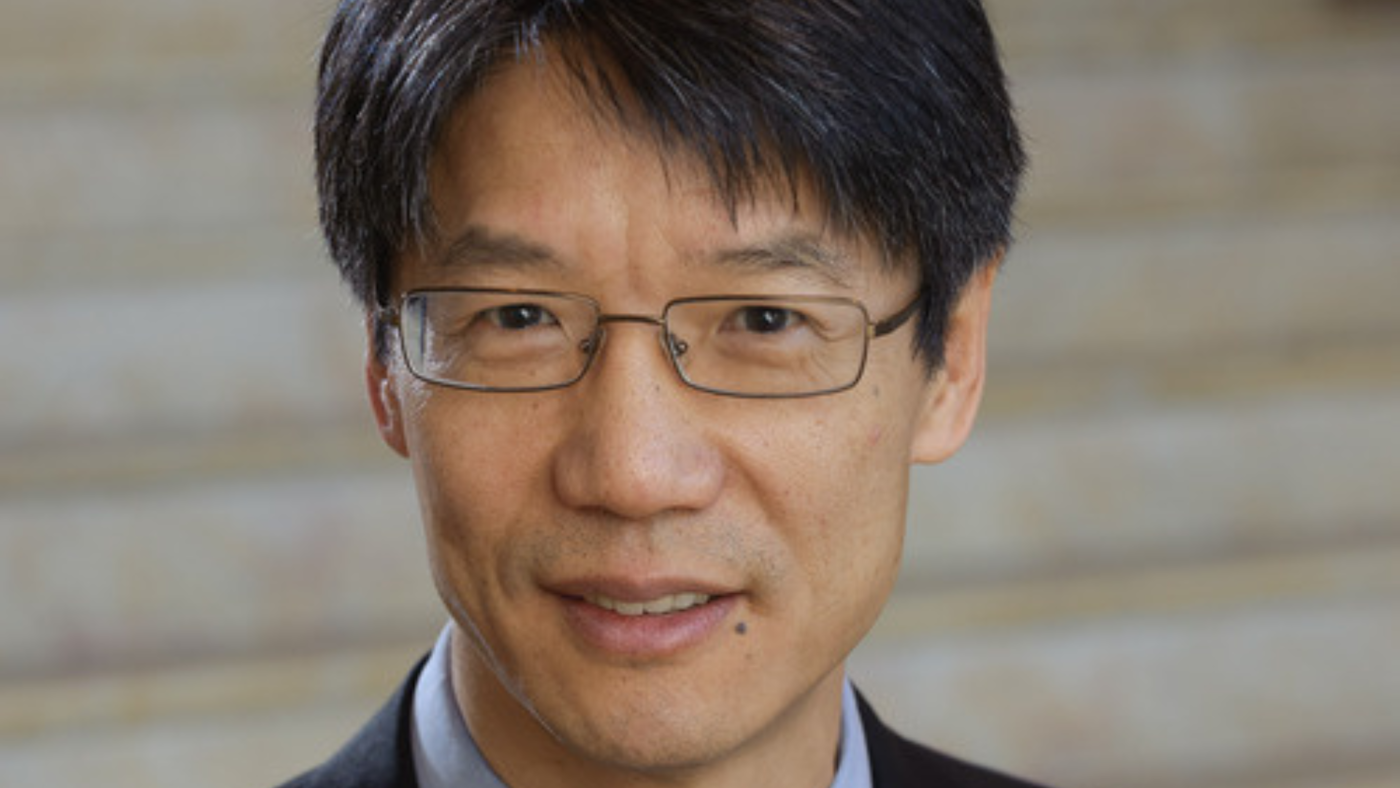
Alex Gearin has spent fifteen years studying the settings where people take psychedelic medicines, from ayahuasca ceremonies in the Amazon rainforest to psychiatry clinics now opening in Australia. What holds the medical anthropologist’s attention is less the drug itself than everything around it: the care of those running the session, the expectations a patient brings, and the culture that shapes what participants see and how they make sense of their experience.
“Psychedelic therapy makes visible, in a very potent way, how much care, meaning, empathy and culture have always mattered in clinical medicine,” says Gearin, an assistant professor and Deputy Director of HKUMed’s Medical Ethics and Humanities Unit. “Some clinicians even say psychedelics only work because they enhance the support therapists give. I wouldn't go that far, but for patients, the caregivers are often really important parts of the treatment.”
The story of psychedelics in medicine has the shape of a long exile and an uncertain homecoming. In the 1950s and 60s, researchers gave LSD, in supportive environments, to people with alcoholism and depression and to dying cancer patients, and found, to their surprise, that many improved – not because the drug numbed them, but because it seemed to crack something open. Prohibition soon halted most of that work, and the drugs went underground, or into the culture, where they became shorthand for a certain kind of sixties excess.
It took half a century for the door to creak back open. When researchers returned to those experiments with the apparatus of modern clinical trials: psychological screening, control groups, months of follow-up, what they found were hard to dismiss. Studies in depression, PTSD and addiction reported encouraging results, and people with life-threatening cancer who took a single, carefully supervised high dose of psilocybin often showed steep and lasting drops in depression and anxiety. Something about the experience, whatever it was, appeared to loosen the grip of despair in a way that talk therapy alone often could not.
Call it the psychedelic renaissance. Australia now lets authorised psychiatrists prescribe psilocybin for treatment-resistant depression and MDMA for PTSD; Canada and Switzerland have opened "special access" routes; Oregon and Colorado are building statewide programmes; other jurisdictions, from Berlin to Wellington, are exploring regulatory frameworks of their own. Venture capital has noticed; so has the wellness industry, which markets ayahuasca retreats in the Peruvian jungle with the breezy confidence of a spa brochure.
The promise is striking: a short, closely supported intervention might ease conditions that have resisted years of treatment, and help people facing death feel less isolated, less terrified, and more able to make peace with a life that is ending.
To Gearin, though, the global rush to medicalise psychedelics must first bridge a critical gap: culture. In a new paper in Translational Psychiatry, Gearin and his co-authors drag an uncomfortable fact into the focus: almost everything clinical that we know about psychedelic medicine comes from a narrow slice of humanity – trials run mostly in the United States, Europe and Australia, on patients steeped in a particular set of assumptions about selfhood, autonomy, healing, and what a meaningful death looks like.
As psychedelic medicine moves outward from the Western research centres where it was reborn, Gearin and his colleagues ask a question that sounds simple and turns out to be anything but: whose version of healing, and of a good death, are we building this medicine around?
“The cultural background of the patient, their expectations about what's going to happen when they take this substance, can have a really big effect on the types of experience they're going to have,” Gearin says.
“If that was to be transposed into a hospital in a place like Hong Kong, we suggest that it would need to accommodate these cultural expectations, or at least have some sort of flexibility to accommodate the culture of what people expect here.”
A pluralistic drug
A psychedelic does not deliver a fixed experience the way aspirin delivers pain relief. What a person encounters under its influence is shaped by what researchers call “set and setting” – the mind the person brings into the room, and the room itself. Grief, memory, faith, a childhood prayer, a half-buried argument with a parent: all of it becomes raw material. The drug doesn't hand you peace; it hands you amplification, and asks you to make something of it.
Under the influence of psilocybin or LSD, patients grow acutely sensitive to the emotional temperature of the room. “Their senses of touch, of emotions, of feelings, of sight, of smell all can become really amplified,” says Gearin. Psychedelic therapists Gearin interviewed in Australia say the patients almost have a "sixth sense" for shifts in tone or body language. The therapists, for their part, wake on dosing days with a sense of “moral weight,” given that patients can undergo psychologically challenging and extremely meaningful experiences during dosing sessions. The therapists often meditate before work, and arrange the clinic space with ritual precision.
Whether the drug is intrinsically therapeutic or simply an enhancement is an open debate. This new model that brings both psychotherapy and biological psychiatry together globally tends to be understood as “a combination treatment,” Gearin says. The emotional intensities a session can summon have the “epistemic quality” where the perception of meaning is sharp-clear – things might appear more meaningful than they otherwise would be. “However, the enhancement of meaning can go both ways,” he adds. “If someone is in a terribly anxious and scared and negative headspace, then that can get amplified too.”
Medicine aspires to standardisation. Once a certain dose, administered a certain way, produces a statistically significant effect, you can build a guideline, scale it, regulate it, roll it out across a health system.
Psychedelic therapy brooks no flattening. If it’s going to move safely and ethically into hospitals and clinics – from Melbourne to Hong Kong and beyond – it will need more than clever protocols and competent professionalism. It calls for what Gearin and his co-authors propose as a working framework: cultural humility.
From mastery to not knowing
End-of-life care is one of many areas where psychedelic therapy is being tested, alongside depression, PTSD, addiction and eating disorders. It is also the focus of the new paper. At HKU, a group of clinicians in the medical faculty are seeking better ways to support people with life-limiting disease. They read the promising clinical data emerging from small studies on psychedelics for end-of-life distress in Western laboratories while confronting a more difficult local reality: Hong Kong palliative care offers psychosocial support, but studies highlight persistent emotional and communication gaps, as well as staffing shortfalls.
Gearin joined them not as a lab scientist but more as a cultural interpreter, who makes questions of meaning, ritual, and context impossible to ignore in a medical protocol.
When the group went looking for a conceptual lens, they turned away from the dominant model in the field: cultural competence. Where competence aspires to master each patient's background, a culturally humble clinician accepts, going in, that they do not fully understand the patient's world; they ask open questions and treat the patient as a source of knowledge rather than a problem to be decoded. The stance is less mastery than: I'm here to listen and adapt.
“Cultural humility places emphasis on giving patients more decision making, including patients and their families,” Gearin says. This disarmingly simple insight gets at something medicine has often struggled to acknowledge: treatments do not act on biological units but on people whose lives are knotted into families, histories, religious commitments, and visions of what suffering means.
Psychedelic therapy, he suggests, “offers a more potent or an intense example of broader changes that are happening in medicine”, which is, above all the attempt, after decades of narrow biologism, to re-humanise clinical care.
“Doctors are not just technicians,” Gearin says. Their task is subtler, and more demanding.
What makes a good death
The humility framework becomes especially urgent at the end of life.
A particular kind of silence hovers over a hospital room when a patient realises, fully and finally, that they are going to die. It is not the silence of pain that morphine can usually handle; it is not the silence of fear, exactly, though fear is often in the room too. It is something closer to the silence of a person confronting the sheer strangeness of ceasing to exist, and finding that none of the existing words are able to grasp it.
For decades, medicine has struggled to answer this particular silence. It has painkillers for the body and antidepressants for the mind, but far less for the “existential distress", the vertigo of facing annihilation, the hollow, ineffable dread that settles in when the usual consolations run out. It is here that psychedelic therapy produced some of its earliest and most discussed results.
Western palliative-care textbooks describe a good death in terms that sound almost self-evident: manage the pain, be honest about the prognosis, preserve the patient's dignity, keep the family close, communicate clearly. It is a humane list. It is also, on closer inspection, a portrait of a very particular kind of person – one who wants the truth spoken plainly, who makes decisions alone, who treats disclosure as a form of respect.
“In Western biomedical ethics,” Gearin notes, “patient autonomy is almost like the cardinal virtue; it is the patient's final choice, final decision.” In the Chinese context, shaped by centuries of Confucian thought alongside Buddhist, Daoist and folk traditions, that arithmetic breaks down. Decisions about dying are rarely made by the patient alone. They may be made collectively, weighing what the patient needs to know against what will crush them, within a moral world moulded by filial piety, dense webs of obligation between generations, and a relational understanding of the self.
The tapestry of cultural meanings varies across Chinese contexts. Taiwan, Gearin says, has more advanced palliative-care planning and, with Buddhism popular, more public conversations about death and dying – less stigma, less taboo. On a recent trip, he saw a public-health poster depicting a grandchild saying: Grandma's dying, and this is part of life. “That's quite radical,” he says. “I don't think you'd see that in Australia where I'm from.”
In practice, a humility protocol would ask patients directly whether and how much they want loved ones involved before, during and after treatment. It would also ask clinicians to read the room. In some families, the patient is clearly the primary decision-maker, sharp-witted and insistent. In others, an eldest son, daughter, or sibling becomes the informal authority. “A talented palliative care clinician can sense this,” Gearin says.
Towards the end, psychedelic medicine could also unsettle the beliefs through which a person has made sense of a life and its ending. Gearin tells of a Christian patient in an Australian end-of-life trial who, during a session, experienced what he later described as an encounter with the Buddhist bardo and a vivid sequence of multiple reincarnations. When he emerged, he wanted to explore Buddhism.
“On the one hand, you might think, well, that's great,” Gearin says. “He's exploring the metaphysical options of life.” But, he added, such an experience might also strain family ties and leave someone to reconcile a lifetime of conviction with what they experienced, unequivocally, as real.
Whether psychedelic treatments can inspire belief changes is an active science probe. Population studies suggest that people who begin as atheists may be more likely, after a psychedelic experience, to entertain more spiritual views. “As an anthropologist,” he says, “I'm very cautious of any sort of pharmacological determinism that would suggest that these drugs are determining beliefs.”
No drug can decide what makes a death good. That question belongs to the person dying, and to the web of people that made their life meaningful. At the end of life, the deepest promise of psychedelic therapy may not be that it eliminates the fear of dying, but that, under the right conditions, it gives some people another way to live with it, through memory, forgiveness, relationship, faith, sorrow, or wonder.
The atmosphere of care
That is the paradox of cultural humility: it cannot be reduced to a competency badge. It is a discipline of listening – one that has made anthropologists, and their ethnographic skills, valuable to psychedelic research.
“Anthropologists do really well at deep listening,” Gearin says. “Our methods require us to go out and spend long periods of time, usually with a smaller group of people, and really listen and participate and get a sense of the everyday experiences of people.”
For Gearin, that attention widens into setting in a broader sense: what he calls atmosphere, which matters in any ward or consulting room. In HKUMed’s MBBS programme, he teaches narrative medicine and “atmospheric literacy”, a framework of exploring sensory and aesthetic variables to create meaningful healing environments. It has also carried him into virtual reality: with local artists, he develops immersive films that give healthcare workers a felt sense of inhabiting difficult mental states; one of his PhD students is building VR “illness narratives” of dementia, designed to provide health professionals a sensory and cognitive approximation of patient experiences.
His new research project on the atmosphere of emerging psychedelic clinics in Australia attends to details that might seem trivial to an outsider: Why is the lighting this soft? Why this music playlist? Why the plant in the corner, the rug on the floor, the abstract painting on the wall? The aim is to evoke not the sterility of a treatment room, but the familiarity of a lounge at home, where you take off your shoes, sink into a couch and let your guard down.
Yet atmosphere is not simply a matter of interior design. Music may be its most obvious, and most contested, element. The choices are anything but straightforward. Some clinics rely heavily on Western classical music, from Bach to Beethoven; others incorporate religious chants, world music, or high-energy drumming. A few newer trials are experimenting with long stretches of silence.
Asking therapists why they chose a particular track list, Gearin jokes, is a sure way to make some of them squirm. Many have thought about it obsessively. They know that a song carrying one person through a difficult memory may overwhelm another in sometimes less than helpful ways.
Borrowing carefully
In a forthcoming project, Gearin is collaborating with Indigenous Australian health workers to understand how cultural elements might reshape mainstream clinical models rather than merely decorate them.
His ethnographic arc has run from Indigenous ceremonies to Western clinics, and now toward a meeting point between the two. “I'm kind of going full circle and bringing the clinical and the Indigenous together.”
Running through Gearin’s work lies a core concern on the tendency to mistake the drug for the treatment. In the popular imagination, psychedelics act like lightning bolts of cure. Participants arrive primed by bestselling books and breathless journalism, half-convinced they are signing up for a miraculous fix. Gearin is more inclined to credit the slow, unglamorous labour that surrounds the dose.
“When you read the newspaper and it says psilocybin reduced anxiety in 60 percent of [participants],” he says, “the first thing I'm thinking is who was on that team, and I'm just imagining all the hard work that the therapists, that the principal investigators all did to provide the care and the support necessary for that data.”
The public, he suggests, “love to essentialise the drugs as doing all of the heavy lifting.” What the headlines also obscure is how hard patients themselves must work: those who gain the most are often the ones willing to walk straight into the heart of what they fear.
Cultural humility, in his telling, reaches well beyond one controversial class of drugs. Psychedelic therapy offers a glimpse of what good care has always depended on, and what medicine will need to remember if it is to meet people where they actually live – and die.
Seven questions with Professor Alex Gearin
Lead: What do you read for pleasure?
Professor Gearin: Chinese science fiction, like Chen Qiufan’s writings on illness and society.
Which book on the topic of altered consciousness would you recommend to your medical students?
A World Appears: A Journey Into Consciousness (Michael Pollan).
If you could complete this sentence from an anthropologist’s point of view: ‘A good death is…’?
Free from suffering.
What’s the most surprising thing your research subjects have ever told you?
Oh, that’s a difficult one. Sometimes people look to me to confirm the reality of their beliefs or strange experiences, as if anthropology has access to the hidden truth of the universe.
Psychedelic wellness tourism – what’s the state of play here in Asia?
As far as I know, it’s not happening here.
Could you name one big translational risk if psychedelic therapy scales globally before those cultural questions are addressed?
There’s not enough support and care provided to patients. And not enough screening.
What research approach might you consider next?
My next project is to understand what cultural safety looks like from an Indigenous Australian perspective of delivering psychedelic therapy, and how Indigenous science can dialogue with clinical science.
Related Topics
Related News