
People
The Scholar Rewriting China’s History of Desire
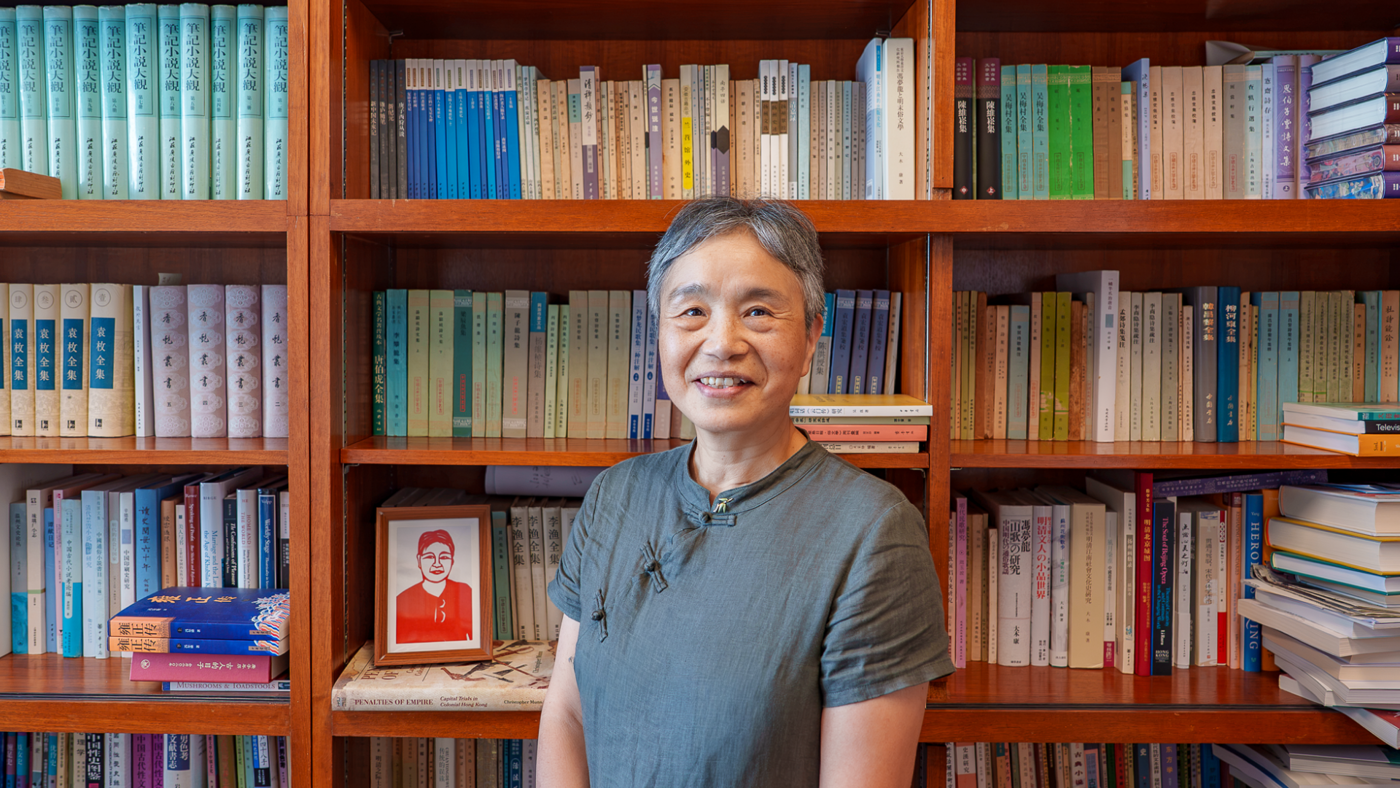
In 2017, Professor Wu Cuncun travelled to St Petersburg in search of a Qing-dynasty text. The book she wanted, she discovered, was in Moscow. But the trip led her, a year later, to something else: a cache of small, unfamiliar Chinese pamphlets at the Library of the Institute of Oriental Manuscripts.
These objects were not the handsome editions that usually anchor literary histories. Crudely printed and sometimes only a few pages long, they had been bundled into envelopes marked with Soviet catalogue numbers. They were cheap things – street songbooks once sold in bun shops and popular tales in rough vernacular, full of typos and slang, the sort of material that scholars and collectors had long called vulgar. Wu, a professor of traditional Chinese literature at the University of Hong Kong, recognised in them an archive of lives that official writing had largely passed over.
There were women who flirted and argued, kept accounts, sought affection, agonised over betrayals and negotiated the terms of survival. There were voices that did not sound much like the dutiful wives, dignified scholars and refined beauties of canonical best-sellers. “These materials,” Wu says, “give people a more comprehensive understanding of traditional Chinese sexuality.”
For more than three decades, Wu has pursued a version of Chinese literary history in which desire is neither an embarrassment nor a footnote. Her work on late-imperial fiction, theatre, grassroots booklets, gender and sexuality is rooted in an unfashionable scholarly instinct: to take seriously the texts that polite culture tried to discard. The result is a body of research that deflates two durable myths at once: the Western image of premodern China as uniformly repressed, and the Chinese tendency to treat a narrow set of moral ideals as timeless tradition.
Her 2000 work “Sex and Sensibility in Ming and Qing Society” first appeared quietly, in a print run of 5,000 copies. Wu says she never learned whether the edition sold out or was withdrawn. Several later efforts to republish it stalled amid official unease over a question that has shadowed the book from the beginning: was it scholarship, or something more suspect?
In July 2025, Tianjin People’s Press issued a new edition. The response surprised both author and publisher. By July 2026, the press said that the book had sold more than 22,000 copies and gone through four reprints; a fifth was planned for later this year. On Douban, where readers have debated it with unusual intensity for an academic work, the book had drawn more than 250 reviews and an average score of 8.2 out of 10 at the time of reporting.
Wu’s 2017 study of theatre culture in the Qing capital, “Drama Beyond the Drama,” was reissued in May and stayed on Douban’s top-50 bestseller list for three months. Younger podcasters now invite her to discuss subjects that, for much of the twentieth century, were treated with reserve: sex, intimacy, the body and the stubborn persistence of desire.
The renewed interest is not simply a taste for provocation. It reflects a public search for a vocabulary that is candid without being sensational, historical without being nostalgic. “When you lay out a lot of historical evidence,” she says, “people feel that their previous impressions are overturned.”
A messier tradition
The conventional picture of Chinese tradition is often a neat one: loyalty, moral purity, heterosexual marriage and social harmony, all imagined as fixed across the centuries. These orthodox codes carried real force, but Wu asks what happens when the archive is widened beyond them.
Her answer is a history of friction and contradictions. In late-imperial China, she finds bawdy songs, erotic stories, women’s sexual agency, same-sex relations and an everyday refusal to make human desire conform to official instruction. The material does not prove that the past was permissive or egalitarian. It does, however, make it harder to sustain the idea that it was sexually joyless or silent.
“People imagine that, in the imperial era, basically no one had sex, that sex existed only for the purpose of having children,” Wu says. “But that is not what the historical record shows.”
The phrase “traditional Chinese virtues”, as it is used in public discourse, troubles her. It can reduce a vast and complex civilisation to a moral postcard: chaste wives, faithful husbands, no conflict and no homosexuality. For Wu, both critics and defenders of “tradition” can fall into the same trap. One turns the past into a feudal nightmare; the other sanitises it. Both select the evidence that best serves their argument.
This is not a call to replace one myth with another. Wu is alert to the limits of the material she studies. The near-absence of lower-class women from official records is, after all, evidence of their constrained public voice. But what survives in popular literature – talk of pregnancy, infidelity, shame, pleasure, money and endurance – offers a different social map. It lets women want things; it lets them refuse things; it lets them be neither symbols nor moral lessons.
In the narratives Wu has recovered, the heroine does not always prefer the fragile scholar of elite romance. She may favour the man who can carry a load, earn a living or bring home goods: a farmer, a peddler, a blacksmith, a fellow villager. Some stories treat the wife who runs the household as a source of prosperity rather than disorder. In a world where women reeled silk, kept shops and managed stalls, economic labour could translate into leverage at home.
These details matter because they restore contingency to a subject too often treated in absolutes. Desire, in these pages, is not owned by men alone. It is voiced, bargained over and sometimes insisted upon by women who understand both the cost of dependence and the value of choice.
A plural, native history
Wu’s work on same-sex desire makes a related argument. Western scholarship, including the work of Michel Foucault, has sharpened many questions about sexuality. Yet it can also encourage conceptual overreach: the assumption that every society will organise sexual life through the same categories of law, sin, pathology and identity.
In her reading of Qing legal materials, cases involving sex between men were concerned with rape, coercion, abuse or violations of hierarchy, not with a specific punishment on consensual same-sex relations as such. The distinction is important. It does not make late-imperial society an uncomplicated haven for queer people, nor does it erase inequalities of status and power. But it challenges the habit of searching Chinese history for a direct equivalent of European sodomy law and then declaring one has found it.
In traditional Chinese society, marriage was oriented above all towards having heirs and maintaining lineage. Romance and passionate love could take shape elsewhere, in more liminal spaces that did not align neatly with modern ideals of exclusive coupledom. Elite men might maintain a wife and household while also forming relationships with men. Such arrangements were structured less around a fixed sexual identity such as “gay” than around hierarchy, reputation and obligation, as well as desire.
The point is not that contemporary identity-based models of queer sexuality are invalid, but that they do not travel backwards unchanged. “We don’t have a Christian tradition of hating homosexuality; we don’t carry that kind of cultural or religious burden,” Wu says. “Why are we now clinging to the West’s leg to justify rejecting homosexuality?”
It is a deliberately pointed formulation, and one that reflects Wu’s larger concern: that modern China has too often borrowed puritanical ideas while disowning the plural, sometimes unruly, history in its own sources. She describes this as a kind of “postcolonial lag”, a belated adoption of attitudes that Western societies were themselves beginning to question.
From pamphlets to the classroom
Wu joined HKU’s School of Chinese in 2010. Her teaching ranges across Chinese classics, poetry and fiction, but the course on gender and sexuality in Ming and Qing literature consistently draws students. She has observed that over the past 15 years, the classroom has become more open. Students speak more readily about queer sensibilities and about the distance between received moral language and lived experience.
Some have told her that the course changed how they thought about bodies and orientation. Some female students have spoken of feeling less afraid of their own desire after recognising it as ordinary rather than deviant.
That shift coexists with real anxiety around sex. Many students remain attached to the idea that “true love” must be pure and untouched by desire. Wu sees the mark left by a public culture that can be moralising, and by sex education that concentrates on physiology while leaving intimacy, emotion and power unaddressed. In social media chats she follows, women weigh independence against status, money and the desire to be chosen and validated; younger generations adopt labels, such as asexual, that may guard against vulnerability but can also become a way of disavowing longing.
The familiar diagnosis of a “low-desire society” is too monolithic, she says. It mistakes a varied emotional landscape for a single generational condition. Young people have always found alternative forms of attachment, refusal and fantasy. Today’s “situationship”, with its intimacy but undefined status, is one more name for that continuing experiment.
“Why live a ‘low-desire’ life?” Wu asks. “We should enjoy everything that comes with having a body. Sexual love is a completely natural part of being human, an inborn desire and a right.”
The assertion invites resistance. Under her online talks, Wu sometimes finds comments calling her dangerous or radical. She says she has learned to expect them. For her, research is not merely an exercise in correction. It is a way of making a buried archive available to people who have been told that their own feelings have no history.
At the end of the interview, Wu returns to a word that is more modest, and more radical, than it first appears: warmth. “I’ve long felt that we should be warmer in how we treat desire,” she says. “We should fully accept that we are beings with desire, accept the needs of our bodies, and not fight against human nature.”
The pamphlets in St Petersburg were not meant to last. Their printers did not expect them to become scholarly evidence, still less to speak to readers a few centuries later. Yet they survived: smudged, misspelled, unrefined and alive with people who wanted more from life than official virtue could contain. In Wu’s hands, they have become an argument for looking, and imagining, again.
Seven Questions with Professor Wu:
Q: What do you read for pleasure?
A: Intaglio books.
Q: After decades of research, what issue still gives you a feeling of discovery?
A: Gender and sexuality.
Q: Which late-imperial text would you most recommend to readers today?
A: “The Golden Lotus” – the greatest Chinese novel ever written.
Q: What is the most persistent myth about Chinese sexual history you’d like to retire?
A: The alleged persecution of gay people.
Q: What words or concepts in Chinese vocabulary for love and sex resist Western translation?
A: Qíng (情): a distinctly Chinese concept linked to passion, erotic love, and a broader desiring force, often set against lǐ (理, reason) as a key moral–emotional contrast. Also “Clouds and Rain” (云雨): a sexual metaphor of mutuality and nature that highlights reciprocity and pleasure rather than hierarchy or violence.
Q: Which woman from late-imperial literature deserves to be better known today?
A: Ma Yuzhen from “Enemies Enamoured” – a late-Ming heroine often cited as an early example of a “good unchaste woman” in Chinese fiction.
Q: Have people’s desires changed over time?
A: The objects of desire keep changing, but desire itself remains constant.
Xi Ding is a Hong Kong–based journalist who has spent more than two decades writing about power, money, the spectacle of sport and the collision of cultures, and about the large and small dramas of the people caught up in them. She has also tried to pass on her curiosity about the world to young people as a teacher. In her spare time, she likes to wander and collect objects of desire.
Related News