
Newsroom
World-Renowned Computational Neuroscientist Professor Xiao-Jing Wang Joins HKU as Chair Professor
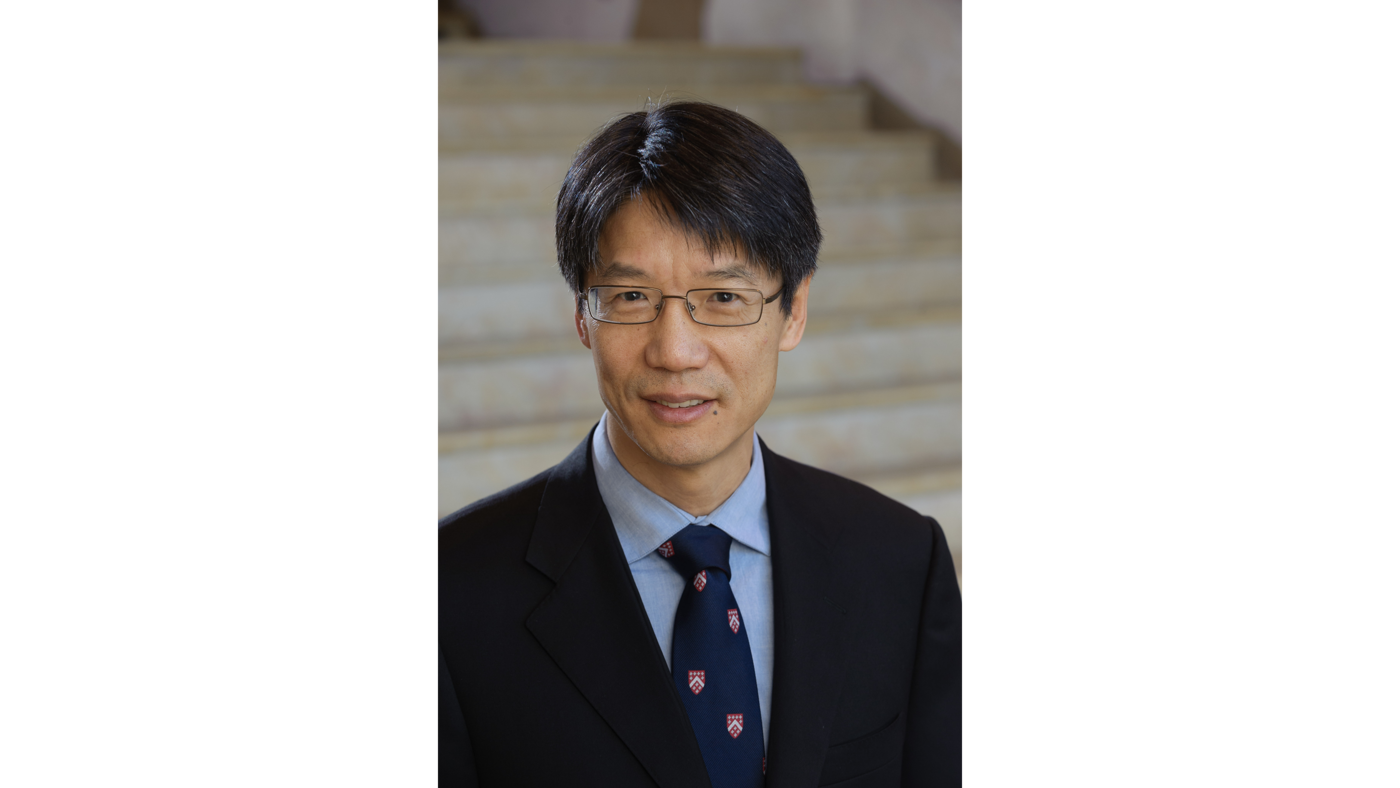
The University of Hong Kong (HKU) announces the appointment of Professor Xiao-Jing Wang, a pioneer in theoretical and computational neuroscience, to its faculty as a Chair Professor. Professor Wang will hold a joint appointment between the School of Computing and Data Science (CDS) and the School of Biomedical Sciences at the LKS Faculty of Medicine (HKUMed) starting September.
Professor Xiang Zhang, President and Vice-Chancellor of HKU remarked, "We are deeply honoured to welcome Professor Wang to HKU. His appointment is a testament to HKU's commitment to recruiting stellar global talent. Professor Wang’s presence will accelerate our leadership in brain science, AI, and healthcare innovation, delivering profound social and academic impact."
A Global Leader in Neuroscience
Originally trained in physics, Professor Wang received his Ph.D. with the highest distinction from the Institute directed by Nobel Laureate Ilya Prigogine, the University of Brussels. He then transitioned to then nascent field of Computational Neuroscience.
Prior to joining HKU, Professor Wang was the Distinguished Global Professor of Neural Science and Adjunct Professor of Physics and Mathematics at New York University (NYU). He also served as the Founding Provost and Vice President for Research at NYU Shanghai (2012–2017), where he led the development of the institution's global research strategy and curriculum. Before that, he was Professor and founding director of the Swartz Center of Theoretical Neuroscience at Yale University.
Pioneering research on the "Brain’s CEO" and Computational Psychiatry
Professor Wang is globally acclaimed for his work on the prefrontal cortex (PFC), often referred to as the "brain’s CEO", which governs working memory, decision-making, and executive functions. He was among the first to develop biologically-based neural circuit models of these cognitive functions. His landmark discoveries include identifying the crucial role of NMDA receptors in working memory, developing a neural circuit model of decision-making that remains a gold standard in the field today, and connectome-based modelling of large-scale brain circuits. He is author of a popular textbook titled “Theoretical Neuroscience: Understanding Cognition”, Taylor & Francis/CRC Press.
His research has had broad implications for mental health. In collaboration with clinical researchers, Professor Wang co-founded the field of "Computational Psychiatry," utilising mathematical models to understand the brain circuit mechanisms of psychiatric disorders. His accomplishments have earned him numerous global accolades, including the Guggenheim Fellowship (2012); the Swartz Prize for Theoretical and Computational Neuroscience (Society for Neuroscience, 2017); the Goldman-Rakic Prize for Outstanding Achievement in Cognitive Neuroscience (2018); the Valentin Braitenberg Award for Computational Neuroscience (Germany, 2026); and election to the Royal Academy of Science, Letters, and Fine Arts of Belgium (2021).
“I am grateful for the opportunity to join HKU, to carry out my research on foundational brain modeling of intelligence and emotion.” said Professor Xiao-Jing Wang, “The synergy between the two schools offers a rare platform for truly interdisciplinary research. I look forward to working with colleagues across both schools, making our contributions to unlock the mysteries of the brain, inspire next-generation artificial intelligence, and advance computational models for psychiatric care.”
At HKU, Professor Wang’s work will foster collaborations between theoretical, systems and cognitive neurosciences, and help build a premier global hub for computational neuroscience and brain-inspired AI.
Related Topics
Related News