
Newsroom
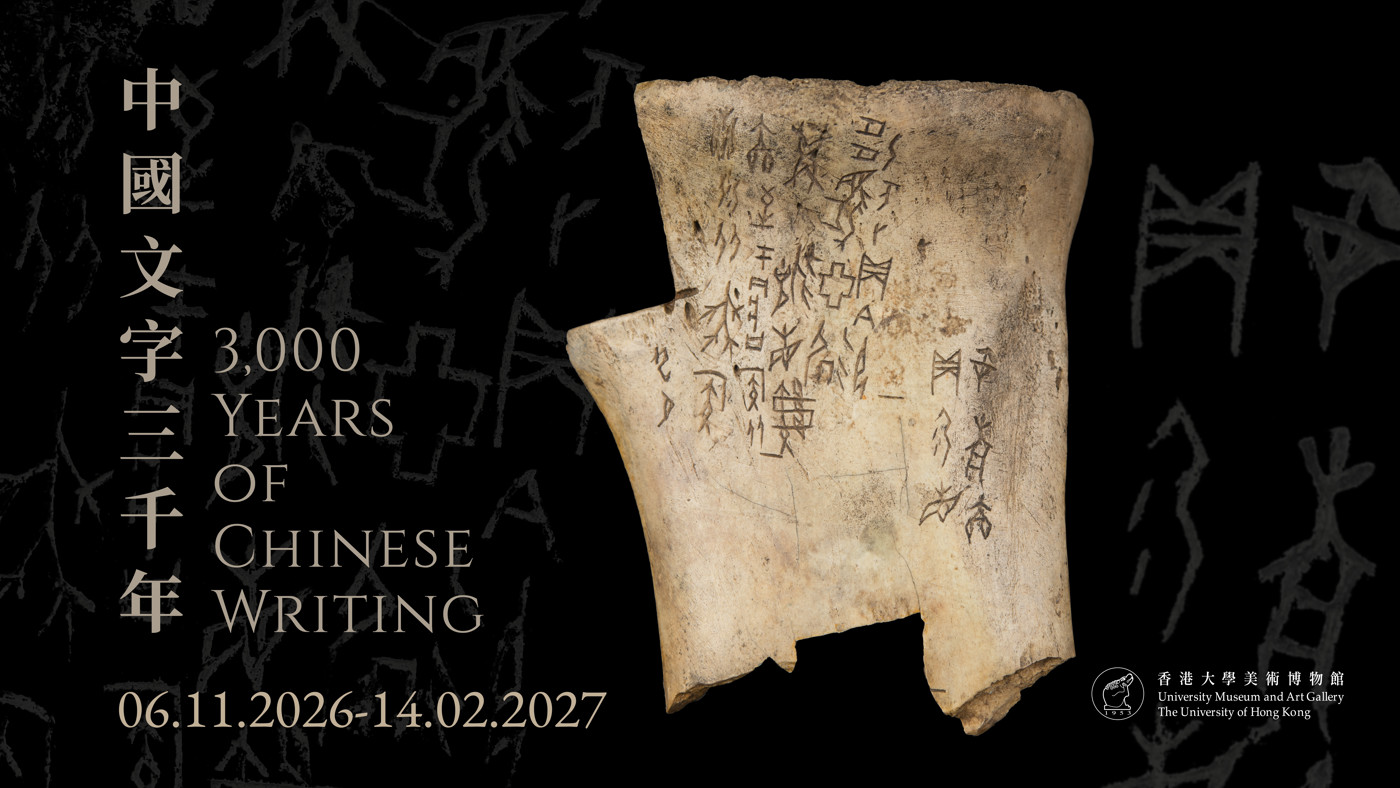
3,000 Years of Chinese Writing
Writing is one of humanity’s greatest inventions, regarded by scholars as a criterion for any civilisation. In China, writing has evolved from the incised marks on Neolithic artefacts, through the oracle bone and bronze inscriptions of the Shang and Zhou dynasties and the divergent scripts of the Warring States period, to the post-Wei-Jin era, when calligraphy developed into an independent art form combining practicality with aesthetic refinement—each transformation closely intertwined with the evolution of society.
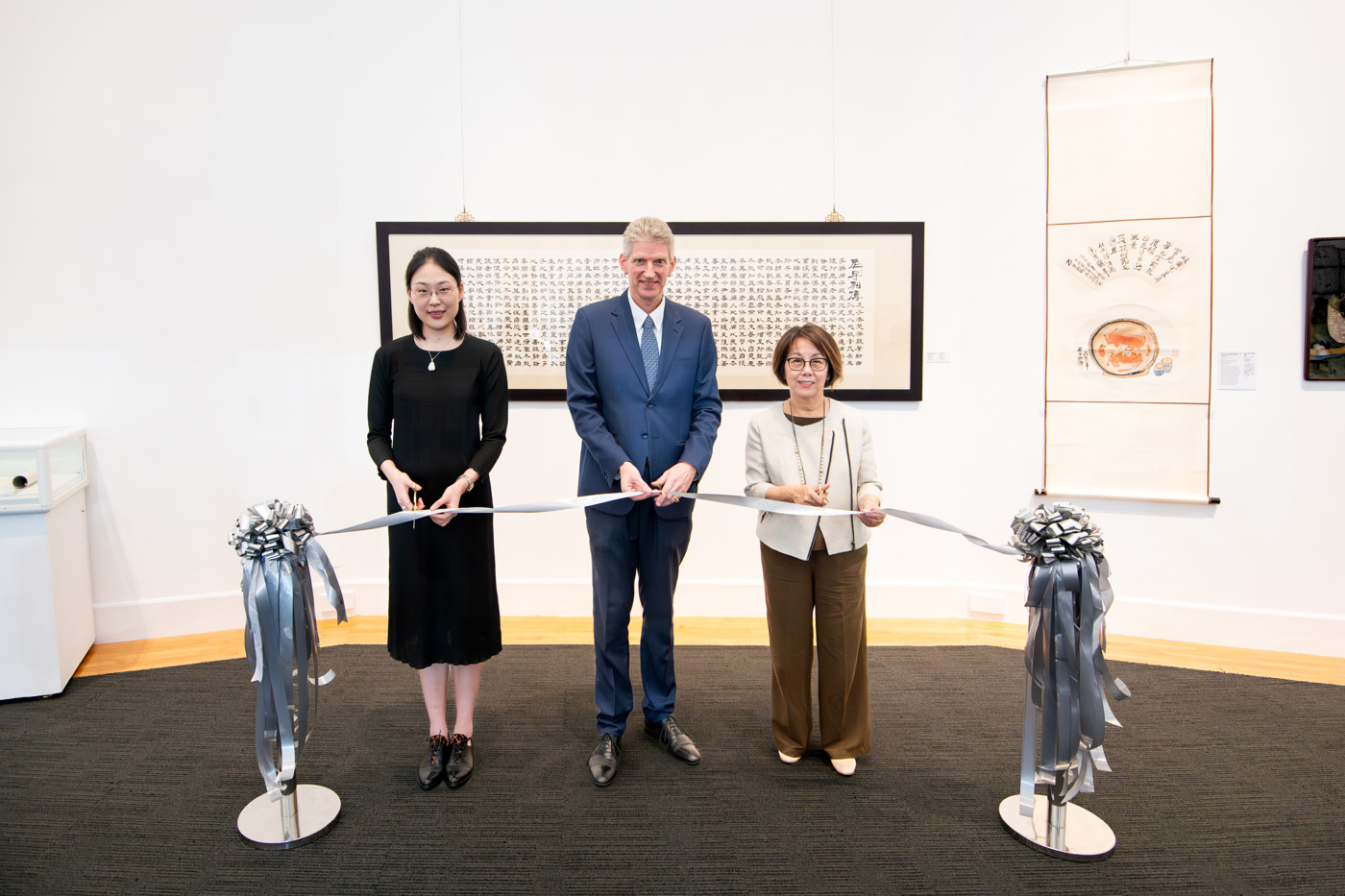
The opening of the exhibition was held at UMAG on November 5. Officiating guests included Ms Yvonne Choi Chairman of HKU Museum Society, Dr Florian Knothe Director of UMAG, and Dr Carol Shengyu Wang Exhibition Curator of UMAG.
This exhibition focuses on the collections of the University Museum and Art Gallery (UMAG), The University of Hong Kong, together with significant holdings from HKU’s Fung Ping Shan Library and The Chinese University of Hong Kong (CUHK) Art Museum. It offers a comprehensive presentation of the origins and evolution of ancient Chinese writing, along with its technological carriers and social functions across various historical periods. The exhibition explores the social contexts in which writing emerged, highlighting its roles in politics, culture, and the arts, and providing valuable material evidence for related scholarly research.
The exhibition is divided into three sections: “The Origins and Unification of Writing”, “The Evolution and Media of Writing”, and “The Dissemination and Art of Writing”. The first section reveals writing’s basic function as a tool for recording and communication in early societies, as well as the symbolic significance it gradually acquired in political and religious spheres. The second section focuses on how writing media and technological innovations facilitated the standardised evolution of scripts from seal and clerical to regular, running, and cursive styles, demonstrating the influence of material technology on writing forms. The final section examines the application of writing in society, art, and daily life, showing how writing became a profound force in shaping Chinese ways of thinking and aesthetic sensibilities.
Details of the Exhibition
Period: November 6, 2026 (Friday) to February 14, 2027 (Sunday)
Opening Hours:
9:30 am–6 pm (Tuesday to Saturday)
1 pm–6 pm (Sunday)
Closed on Mondays, University and Public Holidays
Venue: 1/F, T.T. Tsui Building, UMAG, HKU, 90 Bonham Road, Pokfulam, Hong Kong
Tel/Email: (852) 3917 5500 (General Enquiry) / museum@hku.hk
Admission: Free admission In light of the HKU Tourist Flow Management Scheme, please enter via the ground floor of the Fung Ping Shan Building
Connect with UMAG on Social Media:
Facebook: http://bit.ly/umag_facebook
Instagram: @umag_hku, #UMAG, #ChineseWriting #OracleBones
YouTube: http://bit.ly/umag_youtube
LinkedIn: http://bit.ly/umag_linkedin
RedNote: 香港大学美术博物馆UMAG
About UMAG
UMAG was founded in 1953 as the Fung Ping Shan Museum. It was originally established as the Fung Ping Shan Library in 1932 in honour of its benefactor. For more information on UMAG, please click here.
Media Enquiries
Tel: (852) 3917 5506, Email: musnews@hku.hk
Related Topics
Related News