
Leadership
HKU’s AI Ambition: A University of Independent Minds
The launch of the HKU AI Hub marks a new stage in our efforts to prepare higher education for an AI-powered future. It brings together tools, resources and guidance for teaching, research and administration. More importantly, it gives our university community a shared platform for deciding how these technologies should serve our educational mission.
The Hub builds on HKU’s 2023 policy for integrating generative AI into teaching and learning, which recognizes AI literacy as essential and sets expectations for transparent use in coursework and assessment. It was a decision to engage critically with the technology, rather than leave students and teachers to navigate AI without a common educational framework. The Hub now brings this continuing effort into sharper focus.
An AI-Hub as “watering hole” for the community
The Hub is a central component of a larger reform: using AI to deepen the relationship between independent learning and human interaction. We want students to arrive better prepared to drive discussions, teachers to have more time for intellectual engagement, and both to make informed choices about technology.
Acquiring tools is only the beginning. Broad access is the first step; building early-stage “critical” familiarity and literacy allows for informed and judicious use. Application next demonstrates possible benefits and points out dangerous pitfalls. Judicious governance, based on collective understanding and experience, guides future AI development.
The future of such development should conducted at the frontier by scholars knowledgeable of and sensitive to society’s desires for a safe AI environment, one that works for the welfare of humanity. The university in its roles as educator and frontier researcher cum innovator needs an instrument like an AI-Hub to be the nexus of all these efforts and the focal point for the creation and dissemination of AI-associated knowledge.
One key purpose of the Hub is to connect initiatives that might otherwise remain separate. Alongside access to AI tools, it brings together training, examples of colleagues’ work and responsible-use guidance. A teacher should be able to learn from another discipline’s experience; a student should be able to find support for using AI thoughtfully. Innovation becomes more useful when it is shared.
The educational proposition behind this effort is straightforward: how can AI make the encounter among a students and professors more valuable? Leading universities have always sought to cultivate independent thinkers. Technology does not invent that purpose. It offers us new ways to pursue it, provided we remain clear about what we want students to learn.
Agentified LMS and tools for interactive AI-student learning (ArkJr)
We are addressing the practical demands on teachers too. The HKU LMS Course Agent, currently in preview, helps them organize course files and set up assignments through conversation, with teacher approval before changes. These are ordinary tasks, but they absorb attention. Reducing that burden can create more time for preparing thoughtful lessons and responding to students.
Ark Junior offers another approach. Developed at HKU and integrated with our learning management system, it turns a teacher’s slides and supporting materials into a narrated, interactive presentation. Teachers can review and edit the script, while students can pause to ask questions. Expert-curated material anchors the experience; AI gives students additional ways to explore it.
Consider a student preparing for a tutorial. Rather than leaving an unfamiliar concept unexplored until the next class, she can revisit an explanation and ask follow-up questions. She still needs to check what she understands. But she has an opportunity to identify the difficulty and formulate a more precise question for her professor.
That preparation can change what happens when they meet. The conversation can move towards examining assumptions, connecting ideas and testing an argument. Teachers can also review students’ questions to see where further explanation is needed. The ambition is not to remove the teacher from learning, but to make the teacher’s contribution more consequential.
Together, these tools point towards a different balance of educational work. Students taking more initiative in preparing themselves; teachers devoting more attention to the questions that require their expertise. A student should not be a product passing through examinations. We want our students to develop their own voice and actively seek the expertise their questions demand.
Feedback and Motivation over Ranking and Grading
When the questions belong to the students, the emphasis shifts toward personal motivation, a leading predictor of future learning. A score tells us something about performance at a particular moment, but less about whether a student will keep reading, questioning and learning afterwards. The goal is not that we abandon examinations or lower standards. It is to use assessment and feedback to nurture toward intellectual habits that endure.
The next stage must therefore connect experimentation with evidence about learning. The practical cycle is to support trials in courses, listen to students and teachers, share what they discover and refine the tools and teaching accordingly. We should ask whether students understand more deeply and participate more confidently, rather than assume that increased use means improved education.
For example, we can examine the questions students bring to tutorials and ask them to explain how their understanding changed. That would tell us more than counting the presentations a tool generates.
The AI-Hub can help this process extend across disciplines without imposing a single model on all of them. What works in chemistry may need adaptation in history or law. Deep disciplinary expertise remains essential; it enables teachers and students to recognize when a plausible answer misses something important, and to explain why that omission matters.
AI literacy must develop that capacity for judgement. Obtaining an answer is not enough. Students need to examine the evidence behind it, recognise its limitations and decide when to put the tool aside. Knowledge is not the same as wisdom. Wisdom involves choosing worthwhile questions and taking responsibility for the decisions that follow.
These expectations have practical consequences for academic integrity. Students should acknowledge AI’s contribution, and teachers should make clear what assistance is appropriate for each task. There must also be opportunities to demonstrate understanding independently. An impressive essay is not sufficient evidence of learning if its author cannot explain the reasoning or defend its conclusions.
Good Governance and Ethical Enablement
This responsibility extends to the systems we build. Our human-in-the-loop approach means that people retain responsibility for educational goals, academic judgement and the consequences of decisions. Privacy, accuracy and fairness must accompany experimentation. The Hub’s responsible-use guidance belongs alongside its tools because learning to use AI well also means understanding when its use is inappropriate.
Such safeguards support the confidence to explore. We should neither prescribe AI for every learning task nor retreat from it because it presents difficulties. A university is precisely where new possibilities should be examined critically. Our task is to give students and colleagues the support to experiment, question what they encounter and learn from the experience.
Our aspiration at HKU is to nurture a scholars’ garden, where people grow through encounters with others. An unexpected disagreement, a conversation across disciplines or a mentor’s encouragement can change a life. AI should help make more room for those encounters, not turn education into an isolated exchange with machines.
That ambition reaches beyond campus. Preparing graduates for employment matters, but HKU’s responsibility cannot be confined to today’s job descriptions. Hong Kong, China and the wider world need people who can connect expertise with imagination, communicate across differences and help shape change. We should prepare graduates to create that future, rather than merely adjust to it. We aim to help lead this exploration, bringing its academic community to bear on questions that higher education everywhere must confront.
The real test comes about years after graduation. Does an HKU graduate still seek to understand unfamiliar ideas, revise a judgement when evidence changes and take responsibility for others? Do they see society as a community striving to uphold human dignity, rather than a system concerned only with maximizing productivity? If so, education has become part of how they live and contribute to lasting human purpose and social harmony.
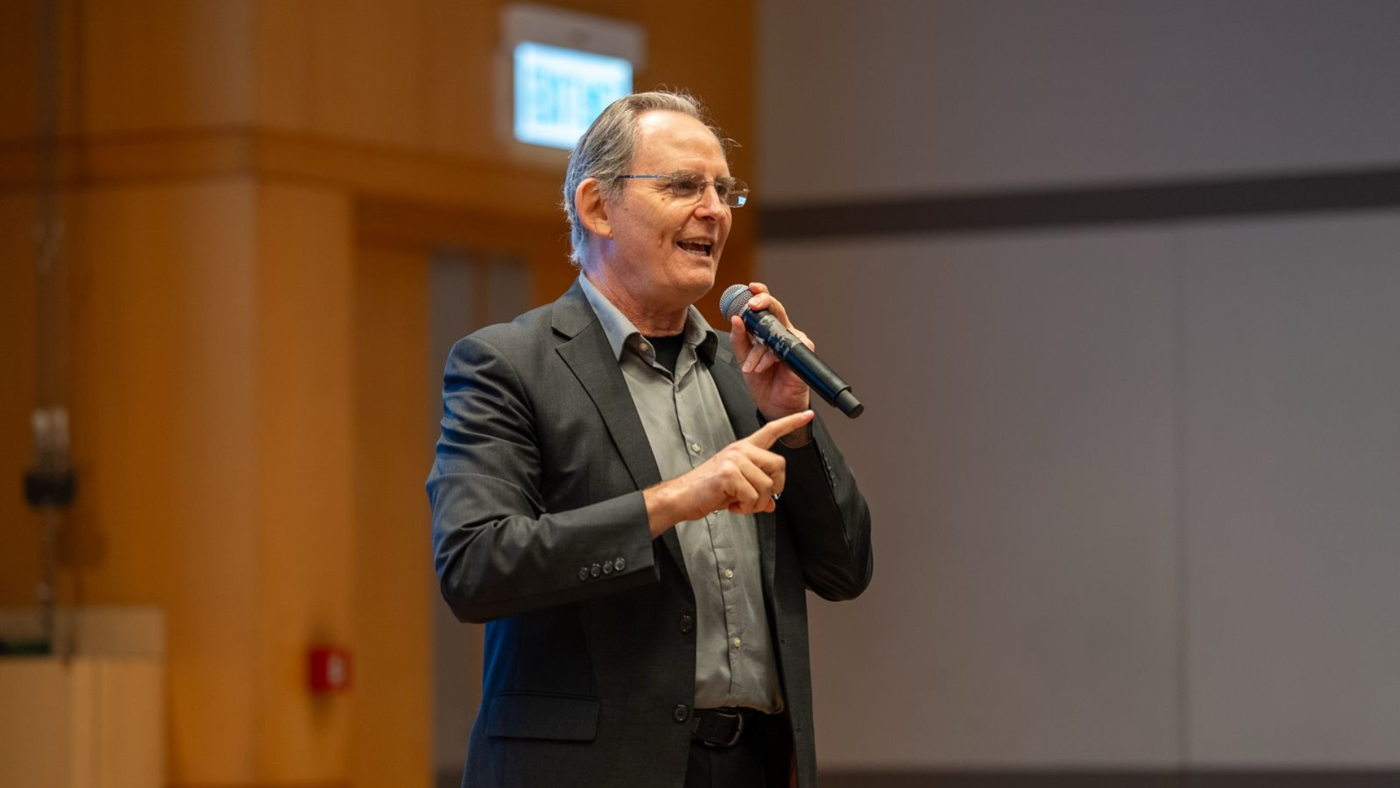
Professor Jay S. Siegel is Vice-President and Pro-Vice-Chancellor (Teaching and Learning) of the University of Hong Kong. This op-ed was first published in Wen Wei Po and is republished here with permission.
Related Topics
Related News