
媒体中心
港大發現甲型禽流感(H7N9)病毒容易感染人類呼吸道
揭開病毒短時間內感染大量人類個案之箇中原因
香港大學研究團隊揭示甲型禽流感(H7N9)病毒能在短時間內感染至今超過130個人類個案的箇中原因。研究人員利用體外培植的人類呼吸道組織進行研究,發現H7N9病毒能高效及廣泛感染人類支氣管上皮細胞,情況與2009年H1N1甲型流感病毒(俗稱豬流感)相似,而比起甲型禽流感(H5N1)病毒,H7N9病毒亦更易引發人類流感大流行的威脅。研究今日剛在國際科學期刊《Lancet Respiratory Medicine》上發表。
是項研究由香港大學李嘉誠醫學院譚華正基金教授(醫療科學)、公共衞生學院病毒學講座教授裴偉士教授及病理學系臨床教授黎國思教授領導。裴偉士教授表示:「今次研究團隊利用體外培植的人類呼吸道組織,發現了H7N9病毒比其它禽流感病毒更容易感染人體呼吸道,並進行複製。由於禽流感病毒感染人類呼吸道(包括氣管和支氣管)的能力,能決定這些病毒是否能有效由禽鳥傳染到人類,同時對評估該病毒在人體的適應力,甚至導致該病毒在人與人之間傳播的可能性亦甚有幫助,因此是次結果對日後的研究十分重要。」
研究結果
今次研究團隊使用體外培植的人體呼吸道組織(支氣管和肺部),來比較甲型禽流感(H7N9)病毒、2009年的甲型流感(H1N1)病毒(俗稱豬流感)和高致病性甲型禽流感(H5N1)病毒的感染能力。研究發現,H7N9病毒及H1N1病毒能感染人體呼吸道以及進行複製,並且比H5N1病毒更快更多。
這項研究更發現H7N9病毒專門感染人類肺部的「二型肺泡上皮細胞」。由於「二型肺泡上皮細胞」是肺組織再生和修復損害的關鍵細胞,此細胞若然被破壞的話,則會阻礙患者的肺部修復及感染後的恢復過程。
由於H7N9病毒能高度適應在人類呼吸道感染和複製,研究人員相信H7N9病毒對人類構成流感大流行的威脅,也許比H5N1病毒更為嚴重。
研究背景
自2013年2月至今,已經有134實驗室確認的人類感染H7N9病毒的個案,其中有43個為死亡個案。感染源頭相信源自家禽。直至目前為止,沒有證據顯示甲型禽流感(H7N9)病毒能在社區內作有效的在人與人之間傳播。
有關研究小組
研究小組由香港大學李嘉誠醫學院公共衞生學院、流感研究中心、病理學系,以及新發傳染性疾病國家重點實驗室的研究人員負責。其他研究人員包括公共衞生學院助理教授陳志偉博士、研究助理教授陳韻怡博士、碩士研究生陳樂蓉小姐、博士後研究員莫家斌博士、副教授潘烈文博士及於崇光基金教授(病毒學)管軼教授等共同研究。
如欲瀏覽新聞圖片,請登入以下網址:
https://www.med.hku.hk/v1/news-and-events/press-releases/
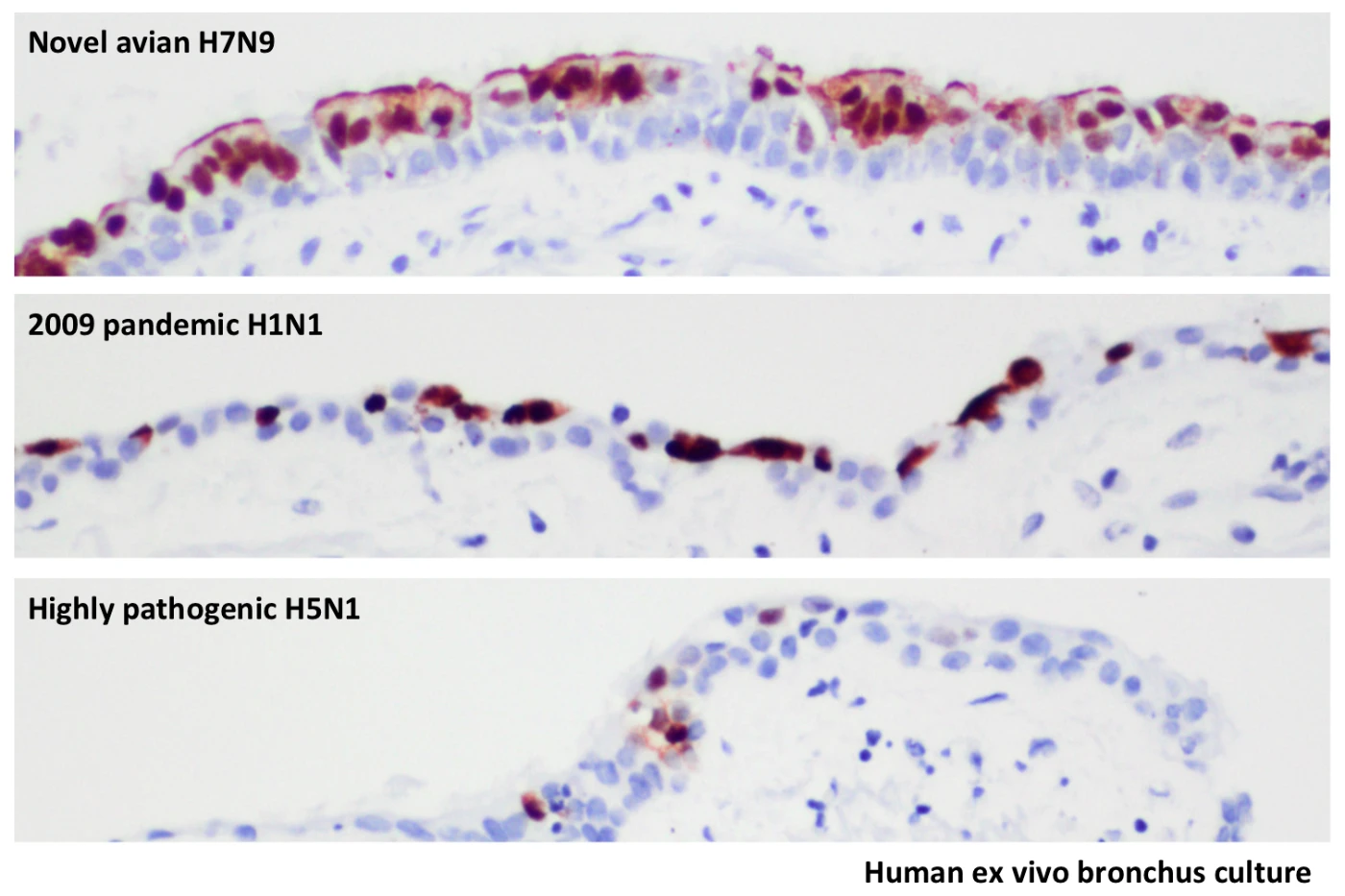
The image shows human ex vivo bronchus culture, research team compared the extent of virus infection with the avian influenza A (H7N9) virus, the 2009 pandemic influenza A (H1N1) virus (commonly known as swine influenza) and highly pathogenic avian influenza A (H5N1) virus in the human bronchus tissues cultured ex vivo.
The part with brown color shows virus infected cells and the blue indicates non infected cells.
H7N9 virus leads to extensive infection of the surface cells (epithelium) of the bronchus, comparable to the 2009 pandemic virus. In contrast, the H5N1 virus only infects occasional bronchial epithelial (surface) cells.
相关主题
相关文章