
媒体中心
提供低成本及高效技術監控細胞內生命活動以助標靶藥物開發
香港大學化學系教授孫紅哲領導的跨學科研究團隊,過去三年經過不斷的嘗試,研發出最新可在活體細胞內標記標籤蛋白的螢光探針。相關的研究成果已刊登於國際權威學術雜誌《美國國家科學院院刊》,文章被評為《美國國家科學院院刊》優異研究的頭百分之二十內,及同期合計研究中的前百分之十內。新技術並已申請美國及歐洲的專利。
多年來,科學家們一直努力開發螢光標記技術來監測細胞內的標籤蛋白。孫教授領導的跨學科團隊研發的新螢光探針,能有效穿透細胞膜,為探測細胞內蛋白分子的活動情況,提供簡單﹑低成本﹑高效快速的工具。新螢光探針可監測細菌﹑細胞及植物組織內的標籤蛋白,可應用於追蹤病菌在感染過程中的蛋白活動變化,偵測藥物及其標靶蛋白質在細胞體內的反應,例如標靶藥物對病菌及癌細胞的作用和成效﹑細菌抗藥性等,有助新標靶藥物﹑針對細菌抗藥性藥物的研發。新螢光探針亦可應用於農業上,幫助改良農產品品種。
組氨酸標籤蛋白系統近年被大量應用於生物醫學研究,是目前最常用的標記蛋白純化與功能分析技術。科學家已建構出龐大的組氨酸標籤蛋白數據庫,因此多年來,科學家們一直努力開發螢光標記技術來監測組氨酸標籤蛋白。但基於一般螢光探針跨膜性差、生產成本高昂,以及大分子螢光標籤(如螢光蛋白)可能對標記蛋白功能上帶來惡性干擾等不利因素,螢光標記技術的發展受到極大的限制。目前,科學家仍缺乏有效方法了解這些標記蛋白在活體細胞內的重要功能。
孫教授的研究團隊致力於螢光標記技術的開發工作,以提供快速及可靠的手段,標記活體細胞內的組氨酸標籤蛋白。
經過三年不斷的嘗試,研究團隊終於開發出目前為止唯一可在活體細胞內標記組氨酸標籤蛋白的小分子螢光探針,生產成本亦大幅下降至現今技術的四分之一,對活細胞螢光標記與成像來說是一個重大突破。孫教授團隊與生物科學學院蔡美蓮教授及生物化學系Julian A. Tanner和錢程民博士合作,將此探針應用於多類活細胞體系如細菌及人類細胞,高效地(數分鐘內)尋找並標記組氨酸標籤蛋白,更精準地在原位觀察並了解蛋白的功能。他們甚至將探針應用於標記植物組織;螢光探針不會影響植物的生長,引證其毒性極微的優點,故可實時監測標記蛋白在植物細胞內的一舉一動。
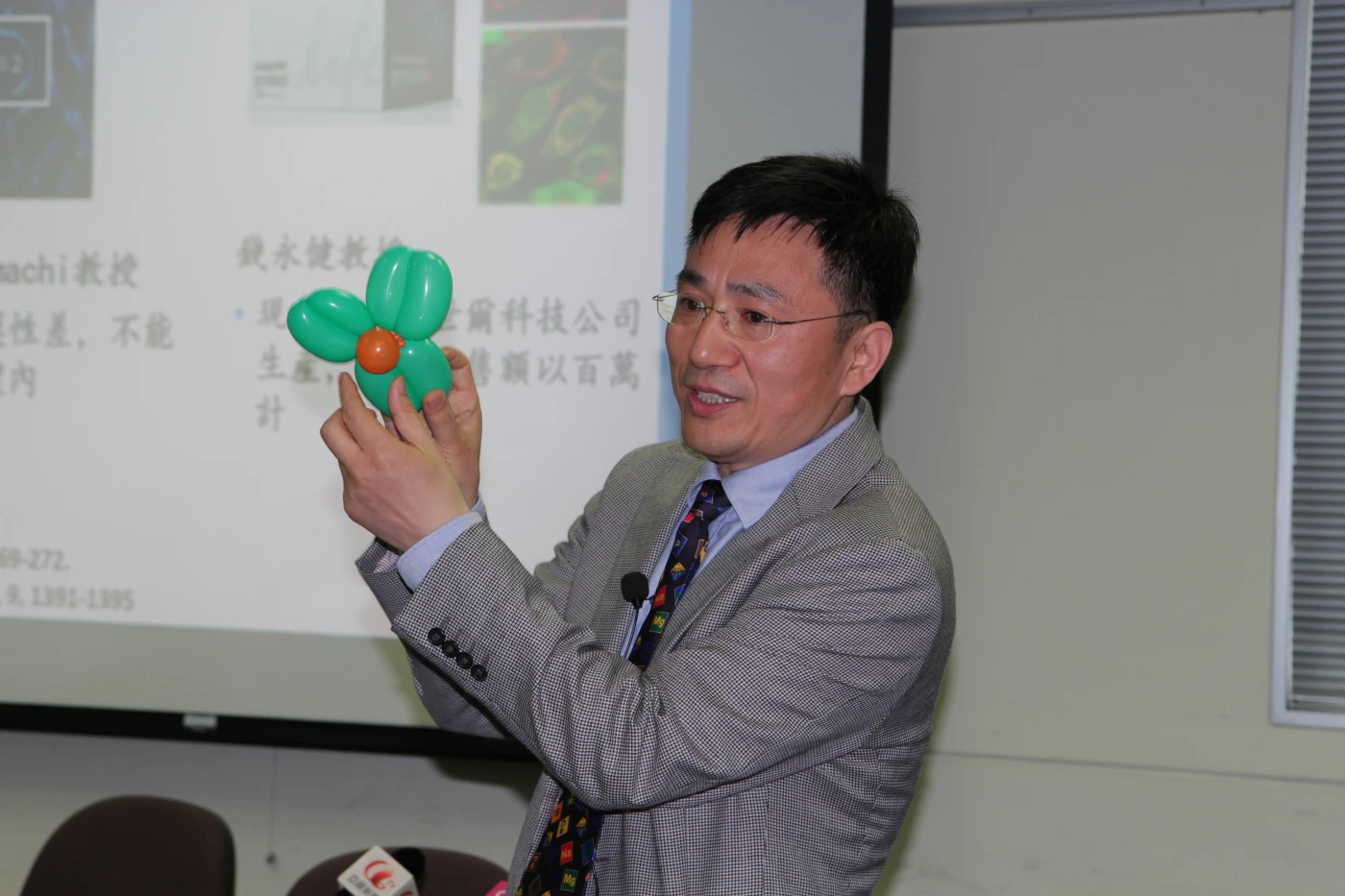
孫紅哲教授
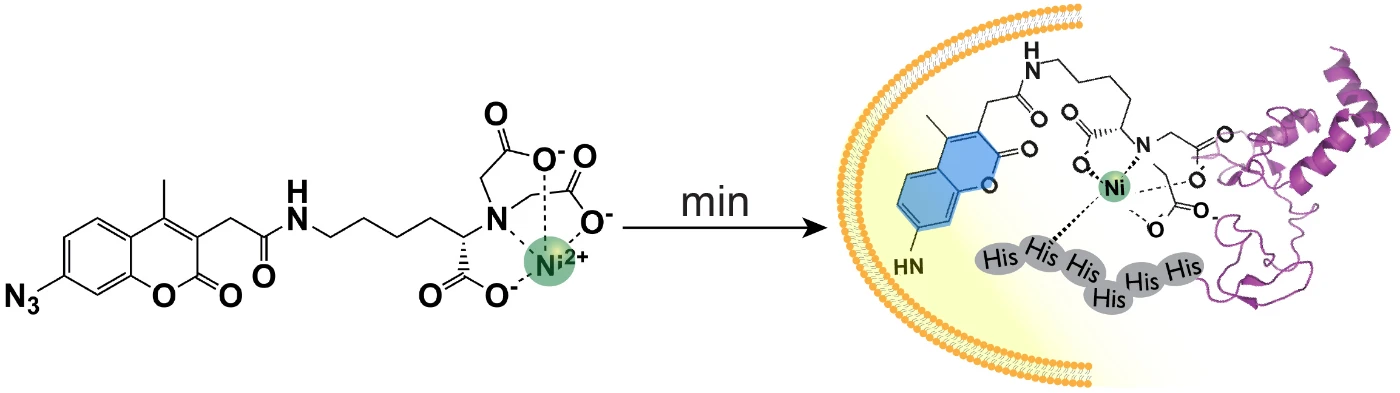
The fluorescent probe can rapidly cross the cell membrane in minutes and emit blue fluorescence only after labeling the target protein in cells. Hence, any actions that cause the movement of proteins in cell can be closely monitored.
在此基礎上,孫教授研究團隊將進一步開發出不同顏色的螢光探針組合,有利於科學家在同一個活體細胞內同時監測多種蛋白的動態活動,了解多項生命活動之間的連鎖反應。 這類螢光探針可運用於偵測藥物與其標靶蛋白質在細胞體內的反應,有助了解藥效以促進藥物研發。新技術對加深現今生物化學知識的了解起了決定性的幫助。
研究獲香港研究資助局、香港大學綜合生物學新興策略性研究領域計劃及黃乾利辛烱僖基金(植物生物技術學)資助。
記者會投影片,請按此瀏覽。投影片中提及研究的詳細內容,請參考研究團隊於美國國家科學院院刊發表文章“Rapid Labeling of Intracellular His-tagged Proteins in Living Cells”
https://www.pnas.org/content/early/2015/02/18/1419598112.abstract
孫紅哲教授
孫紅哲教授是香港大學化學系的教授。他的研究主向為生物無機化學和化學生物學,尤在金屬組學和金屬蛋白組學中獲得廣泛認同。孫教授就了解金屬蛋白功能及鉍系金屬藥物的藥用機制研究發表了許多重要論文。孫教授同時是裘槎基金會高級研究成就獎得主及香港大學整合生物學新興策略性研究領域的通訊聯席召集人。
孫紅哲教授於2013年獲得香港大學頒發「傑出研究生導師獎」, 以肯定他在教學及研究兩範疇的傑出表現
有關孫紅哲教授及其團隊的更多信息,可以參閱他的小組網頁:
https://www.chemistry.hku.hk/staff/hzsun/website2013/Labpage/Home.html
化學標籤蛋白的螢光成像和組氨酸標籤蛋白數據庫
化學標籤蛋白是一種可用於監測標記蛋白的定位,以探討其功能和動態活動的生化技術,從而了解標記蛋白在活體細胞內的生物活動。科學家一直致力於開發螢光標記以研究細胞事件。雖然利用遺傳編碼構建的標籤(如螢光蛋白標籤)可輕易地在細胞內與標記蛋白共融表達,但是這些標籤的應用卻可能因為其大分子量而嚴重影響標記蛋白的功能。因此,合成的螢光探針等小標籤系統可標記與短肽共融的蛋白,透過螢光成像技術,可望成為一個有效的解決方案。迄今為止,以小分子為基礎的螢光探針包括二亞砷酸鹽探針FlAsH及其衍生物以標記細胞內標記蛋白的四半胱氨酸基序,及利用鎳-次氮基三乙酸酯(Ni2+-NTA)的探針以標記組氨酸標籤蛋白。
組氨酸標籤系統被廣泛應用於生物技術中的蛋白質純化和表徵。組氨酸標籤的應用有助於在不干擾細胞活動的情況下監測標記蛋白。然而,基於Ni2+-NTA系列螢光探針跨膜性差,目前仍無法在活體細胞內跟縱組氨酸標籤蛋白。
因此,構建具良好膜滲透性的小分子螢光探針以實時監測活體細胞內的組氨酸標籤蛋白非常重要,有助於原位研究各種細胞中的生物反應及機理。
傳媒如有垂詢,可致電香港大學理學院高級傳訊經理陳詩迪女士(電話:3917-5286/ 6703-0212;電郵:cindycst@hku.hk)。
Professor Sun Hongzhe
Professor Sun Hongzhe is a professor of the Department of Chemistry at the University of Hong Kong. His research focuses on the biological inorganic chemistry and inorganic chemical biology, especially in metallomics and metalloproteomics. Professor Sun has published a series of work in understanding the functions of metalloproteins and the mechanisms of actions of bismuth-based metallodrugs. He is also a recipient of the Crouch Senior Research Fellow and the Convenor of the e-SRT on Integrative Biology.
Professor Sun was recipient of the HKU Outstanding Research Student Supervisor Award in 2013, awarded in recognition of his excellence in teaching and research.
More information about Professor Sun Hongzhe and his research group can be found from their group’s webpage: https://www.chemistry.hku.hk/staff/hzsun/website2013/Labpage/Home.html
Paper
“Rapid Labeling of Intracellular His-tagged Proteins in Living Cells”
at Proceedings of the National Academy of Sciences of the United States of America
https://www.pnas.org/content/early/2015/02/18/1419598112.abstract
Proceedings of the National Academy of Sciences of the United States of America, referred to as PNAS, is an official journal of the National Academy of Science, USA. PNAS is one of the world’s most-cited multidisciplinary scientific journals, covering publications in biological, physical and social sciences. PNAS is now celebrating the 100th anniversary of establishment.
Chemical Labeling of Proteins for Fluorescence Imaging and His-tagged Protein Library
Chemical labeling of proteins is a technique to investigate the localization, functions and dynamic activity of target proteins in order to understand the biological events in living cells. Scientists have spent tremendous efforts to manipulate fluorescent labeling in studying cellular events. Although genetically-encoded tags (e.g. fluorescent protein-tag) can be readily expressed with target proteins inside cells, they possess potential in deleterious perturbation of protein functions due to their large size. Alternatively, small tag-based fluorescent imaging, utilizing synthetic fluorescent probe to site-specifically interact with short peptide-fused target proteins provides a solution. Successful small molecule-based fluorescent probes include biarsenical FlAsH and its derivatives which bind to the tetracysteine motif of intracellular proteins, and Ni2+-NTA-based probes which interact with the hexahistidine-tag (His-tag) on proteins.
His-tag labeling system has been widely applied in protein purification and elucidation of protein characterization for biological and biotechnological research owing to its advantage in monitoring cellular activities with minimal disturbance to the functions of target proteins. However, due to the constraints of poor membrane permeability of Ni2+-NTA-based fluorescent probes, tracking the large library of His-tagged proteins in living cells is still impossible.
It is, therefore, of great interest to construct membrane-permeable small fluorescent probes in real-time monitoring intracellular His-tagged proteins for the investigation of various cellular events in situ.
For press enquiry, please contact Ms Cindy Chan, Senior Communication Manager of Faculty of Science, at 3917-5286/ 6703- 0212 or by email at cindycst@hku.hk.
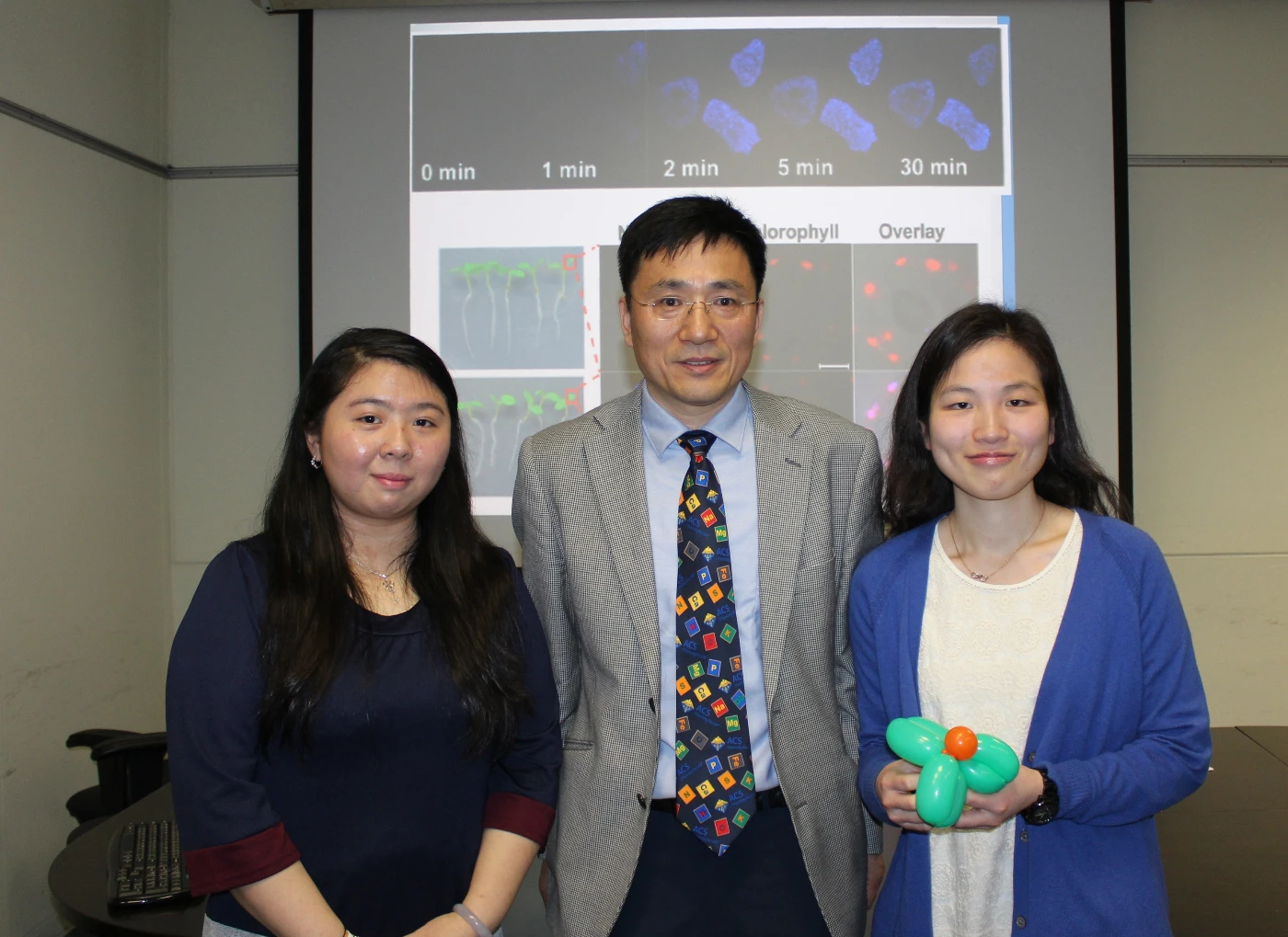
Professor Sun Hongzhe’s research team and his collaborators at HKU (from left): Dr. Julian A. Tanner (Dept of Biochemistry), Prof. Chye Mee-Len (Wilson and Amelia Wong Professor in Plant Biotechnology, School of Biological Sciences), Prof. Sun Hongzhe and his research group members from the Department of Chemistry: Dr. Li Hongyan, Miss Yang Ya, Dr. Lai Yau-tsz, Miss Chang Yuen-yan, Miss Chao Ailun
(From Left) Dr. Lai Yau-tsz and Miss Chang Yuen-yan, of HKU Department of Chemistry
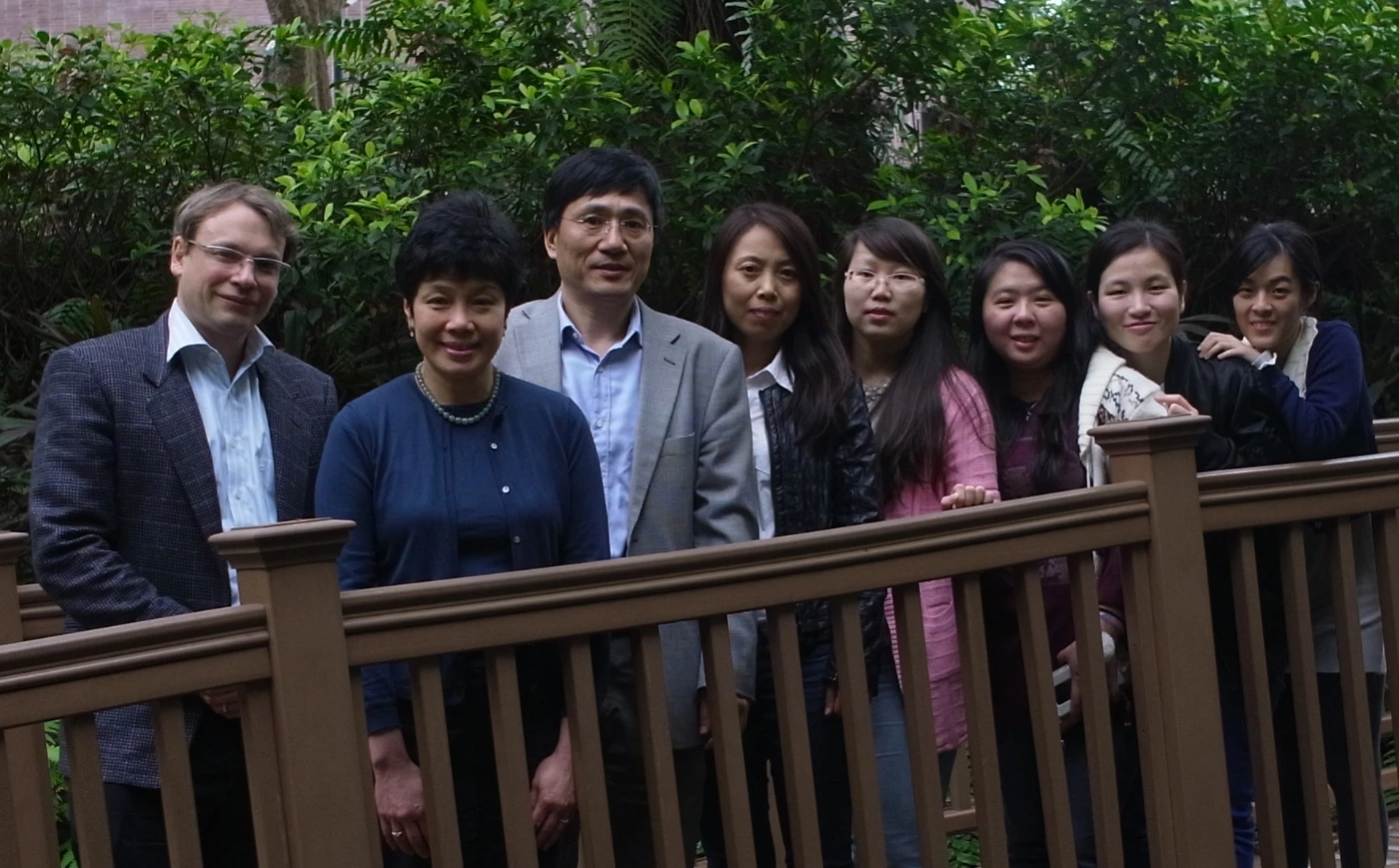
孫紅哲教授及他的香港大學研究團隊 (從左至右):Dr. Julian A. Tanner (生物化學系),黃乾利辛烱僖基金(植物生物技術學)蔡美蓮教授(生物科學學院),孫紅哲教授及化學系研究小組成員:李洪艷博士,研究生陽婭,黎佑芷博士,研究生張苑茵和巢艾倫。
相关主题
相关文章