
媒体中心
香港大學公布2015年第二季宏觀經濟預測
1 概論
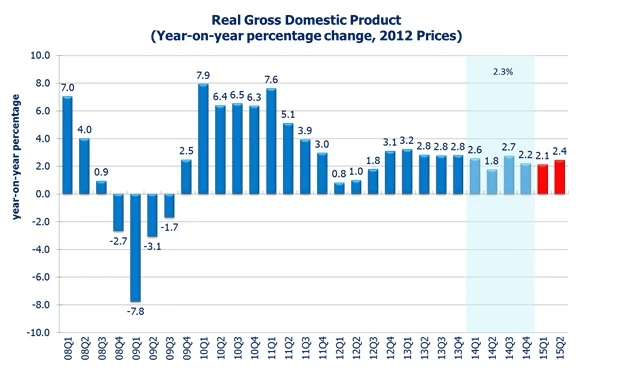
香港大學香港經濟及商業策略研究所亞太經濟合作研究項目今天(4月9日)發表高頻宏觀經濟預測。報告指出,2015年第一季實質GDP較2014年同期上升2.1%,為上次(1月6日)公布的預測2.4%的下調。這調整反映了稍微趨向謹慎的消費支出,其主要表現在私人消費開支及服務出口上。
預料2015年第二季實質GDP將較去年同期上升2.4%。
HKU announces 2015 Q2 HK Macroeconomic Forecast
「儘管全球經濟仍然顛簸前行,但需求持續復甦。全球廣泛地區寬鬆的貨幣政策與較低的油價仍然是主要的驅動力。在這些因素的刺激下,美國和歐盟的復甦預期回暖;日本和韓國將可避免任何嚴重的衰退。另一方面,預料中國在2015年仍可維持顯著的增長,儘管步伐會較2014年為慢。全球需求的整體復甦將惠及香港。
美元兌其他主要貨幣均已升值,港元由於與美國掛鈎,故情況相若。以美元及港元結算的貨物與服務變得較昂貴,吸引力相對降低,對香港的負面影響將逐步顯現。
在這些因素的影響下,預計香港經濟在2015年上半年上升2.3%,僅僅略低於2014年下半年的2.5%,2015年下半年則可能進一步改善。」香港大學經濟學首席講師王家富博士表示。
HKU announces 2015 Q2 HK Macroeconomic Forecast
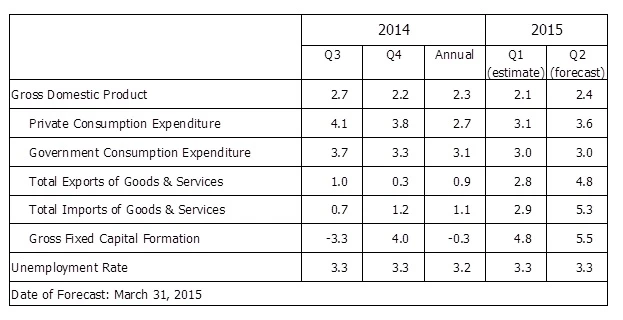
在GDP的組成中,2015年上半年本地需求推動GDP的增長3.1個百分點,而外部需求則令GDP增長下跌0.8個百分點。外部需求的負面影響主要是近期貿易加權有效匯率大幅升值,導致出口價格上漲,以及進口價格下跌,結果抑壓出口,刺激進口。
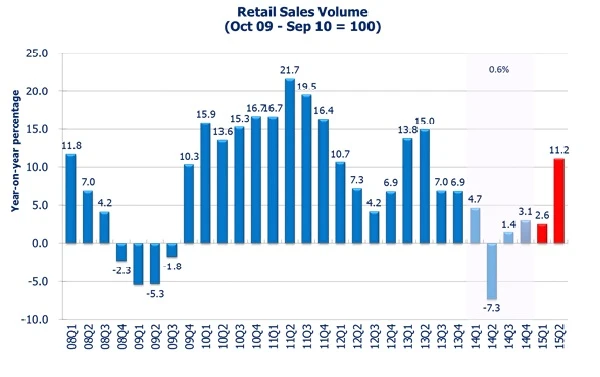
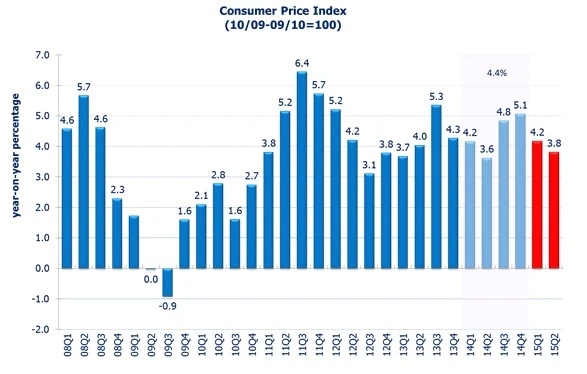
預料就業市場依然緊張,估計失業率於2015年第二季為3.3%,與2015年第一季相同。預計短期內整體通脹率會維持穩定,2015年第二季的通脹率為3.8%。
預測的詳細內容分別見於(附件 )圖表一及圖表二;而各項按月計算的指標性預測則見於圖表三。發表的所有增長比率皆是以按年計算的幅度為基礎。
2 本地需求
2.1 私人消費開支
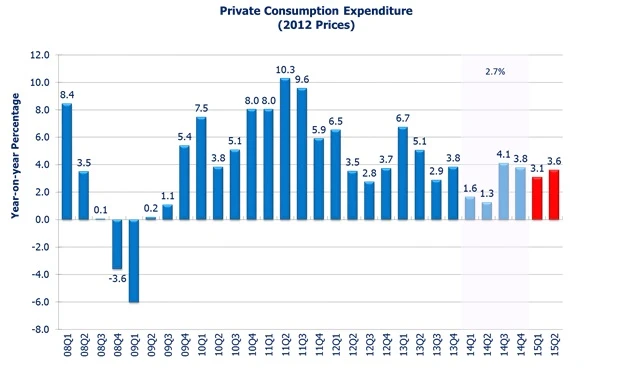
在勞動力市場活躍和的工資增長理想的情況下,消費者信心在2015年上半年得以維持相對高水平。去年,私人消費開支在2014年第四季增長了3.8%,較2014年第三季的4.1%稍微慢一些。在維持較高消費者信心的情況下,預期私人消費開支將有不俗的表現,2015年第一季與第二季分別增長3.1%及3.6%。
HKU announces 2015 Q2 HK Macroeconomic Forecast
5 勞動市場
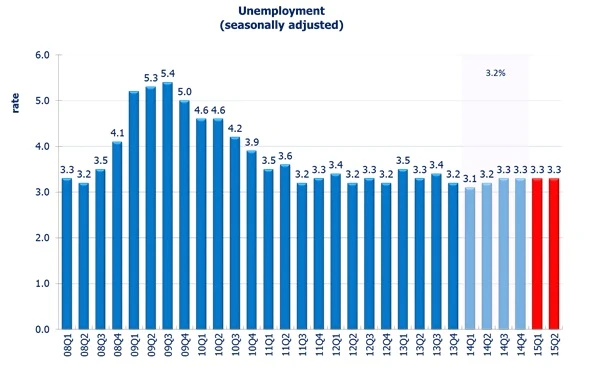
經季節性調整的失業率臨時數字,至2015年2月的三個月平均值連續八個月維持在3.3%水平,反映了勞動力市場相對緊張。預計失業率在2015年第一季維持3.3%。
預計2015年全年勞動市場依然緊張,2015年第二季失業率維持在3.3%水平。比較2015年第一季,第二季就業人數增加32,000人,失業人數上升7,000人。
HKU announces 2015 Q2 HK Macroeconomic Forecast
6 總論
6.1美元利率
美國很大機會在2015年下半年加息。美國失業率在2015年2月已下降至5.5%,實質GDP增長於2014年第四季上升2.2%。若沒有受制於油價下跌及美元升值,這強勁復甦將引致美國通脹壓力升溫。事實上,一些美國聯邦儲備局的成員已經暗示在六月份可能加息。近幾個月來美元大幅升值反映市場對加息的預期。
在現時低利率的環境下,0.25百分點的息口上升也會帶來相對大的影響,美國聯邦儲備局對加息的決定將十分審慎,所以實際加息的時間仍然很難預料。
由於港幣與美元掛鈎,香港並沒有其他選擇只能跟隨美國加息。眾所周知,加息會影響投資和消費決定,對經濟產生不利影響。
廣大市民也應該提高警覺,可見將來的加息,資產和房地產價格有潛在下行風險。而房地產一般都在較高的槓桿比率下購入,樓價下行的風險會較高。
6.2 美元升值
美元兌其他主要貨幣已大幅升值,港元因與美元掛鈎,亦隨之大幅升值。以美元和港元結算的商品和服務因而顯得更加昂貴缺乏吸引力。對於即將在香港設立辦事處的外國公司,租用辦事處和聘請勞動力的成本增加,香港對旅客的吸引力也降低。
美元升值對香港經濟的影響廣泛,影響幅度取決於美元強勢持續多久,以及其他抵銷因素的力度(如全球需求復甦)。美元升值對香港經濟的滯後影響將會是漫長和波動。
6.3平行貿易爭議
反對內地水貨客的行為已被廣泛報導。社會上有訴求建議用各種形式限制內地透過個人遊計劃的訪港遊客人數。社會亦關注到有關政策對經濟的負面影響。
我們認為有關限制對經濟的影響有限。政府近期發表的一份報告指出,2012年,個人遊計劃貢獻GDP 1.3%。換句話說,如果個人遊計劃於今天完全取消,香港經濟增長將減少1.3%,而這降低將是一次性,隨後的幾年不會降低。當然,突然徹底取消個人遊計劃的可能性不大。任何限制措施,一定經過長時間的討論,而如果最後決定執行,也會經歷一段頗長的時間逐步落實。香港有能力適應經濟變化,任何限制個人遊計劃的措施所帶來的負面影響,將遠較1.3% 為少。
但要留意的是,即使限制了個人遊計劃,平行貿易對在邊境附近居住市民日常生活的影響仍很可能持續。平行貿易是受利潤驅動,只有當利潤消失才會停止。限制個人遊只會將經營者由內地人轉向香港市民。若政府認真希望減少平行貿易,一個可能更有效的方法,是向陸路及水路口岸出境旅客徵收低額(例如10港元)的離境稅。
6.4總結
在加息和美元升值的陰霾下,短期內我們對本港經濟的前景維持樂觀。在2015年全年的內部需求支持以及下半年的外部需求帶動下,預期本港經濟在2015年將繼續有溫和的增長,全年實質GDP增長為2.8%,很大可能在2.5%至3.1%之間,略高於2014年全年的2.3%增長。
「香港宏觀經濟預測」簡介
「香港宏觀經濟預測」是由香港大學香港經濟及商業策略研究所亞太經濟合作研究項目負責研究及有關工作,旨在為社會提供及時及有用的數據,以追蹤及預測短期的經濟波動。這個宏觀經濟預測,自一九九九年起每季定時發表。
上述研究結果乃採用「高頻」宏觀經濟預測系統而得出。該系統於1999-2000年,由香港大學亞太經濟合作研究中心與美國賓夕凡尼亞大學 Professor Lawrence Klein共同研發。其後,亞洲經濟合作研究中心將系統再加改良,現時是香港經濟及商業策略研究所的研究項目。
該項目由經濟金融學院資助,由香港大學首席講師王家富博士領導。這項計劃現由香港大學經濟及工商管理學院贊助,港大香港經濟研究中心則提供行政上的支援,港大香港經濟及商業策略研究所負責所有的研究工作、數據闡釋及確保它們的準確性。如欲查閱每季的經濟預測,可隨時瀏覽以下網頁: https://www.hiebs.hku.hk/apec/macroforecast.htm
傳媒查詢,請聯絡香港大學香港經濟及商業策略研究所,電話︰2548 9300,電郵︰ info@hiebs.hku.hk。
HKU announces 2015 Q2 HK Macroeconomic Forecast
5 Labour Market
The provisional seasonally adjusted unemployment rate stood at 3.3% in the three months ending in February 2015 for eight consecutive months, reflecting a tight labour market condition. The unemployment rate is forecast to stay at 3.3% in 15Q1.
We expect the job market to stay tight throughout the year of 2015. The unemployment rate is forecast to stay at 3.3% in 15Q2. Comparing to 15Q1, we forecast 32,000 employment created and 7,000 persons increase in unemployment in 15Q2.
HKU announces 2015 Q2 HK Macroeconomic Forecast
6 Concluding Remarks
6.1 US Interest Rate
An interest rate hike in the US is deemed likely in the second half of 2015. Civilian unemployment rate has dropped to 5.5% in February 2015 and real GDP grew at 2.2% in 14Q4. Such robust recovery of the US economy suggests that inflation pressure is mounting, if it were not contained by the plunge in oil prices and US dollar appreciation. Indeed, some Federal Reserve Board members have hinted the likely interest rate hike in June. The substantial dollar appreciation in recent months reflects the market expectation of interest rate hike.
Since quarter percentage increase of interest rate from the currently low interest rate can have substantial impact, the Fed will likely be very cautious in its decision. That is why the exact timing is difficult to tell.
Moreover, since our currency is pegged to the US dollar, Hong Kong has no other option but to match the interest rate hike of the US when it happens. As we all know, an interest rate hike will have an adverse impact on the economy via changes in investment and consumption decisions.
The general public should also be warned of the potential downward risk in asset and property prices in view of the likely interest rate hike in the near future. The downward risk in property prices is deemed higher because properties are often bought with a rather high leverage.
6.2 Appreciation of the US dollar
US dollar has appreciated much against the major currencies, and so has Hong Kong dollar due to its peg to the US dollar. US dollar and HK dollar-denominated goods and services appear more expensive and thus less attractive. For instance, office space and labor will appear much more expensive to foreign firms which are about to set up offices in Hong Kong; Hong Kong will become a less attractive tourist destination.
The impact of dollar appreciation on Hong Kong economy is wide spread. The extent of the impact depends on how long the US dollar stays at this level and how strong the other counteracting factors (such as the recovery in global demand) are. The lags in its effect of dollar appreciation on the economy is likely long and variable.
6.3 Protest against parallel trade
Protests against mainland parallel traders have been widely reported. There have been calls in society for various forms of restrictions on the number of visitors from the mainland via the individual visit scheme. There have been concerns about the adverse impact of the policy on the economy.
Our view is that such restriction will likely to have only limited impact on our economy. A recent report by the Government estimated that the individual visit scheme contributed 1.3% of GDP to the Hong Kong economy in 2012. That is, if individual visit scheme is removed completely today, the GDP of Hong Kong will be lowered by 1.3% once and for all. GDP growth will be lowered by 1.3% in the current year only but not in subsequent years. Of course, an abrupt and complete removal of the individual visit scheme is unlikely. The implementation, if any after lengthy discussions, is likely to be gradual over a long period of time. Therefore, the impact of any restriction on individual visit scheme is likely to spread out over many years and the impact on GDP growth is likely to be small in any given year. In addition, given the economy’s ability to adapt to economic changes, the adverse effect of any such restriction on economic growth is likely to be much smaller than 1.3%.
It should however be noted that the disruption caused by parallel trade to the life of people living in areas near the border will likely continue even if restriction on the scheme is imposed. Parallel trade is driven by profit, it will stop only when no longer profitable. A restriction on individual visit scheme will only shift the parallel trade operators from mainlanders to Hong Kong people. If the Government is really serious about reducing the extent of parallel trade, a more effective measure would be to increase the operation cost by introducing a small departure tax on passengers departing Hong Kong through land and water crossings (e.g., $10 dollars Departure Tax).
6.4 Conclusion
Clouded by the risk of interest rate hike and the US dollar appreciation, we remain optimistic in the short term. In the short run, we expect Hong Kong to have another modest growth year in 2015, supported by local demand throughout 2015 and external demand in the latter part of 2015. Hong Kong’s real GDP is expected to grow by 2.8% in 2015 for the year as a whole, likely between 2.5% and 3.1%, slightly higher than the 2.3% growth in 2014.
About Hong Kong Macroeconomic Forecast Project
The Hong Kong Macroeconomic Forecast is based on research conducted by the APEC Studies Programme of the Hong Kong Institute of Economics and Business Strategy at HKU in the Faculty of Business and Economics. It aims to provide the community with timely information useful for tracking the short-term fluctuations of the economy. The current quarter macro forecasts have been released on a quarterly basis since 1999.
The high frequency forecasting system was originally developed in collaboration with Professor Lawrence Klein of the University of Pennsylvania in 1999-2000. Since then, the system has been maintained and further refined by the APEC Study Center which is now a research programme area of the Hong Kong Institution of Economics and Business Strategy.
The project is sponsored by the Faculty of Business and Economics and led by Dr. Ka-Fu Wong, Principal Lecturer of Economics at HKU. The Hong Kong Centre for Economic Research at HKU provides administrative support to the project. Researchers at the Hong Kong Institution of Economics and Business Strategy are solely responsible for the accuracy and interpretation of the forecasts. Our quarterly forecasts can be accessed at: http://www.hiebs.hku.hk/apec/macroforecast.htm
For media enquiries, please contact the HKU Hong Kong Institute of Economics & Business Strategy, tel: 2548 9300, email: info@hiebs.hku.hk.
相关主题
相关文章