
媒體中心
《邪惡下的倖存:阿玆曼畫語》展覽開幕禮
喚起世人對猶太人大屠殺歷史的關注
教育年輕人包容種族文化差異
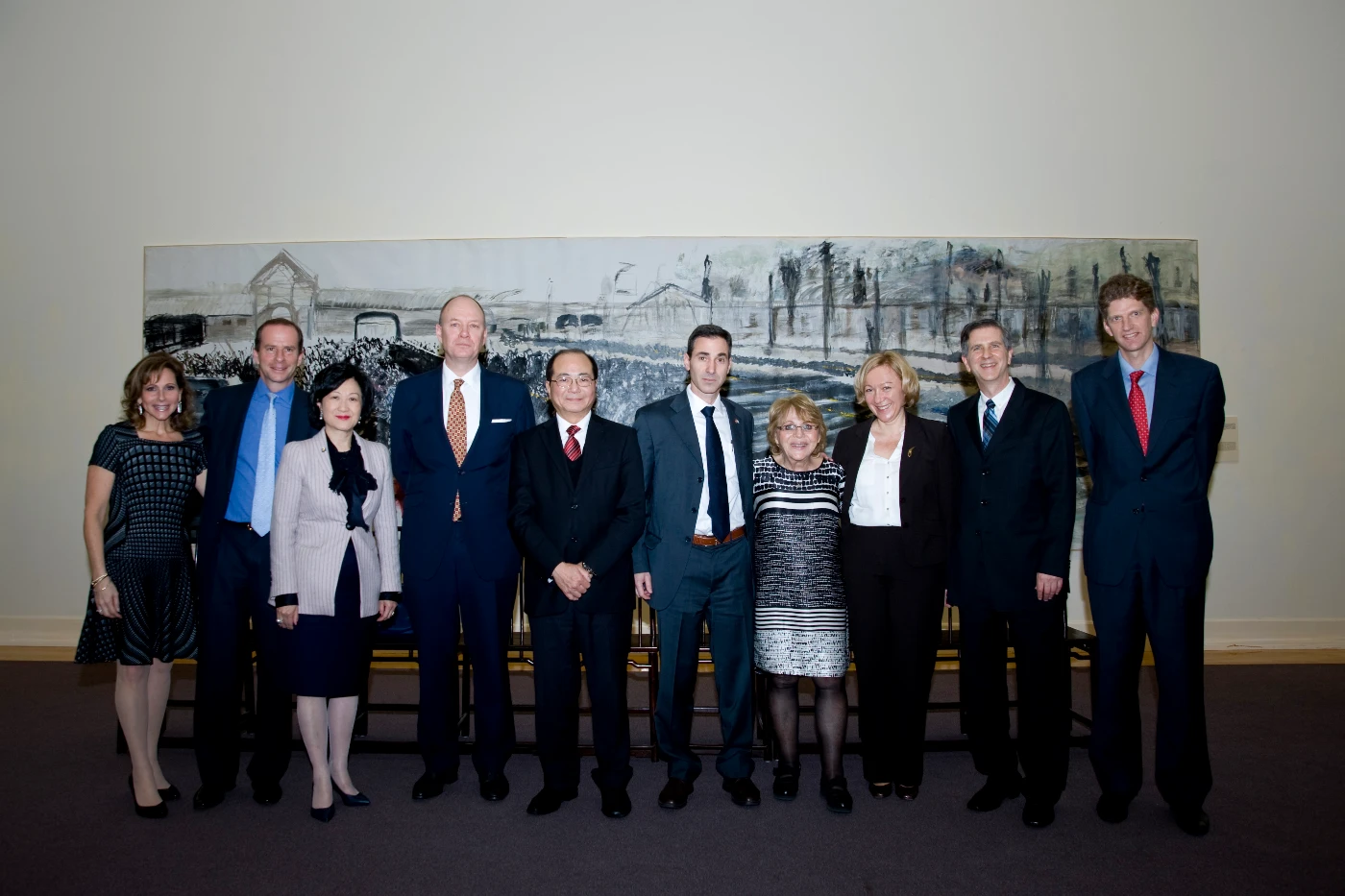
香港猶太大屠殺及寬容中心、香港大學美術博物館與香港歌徳學院於今天(2月25日)為猶太人大屠殺倖存者薩拉•阿玆曼女士,首次在大中華地區舉行的畫展 ---《邪惡下的倖存:阿玆曼畫語》,舉行開幕禮。主禮嘉賓包括阿玆曼女士、香港特別行政區教育局局長吳克儉先生、匯賢智庫學苑院長葉劉淑儀女士、德國駐香港總領事Mr. Nikolaus Graf、以色列駐香港總領事Mr. Sagi Karni、香港猶太大屠殺及寬容中心主席艾卓明先生,以及香港大學美術博物館總監羅諾德博士。
薩拉• 阿玆曼女士生於匈牙利,現居以色列,是猶太人大屠殺中的倖存者。其作品多為大型畫作,見證著她對當年大屠殺的恐怖回憶。1944年,阿玆曼先被驅逐至施特拉斯霍夫集中營,之後才輾轉在伯根•貝爾森集中營渡過艱苦的歲月。
成年以後的阿玆曼,成為一名出色的畫家。其戲劇化和鮮明的畫風,喚起世人對這段殘酷歷史的關注,亦教育年輕一代學會珍惜與包容,使種族之間承載著相異的文化和宗教背景,仍能培養出相互謙讓的慈憫精神。
阿玆曼女士就在此春分時節到訪香港主禮其畫展的開幕禮,並受邀在香港大學主持講座,與參加者直接交流、思辨暢談。
《邪惡下的倖存:阿玆曼畫語》展覽詳情
展出日期: 2014年2月26日至2014年5月4日
開放時間: 星期一至星期六,上午9時30分至下午6時;星期日,下午1時至6時。大學及公眾假期休息。
地點: 香港大學美術博物館徐展堂樓一樓
電話: (852) 2241 5500 (一般查詢)
費用: 免費入場
有關香港大學美術博物館舉辦的講座和導賞及專為學生而設的外展活動詳情將稍後公佈。
薩拉‧阿兹曼簡歷
1933年 薩拉‧阿兹曼,原名薩拉‧哥甸亞(Sara Gottdiener),在嫁給烏利‧阿兹曼後改名為薩拉‧阿兹曼,出生於匈牙利的海都納鎮 (Hajdúnánás),在家中16個孩子中排行14。
1940年 隨着法西斯主義在匈牙利抬頭,猶太人亦遭到迫害、侮辱和殺害。薩拉的父親和她的4名兄弟被徵召到強制勞動營勞役。
1944年 哥甸亞(Gottdiener)一家被逐入德布勒森猶太人隔離區。當地的猶太人被迫將所有財物繳交給蓋世太保(Gestapo)並需佩帶大衛之星(Star of David)。
薩拉開始經歷極為艱苦及受盡侮辱的日子。這一年她11歲,卻承受了納粹「婦科檢查」的恐懼和痛苦,因納粹懷疑女童體內藏有財物。
猶太人其後從德布勒森猶太人隔離區被帶到城外一座製磚廠。4萬名囚徒需共用4個水龍頭及4座廁所。猶太人在這裡被有組織地送到奧斯威辛。
6月25日,薩拉和其他95名囚徒被送上前往奧斯威辛火車的運牛車廂裡。由於沒有標明要前往奧斯威辛而被拒接收,火車遂轉送他們至施特拉斯霍夫集中營,剛抵達薩拉就被迫脫光衣服進行「消毒」。
薩拉和家人不久就被送往奧地利的海登賴希施泰因的勞動營,薩拉在那兒由早到晚勞動,但每日僅獲發一片麵包。8月11日,薩拉的父親因繁重勞動和飢餓,不支倒地,死在薩拉旁邊。
哥甸亞一家再次被運送到一間降落傘工廠工作,其後於11月再被運回施特拉斯霍夫,並在其中的消毒營中渡過了3天。
12月上旬,哥甸亞一家再次被送上運牛車廂,然後被運到伯根‧貝爾森集中營,薩拉在那裡目睹了無法想像的事情。囚徒長滿跳蚤,糧食和水亦十分短缺。多人死於傷寒,未死去的人則在戰爭結束前被黨衛隊注射毒針。
薩拉還需要在嚴寒中忍受長達數小時的點名。在她的營房「匈牙利營房」(The Hungarian House)的窗前,屍體堆積如山。
1945年 4月上旬,黨衛隊安排運送猶太人的火車以交換德國戰俘。4月6日,薩拉被送到離開伯根‧貝爾森的火車,但其後火車因黨衛隊逃避盟軍進攻而被遺棄。
4月13日,美軍在法斯拉本(Farsleben)遇上被遺棄的火車。當時12歲、僅重17公斤的薩拉終於獲得自由。哥甸亞一家16個孩子中有13個孩子和其母親倖存。另外60名薩拉的家庭成員被納粹黨殺害。
薩拉之後被帶往位於布痕瓦爾德,剛被解放的集中營。紅十字會在那裡將兒童送往美國、瑞士和巴勒斯坦。 哥甸亞一家決定前往巴勒斯坦,並於1945年7月16日經巴黎及馬賽乘第一艘移民船抵達巴勒斯坦海法。
雖然薩拉與其他兒童是合法進入巴勒斯坦,她卻被英國士兵當作「非法移民」而被再次送到營地。她再次成為囚徒,望着鐵絲網、接受消毒及面臨與家人分離的痛苦。
1949年 以色列獨立戰爭(1947-1949)後,薩拉終於能夠上學,並畢業於七年級。她從事過不同的工作,並在夜校就讀以完成學業。
1951-1953年 薩拉在以色列軍中服役。
1954年 薩拉嫁給在以色列出生的烏利‧阿兹曼。他們共育有6名子女和22名孫兒女。薩拉在差不多20年後才開始談及她的過去。
1982年 薩拉開始參加一個社區組織,每周一次作畫,社區組織的作品對外展出,但即使薩拉描繪花朵和水果時,她也確認這是爲將來的命運做出準備。
1980年代 薩拉開始在學校發表猶太人大屠殺演講。儘管目睹部分孩童出現情緒反應,但薩拉認為大部分學生並沒有真正理解她所教導的,因而憂心猶太人大屠殺也許會被世人所遺忘。.
1987年 薩拉第一次回到她的故土匈牙利。當她意識到當地許多人對戰爭期間匈牙利猶太人的遭遇毫不知情時,她感到非常地憤怒。回到以色列後,薩拉就開始畫出她在猶太人大屠殺的恐怖經歷。
1990年代 薩拉的作品永久展示於以色列耶路撒冷猶太人大屠殺紀念館。薩拉亦開始在國際間展示她的作品。1993年,奧地利政府向她頒授蘇斯曼奬(Sussman Prize)。
1997年 薩拉出席比利時首都布魯塞爾 (Brussels) 猶太人大屠殺紀念館的國際研討會,隨即在耶路撒冷和特拉維夫大學 (Tel Aviv University) 也舉辦了展覽。
2000年 薩拉在瑞典斯德哥爾摩歷史博物館 (Stockholm Historical Museum)舉辦畫展,與此同時一個大屠殺歷史的國際研討會也在舉辦。
2000年代 近年來,薩拉已在以色列各地的重要場所舉辦超過90場關於猶太人大屠殺作品展覽。展出地點有以色列國會、以色列猶太大屠殺紀念館和一些歐洲國家包括德國、奧地利、匈牙利、捷克共和國、西班牙、瑞典,以及在世界其他地區,如美國和印度。
2010年代 薩拉繼續演講,並在全球展示作品
2014年 《邪惡下的倖存:阿兹曼畫語》於香港大學美術博物館展出,這是她在大中華地區的首個展覽。有關她的作品,以及她的非凡故事及使命的進一步詳情載於她的網站www.saraatzmon.com。
傳媒聯絡
張寶儀小姐 (傳訊主任), 電話: (852) 2241 5512, 電郵: elenac@hku.hk
一般查詢
香港大學美術博物館, 電話: (852) 2241 5500, 電郵: museum@hku.hk
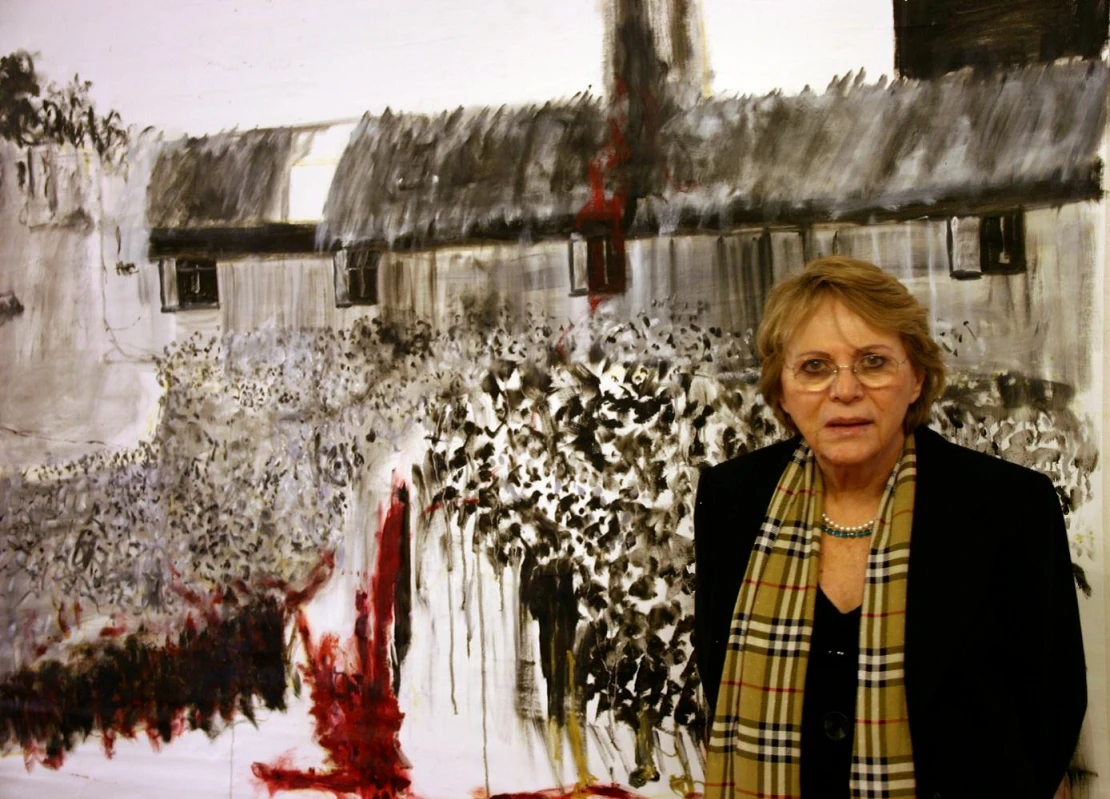
薩拉•阿玆曼攝於其畫作前 (《頭髮》,
布面油畫,210 X 250 公分,1996年)
Ms Atzmon, a Holocaust survivor, was born in Hungary and now resides in Israel. Her artworks, many of which are large-scale, highly impactful paintings, reflect the artist’s memories of her horrible experiences during the Shoah. In 1944, Ms Atzmon was first deported to Strasshof concentration camp and from there she was sent to Bergen-Belsen concentration camp under terrible circumstances.
As an adult, Ms Atzmon became a talent painter dedicated to use her, often very dramatic and explicit, paintings, to bring awareness to the cruel times in the fairly recent past, and to educate the young generation to treasure and practice tolerance, to foster understanding and compassion among people of different religion and cultural backgrounds.
Ms Atzmon was at the University of Hong Kong to officiate at the opening ceremony of her exhibition. She was invited to lecture at the University thus able to engage directly with the audiences in exchange of thoughts and knowledge. .
Details of the exhibition “Surviving Evil: The Pictorial Language of Sara Atzmon”
Period: February 26, 2014 (Wednesday) to May 4, 2014 (Sunday)
Opening Hours: 09:30 to 18:00 (Monday – Saturday); 13:00 – 18:00 (Sunday).
Closed on University and Public Holidays
Venue: 1/F, T.T. Tsui Building, University Museum and Art Gallery, The University of Hong Kong.
Tel: (852) 2241 5500 (General Enquiry)
Free Admission
For media enquiries, please contact:
Miss Elena Cheung (Communication Officer), Tel: (852) 2241 5512, Email: elenac@hku.hk
For details of the exhibition, please contact:
University Museum and Art Gallery, the University of Hong Kong, Tel: 2241 5500, Email: museum@hku.hk.
Details of public lectures and guided tours as well as the outreach programmes to schools will be announced soon.
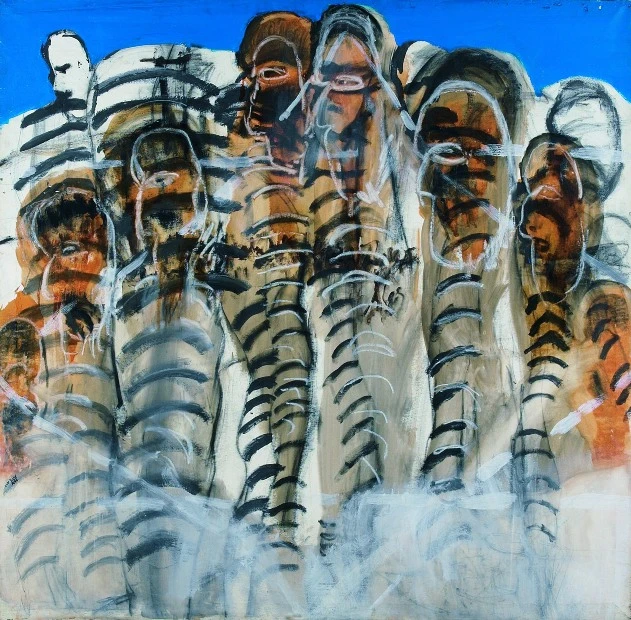
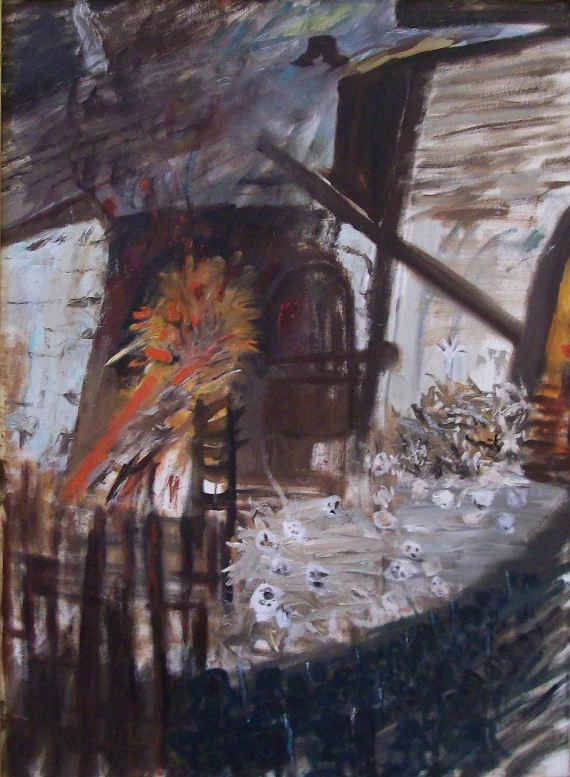
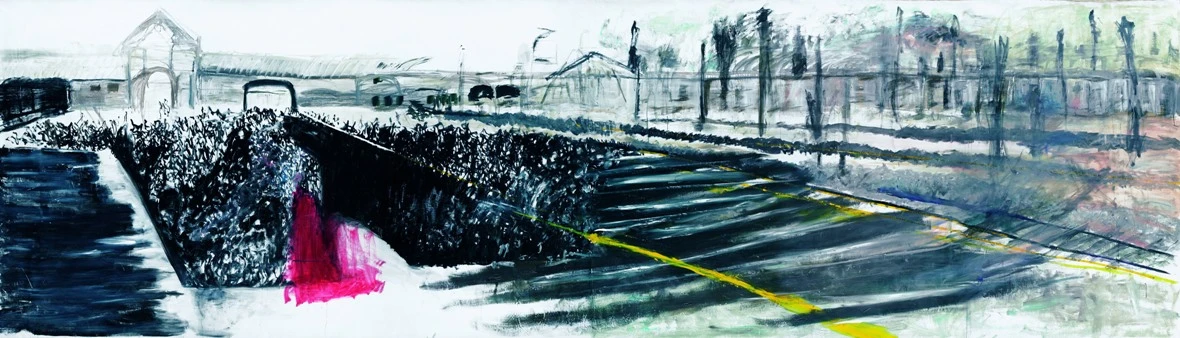
《比克瑙營的斜坡》 布面油畫 230 x 750公分 1994年 薩拉•阿玆曼藏品
Sara Atzmon’s biography
1933 Sara Atzmon, known as Sara Gottdiener before married to Uri Atzmon, was born the fourteenth of sixteen children in Hahdunanas, Hungary.
1940 With Fascism rising in Hungary, Jews were being persecuted, humiliated and killed. Sara’s father and four of Sara’s brothers were drafted to work at a forced labour camp.
1944 The Gottdiener family was taken to the Debrecen ghetto, where Jews surrendered all their valuables to the Gestapo and were forced to wear the Jewish Star of David.
Sara began a period of intense hardship and humiliation. At age 11, Sara was forced to undergo the fear and pain of a "gynecological" exam by the Nazis, who were looking for valuables allegedly hidden inside girls.
Jews were later taken from the Debrecen ghetto to a brick factory outside of the city. Here, 40,000 prisoners were only provided four water taps and four toilets. From there, transports of Jews to Auschwitz were organized.
On June 25, Sara was put in a cattle car with 95 other prisoners on a train to Auschwitz. The train was not listed to go on to Auschwitz and so the prisoners were not received into the camp. Instead, all were sent to a concentration camp in Strasshof, where Sara was forced to strip naked and be "disinfected" upon her arrival.
Sara and her family were soon sent on to a forced labour camp in Heidenreichstein, Austria, where she was forced to work from morning to night with only one slice of bread a day. On August 11, Sara’s father, weakened by hard labour and starvation, suffered a breakdown and died with Sara standing next to him.
The Gottdiener family was transported again to work in a parachute factory and then transported again later in November back to Strasshof, where they spent three days at a disinfection camp.
In early December, the family was loaded again into a cattle car and transported to the Bergen-Belsen concentration camp, where Sara witnessed the unimaginable. People were full of lice and there was hardly any food or water. Many people died of typhoid and many of those who did not were given a lethal injection by the SS shortly before the war ended.
Sara endured roll calls for hours on end in the freezing cold. In front of the windows of her barracks, "The Hungarian House", corpses were piled high in mounds.
1945 In early April, the SS organized transports filled with Jews to use in exchange for German prisoners of war. On April 6, Sara was put on such a transport leaving Bergen-Belsen; but the train was abandoned by the SS guards who were running from the advancing Allied troops.
On April 13, at Farsleben, American troops encountered the abandoned trains and Sara, aged 12 and weighing only 17 kilos, was freed. Thirteen of the sixteen Gottdiener children and their mother survived. Sixty other members of Sara’s family were murdered by the Nazis.
Sara was then brought back to the newly liberated concentration camp in Buchenwald where the Red Cross was organizing children's transports to America, Switzerland and Palestine. The Gottdiener family decided to go to Palestine and arrived, via Paris and Marseille, on the first immigration ship to Haifa, Palestine on 16 July 1945.
Although Sara and other children entered Palestine legally, she was again put into a camp, this time by British soldiers, for "illegal immigrants". Here she was again a prisoner, looking at barbed wire, being disinfected and facing separation from her family.
1949 After the Israeli War of Independence (1947–1949), Sara finally attended school and graduated from the seventh grade. She worked in various jobs and completed her education through evening courses.
1951-1953 Sara served in the Israeli Army.
1954 Sara married Uri Atzmon, who was born in Israel. Together they raised six children and twenty-two grandchildren. Sara did not speak of her past until nearly 20 years later.
1982 Sara began painting in a community group once a week. Her circle exhibited their works but even as she painted flowers and fruit, she was certain that this was merely preparation for her real destiny.
1980s Sara began to lecture about the Holocaust at schools. Despite some children’s emotional reactions, Sara felt that most students did not really comprehend what she taught and she feared that the Holocaust might be forgotten.
1987 Sara returned to Hungary, her country of birth, for the first time. She was outraged that many of her countrymen did not know what had happened to Hungarian Jews during the war. Upon her return to Israel, Sara began to paint the memories of the horrors she experienced in the Holocaust.
1990s Sara’s work is on permanent display at Yad Vashem, the Holocaust Museum and Centre for Holocaust Research, in Jerusalem, Israel. Sara also began to exhibit her work internationally. In 1993, she received the Sussman Prize from the Austrian government.
1997 Sara attended an international conference at the Memorial of the Holocaust in Brussels. Immediately afterwards, she arranged additional exhibitions in Jerusalem and at Tel Aviv University.
2000 An exhibition of Sara’s paintings was held at the Stockholm Historical Museum coinciding with an International Conference on Holocaust history.
2000s In recent years, more than ninety Holocaust-related exhibitions of Sara’s artworks have been held throughout Israel at high profile locations, such as the Knesset (the Israel Parliament) and Yad Vashem, and in several European countries, including Germany, Austria, Hungary, the Czech Republic, Spain, Sweden, as well as in other parts of the world such as the United States of America and India.
2010s Sara continues to lecture and to show her work internationally.
2014 “Surviving Evil: The Pictorial Language of Sara Atzmon” exhibition opens at the Hong Kong University Museum Art Gallery; her first exhibition in the Greater China. Further information about her artworks, as well as her extraordinary story and life mission, can be found at her website: www.saraatzmon.com .
相關主題
相關文章