
HKU Today
HKUMed launches Centre for Health AI Research and Translation
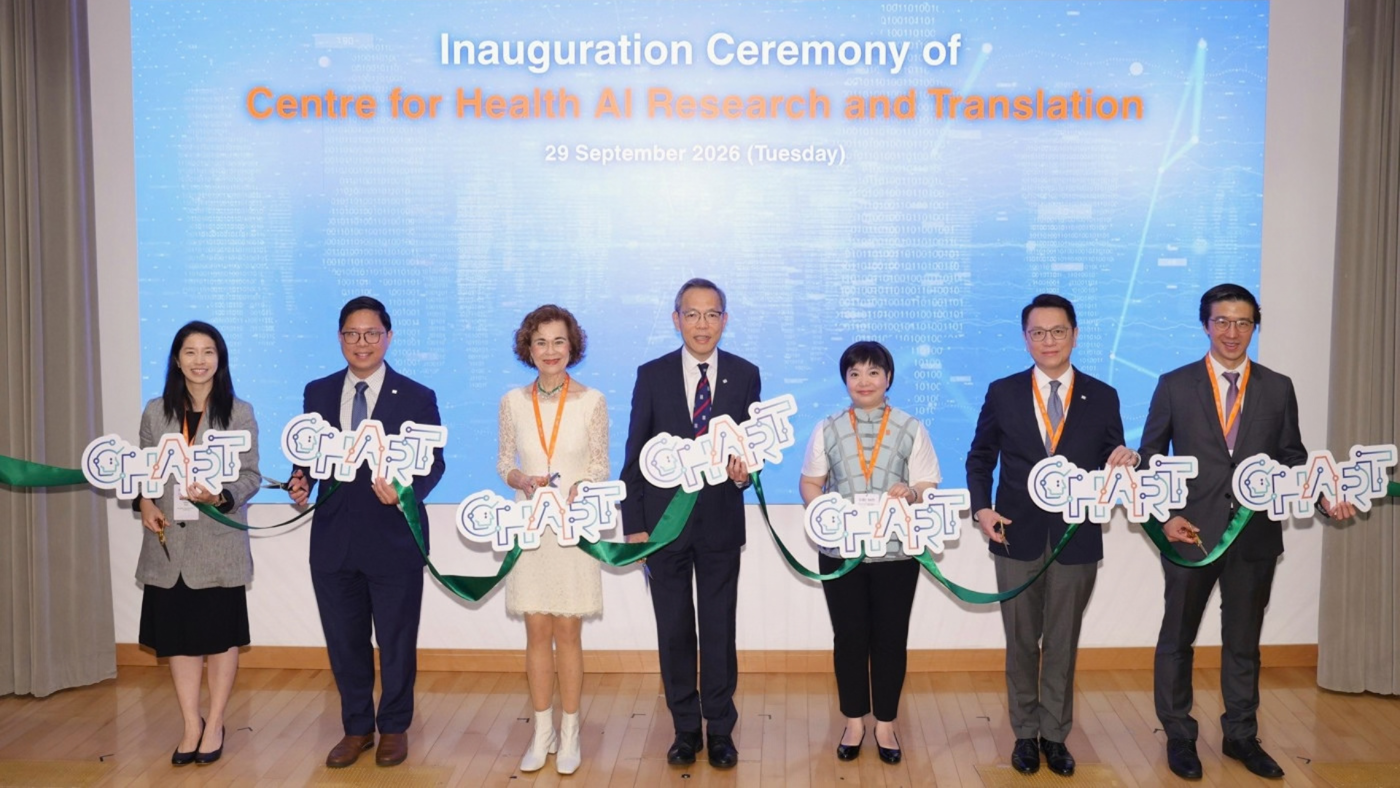
The LKS Faculty of Medicine has officially launched the Centre for Health AI Research and Translation (CHART), marking a significant step in translating artificial intelligence innovations into safe, sustainable healthcare solutions.
Launched on 29 September at an inauguration ceremony and symposium themed ‘Advancing Human-Centred Healthcare through AI’, CHART aims to develop, evaluate, translate and implement trustworthy AI solutions that deliver tangible benefits to patients, healthcare professionals, systems and society.
It was established with generous support from Mrs Carol Murray and The D. H. Chen Foundation.
Professor Chak-sing Lau, Vice-President and Pro-Vice-Chancellor (Health) and Dean of Medicine, highlighted the centre’s mission. “AI is rapidly reshaping healthcare, creating new opportunities and far-reaching impacts in areas ranging from disease prediction and precision diagnosis to personalised treatment and care delivery,” Professor Lau said.
“The true value of AI, however, lies in technological breakthroughs and our ability to translate innovation into safe and sustainable solutions that bring tangible benefits to patients and society. Through the establishment of CHART, HKUMed aims to strengthen interdisciplinary collaboration and accelerate the translation of impactful AI solutions into real-world applications, advancing human-centred healthcare innovations.”
Professor Joshua Ho Wing-kei, HKUMed Assistant Dean (Innovation & Technology Transfer) and Co-Director of CHART, added: “CHART was established to address some of the most pressing challenges in healthcare AI and to bridge the gap between proof-of-concept discoveries and their meaningful applications in clinical and community settings. Our goal is to advance the translation of promising AI technologies into real-world solutions that can benefit patients, frontline healthcare professionals and society at large.”
The Centre’s work will focus on five key areas: fostering interdisciplinary collaboration; accelerating research translation and implementation; advancing responsible and trustworthy AI; building partnerships and innovative ecosystems; and developing the next generation of healthcare AI talent.
The launch event featured a keynote lecture by Professor Wong Tien Yin of Tsinghua University on ‘Will AI Eventually Replace the Doctor?’, followed by panel discussions on academia-industry collaboration, data governance and clinical validation. The symposium concluded with an AI and Technology Showcase demonstrating latest innovations.
Related Topics
Related News