
HKU Around the World
Universities Need Institutional Renewal in the AI Era
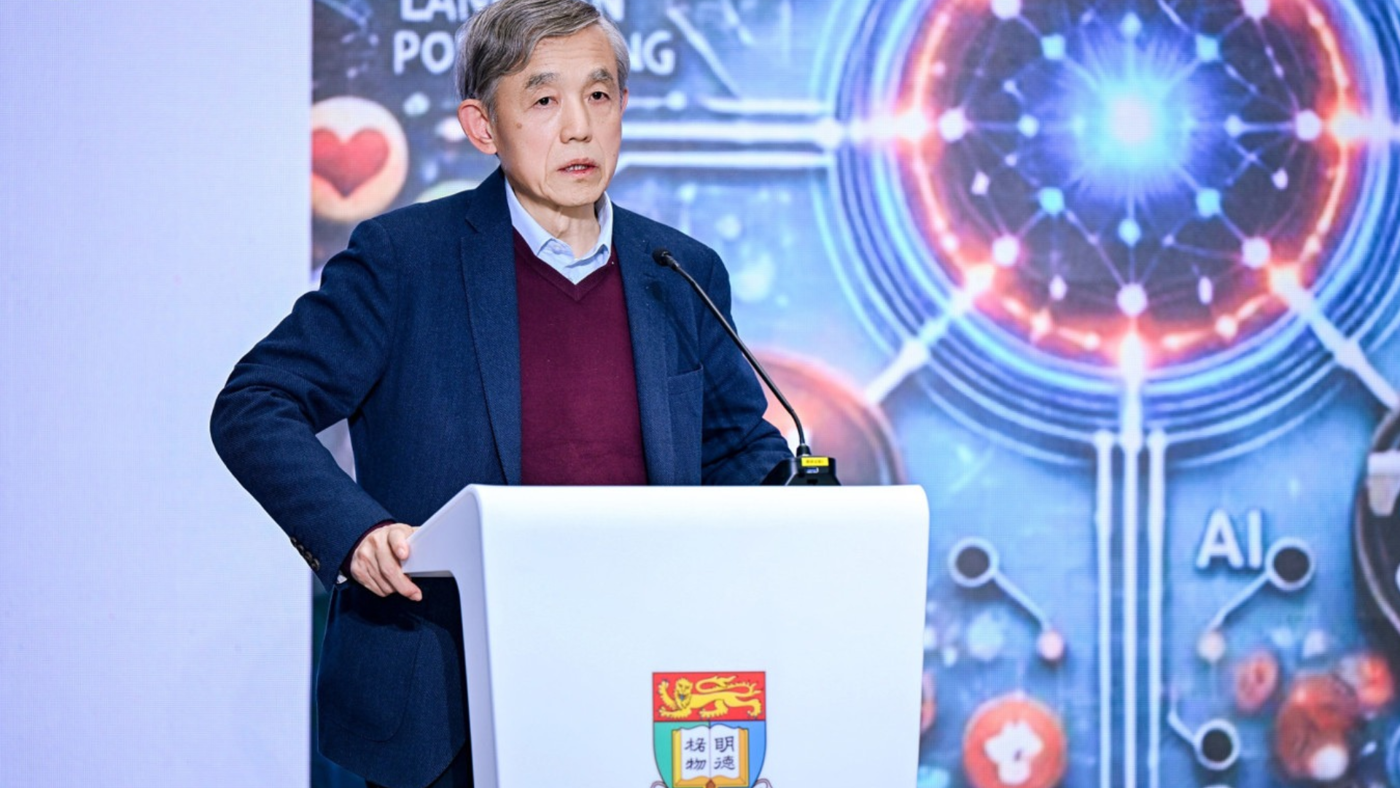
Editor’s note: This article was adapted from Professor Lan Xue’s keynote address at the HKU Talent Forum in Beijing on 31 October 2026. The views expressed are his own.
The question before universities is not whether they should permit a chatbot in the classroom. That question is already too narrow. The more important question is whether our institutional arrangements can still demonstrate that students have learned, that research is responsibly assessed, and that qualifications deserve public trust when artificial intelligence is part of daily academic work.
Generative AI has lowered the cost of accessing and producing some forms of information. It can retrieve, summarise, translate and generate text or code with startling speed. But it would be a mistake to conclude that reliable knowledge is now abundant, or that universities have lost their purpose. Trusted evidence, disciplinary expertise, laboratory access, mentorship, time and careful judgement remain scarce. A university's value has never rested only on controlling access to content. Its enduring responsibility is to create the conditions in which people learn to ask good questions, test answers, work with others and take responsibility for their conclusions.
The danger is an “empty-shell university”: students outsource their thinking to AI, the institution automates assessment, and students receive degrees without developing the knowledge and abilities those degrees are meant to certify. The remedy is not to ban useful tools, but to make a learner's reasoning, process and accountability visible.
AI will not affect every institution or discipline in the same way. Reliability, cost, data practices and educational fit vary. A laboratory course, a design studio, a clinical placement and a history seminar do not pose identical questions. Universities should avoid blanket bans and blanket embrace alike: they should make choices openly, test their effects and revise them as evidence accumulates.
That responsibility now requires institutional renewal. I use the term "institutional infrastructure" to mean the rules, organisations, standards, practices and shared capabilities through which a university teaches, assesses, employs, conducts research and awards credentials. In the AI era, this infrastructure deserves as much attention as any new model or application.
Consider assessment. When an unsupervised take-home submission can be substantially assisted by AI, the final product alone may offer weaker evidence of a learner's understanding. That does not mean that assignments, examinations or degrees have failed. It means that their design must be reconsidered. Universities should combine different forms of evidence: observed performance, oral explanation, iterative work, practical application, peer interaction and transparent declarations of AI use. The purpose is not to catch students out. It is to make reasoning, verification, application and responsible use of tools visible.
We should be equally cautious about the proposed remedies. More data does not automatically mean better education. A digital trace is not the same as genuine understanding. Any richer account of learning must protect privacy, respect student agency, provide clear criteria and allow errors to be challenged. High-stakes decisions about progression, discipline or credentials cannot be delegated to an automated system. AI may help identify patterns that deserve human attention; accountable people must make consequential judgements and explain them.
The same principle applies to teaching. I envisage a three-way relationship among learner, teacher and intelligent system. The learner remains active: framing questions, pursuing knowledge and reflecting on evidence. The teacher's role becomes still more consequential: guiding judgement, setting intellectual and ethical standards, and helping students connect ideas across contexts. The intelligent system can support this work through feedback, practice and access to relevant material. It should not substitute for the learner's effort or the teacher's responsibility. Used with a clear pedagogical purpose, AI can enrich learning; used merely to complete a task, it can conceal the absence of learning.
Renewal must also reach the organisation of knowledge. Disciplines matter because they preserve depth, methods and standards. They should not be discarded in the name of fashionable interdisciplinarity. Yet many of the problems that will shape the coming decades — from robotics and health technologies to AI safety and climate resilience — cannot be addressed from within a single field. Universities need durable routes for collaboration across engineering, computing, the natural sciences, medicine, the humanities and the social sciences. The challenge is to build more porous boundaries without losing the intellectual accountability that disciplines provide.
This may call for new organisational forms: cross-disciplinary institutes, research centres and mission-oriented teams that can respond to emerging questions. Several universities are testing arrangements that cut across conventional departmental structures. Such experiments are useful not because they supply a universal blueprint, but because they invite us to ask a practical question: how can an institution assemble the right expertise quickly enough to address a real problem, while sustaining the depth and continuity that serious scholarship requires?
Academic evaluation must be part of the same conversation. Counting papers, or treating the reputation of a journal as a substitute for assessing a piece of work, will not serve either science or society. We need evaluation that considers the quality and originality of research, the reliability of methods, the contribution to knowledge, teaching and professional practice, and the different forms of value created by different disciplines. This is not an argument against standards; it is an argument for more intelligent standards.
AI may help with carefully bounded administrative or discovery tasks, subject to institutional and publisher rules. It cannot bear scholarly responsibility. Human experts remain accountable for the methods, ethics, interpretation and conclusions that give research its value. The same is true of teaching and promotion: a university should seek credible evidence of contribution rather than confuse a readily counted output with the thing that matters.
Finally, universities will need shared digital capacity: secure computing, strong network infrastructure, governed data environments and tools that have been validated for educational value. I call this a new layer of institutional infrastructure, but it should not be understood as an argument to procure technology for its own sake. The real test is governance. Are these systems secure? Do they protect personal data? Are they accessible to students and staff with different resources and needs? Do they strengthen academic control, rather than outsource it? Can their outputs be scrutinised and contested?
These questions are practical, but they are also moral. Higher education is not simply a mechanism for delivering content or generating credentials. It is a public institution charged with developing capable people and sustaining trust in knowledge. AI makes that task more demanding, not less.
The university of the future should therefore be neither a museum of old routines nor a showcase for uncritical automation. It should be a place where technology expands human capability while human judgement remains visible, accountable and central. If we renew our institutional infrastructure with that purpose in mind, AI can become an impetus to make higher education more rigorous, more adaptable and more worthy of the trust that society places in it.
Related Topics
Related News