
Research & Discovery
HKU Study Explains How Earthquakes Can Trigger Seismic Events Thousands of Kilometres Away
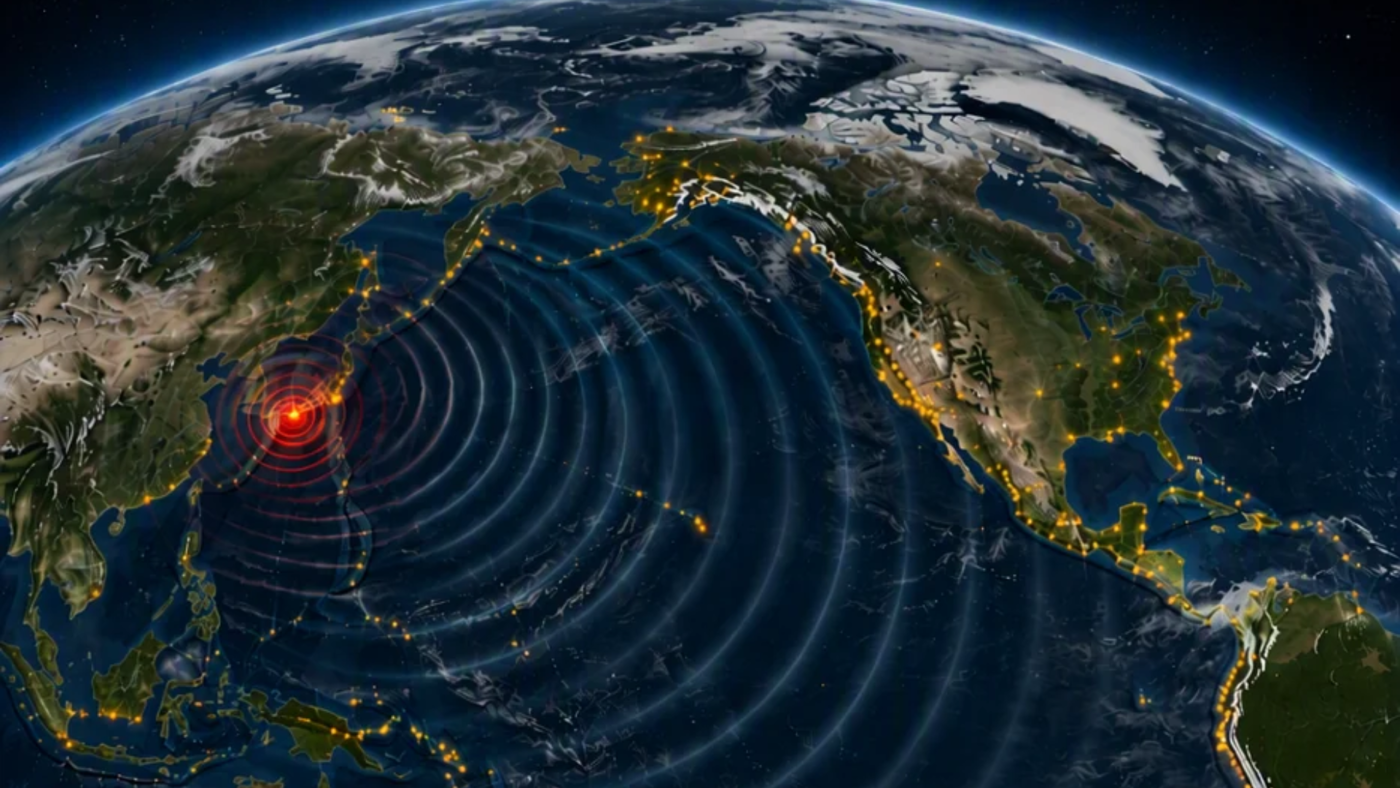
When a large earthquake strikes, its seismic waves can trigger additional quakes thousands of kilometres from the epicentre. Scientists have long observed this phenomenon, known as remote dynamic triggering, but two questions have proved stubbornly difficult to answer.
The first involves timing: Why do some triggered events occur long after the seismic waves have passed? The second is a matter of mechanics. Earthquakes generate several types of seismic waves. Love waves shake the ground side to side and exert relatively high shear stress on faults. Rayleigh waves roll along the Earth's surface in a motion that combines horizontal and vertical compression. In theory, Love waves should be the more potent trigger, yet observations consistently point to Rayleigh waves. Why?
A study by researchers at The University of Hong Kong proposes that both puzzles can be explained by what happens inside fault gouge, the layer of porous, granular material that lines the surfaces where tectonic plates or rock masses grind past one another.
Professor Jun Yang and PhD student Chao Huang, both from HKU’s Department of Civil Engineering, developed an analysis framework grounded in critical-state soil mechanics to simulate how fault gouge responds to passing seismic waves. Their simulations show that even very small wave-induced stresses can cause fluid pressure in the pores of the gouge to build up progressively, reducing the stress clamping the fault shut and weakening it over time.
The finding challenges the traditional view that seismic waves must be powerful enough to push a fault directly to failure. Instead, the researchers argue, waves can indirectly weaken a fault by elevating pore pressure. Because that pressure does not dissipate immediately after the waves pass, the fault remains in a vulnerable state, making it susceptible to rupture well after the initial disturbance. This offers a clear physical explanation for delayed triggering.
The study also found that compressional motion drives pore-pressure buildup far more efficiently than side-to-side shearing, explaining why Rayleigh waves, which are rich in compressional energy, are more closely linked to remote triggering than Love waves.
“This work transforms the remote-triggering problem from a classical stress-amplitude question into a coupled problem involving material rheology, fluid dynamics, and wave propagation,” Professor Yang said.
The paper was published in Science Advances.
Related Topics
Related News