
HKU Today
How Do You See the Invisible? Two CAS Academicians Talk Frontier Instruments at HKU
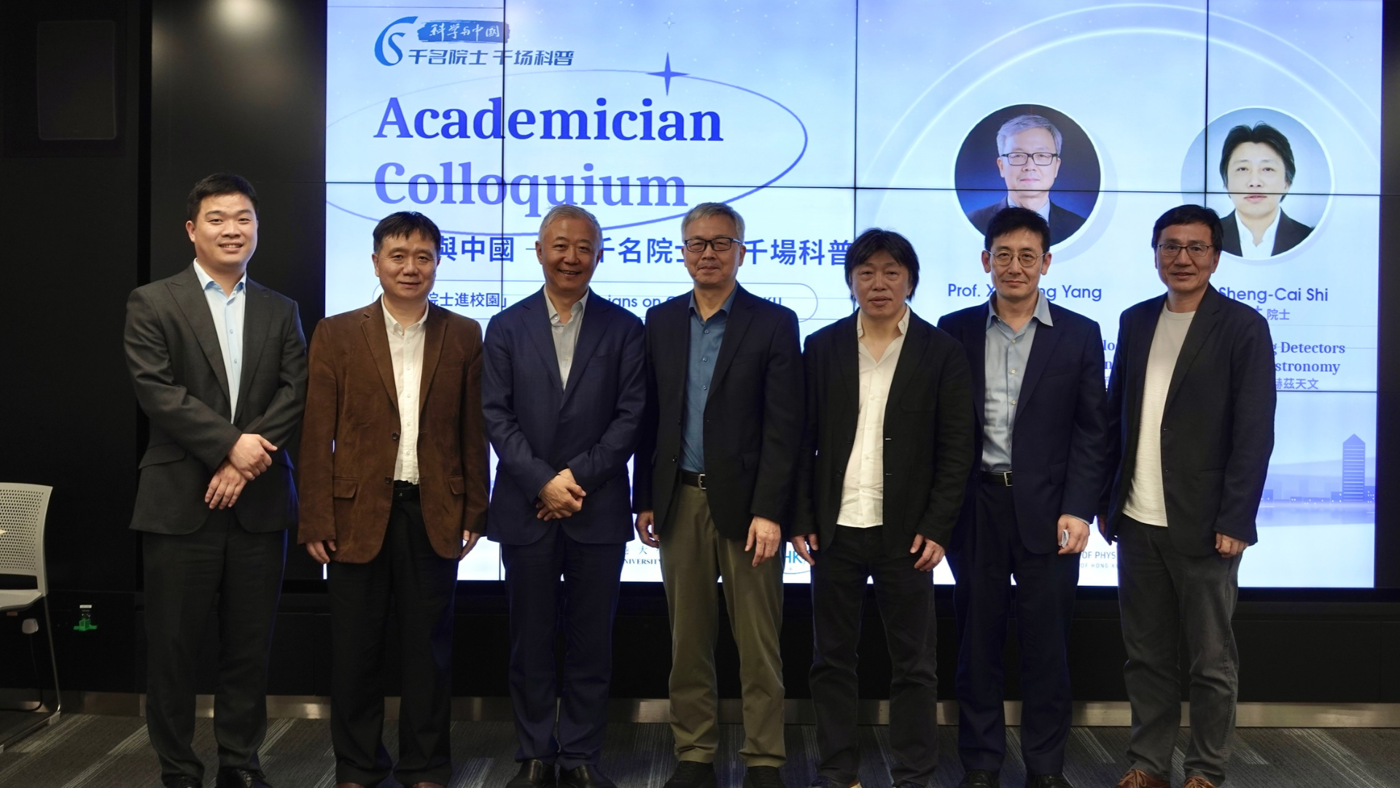
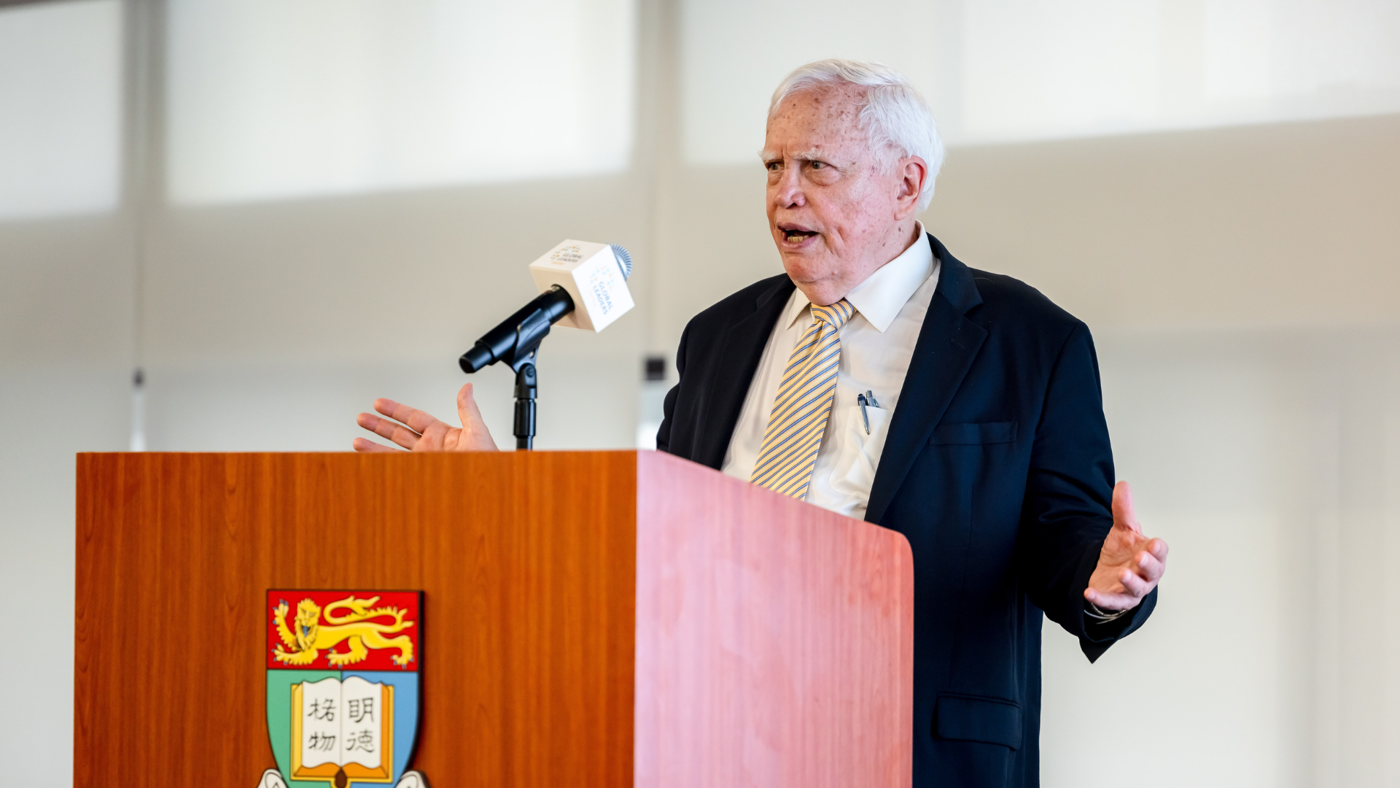
“Science often advances when someone builds a better eye,” said Professor Peng Gong, Vice-President and Pro-Vice-Chancellor (Academic Development) at The University of Hong Kong as he welcomed two Academicians of the Chinese Academy of Sciences (CAS) to campus for a public colloquium on November 13, 2026.
The event, held at the Digital Interactive Lab of the Main Library, featured talks by Professor Xueming Yang and Professor Sheng-Cai Shi, both leading figures in the development of scientific instruments that are allowing researchers to observe phenomena previously beyond reach.
Professor Yang, Chair Professor at the Southern University of Science and Technology and Distinguished Fellow of the Dalian Institute of Chemical Physics, spoke on “Free Electron Laser Technology and its Applications in Science.” A pioneer in quantum reaction dynamics, Professor Yang drew on his experience leading the construction of the Dalian vacuum-ultraviolet free electron laser to explain how these light sources extend laser science into the vacuum-ultraviolet and X-ray range, enabling new discoveries across physics, chemistry, and biology. The session was moderated by Professor Shuang Zhang, Interim Head of HKU’s Department of Physics.
Professor Shi, Professor and Chair of the Advisory Committee at the Purple Mountain Observatory, delivered a talk on “Superconducting Detectors and Terahertz Astronomy.” A leading expert in superconducting receivers, Professor Shi's team developed key components for the Atacama Large Millimeter/submillimeter Array (ALMA), one of the world’s most powerful astronomical observatories, located in remote northern Chile. He described the role of terahertz observations in landmark achievements including the first-ever image of a black hole. The session was moderated by Professor Bing Zhang, Chair of Astrophysics and Founding Director of HKU's Hong Kong Institute for Astronomy and Astrophysics (HKIAA).
Both talks were followed by audience questions, as the researchers engaged with young scientists interested in following in their footsteps.
"This programme aims to bring leading scientists face to face with young people, so that the scientific spirit is passed on in person," said Professor Gong.
The colloquium was part of “Science and China — A Thousand Academicians, A Thousand Science Talks,” an outreach programme organised by the Academic Divisions of the Chinese Academy of Sciences. Launched to bring frontier science directly to students and the public, the series sends CAS Academicians to universities and schools across China and beyond.
In China’s academic system, election as an Academician is among the highest scholarly honours in the natural sciences, recognising researchers who have made foundational contributions to their fields.
The event was co-hosted by HKIAA and HKU's Department of Physics.
Related Topics
Related News