Leadership
Do Not Confuse a Degree with an Education
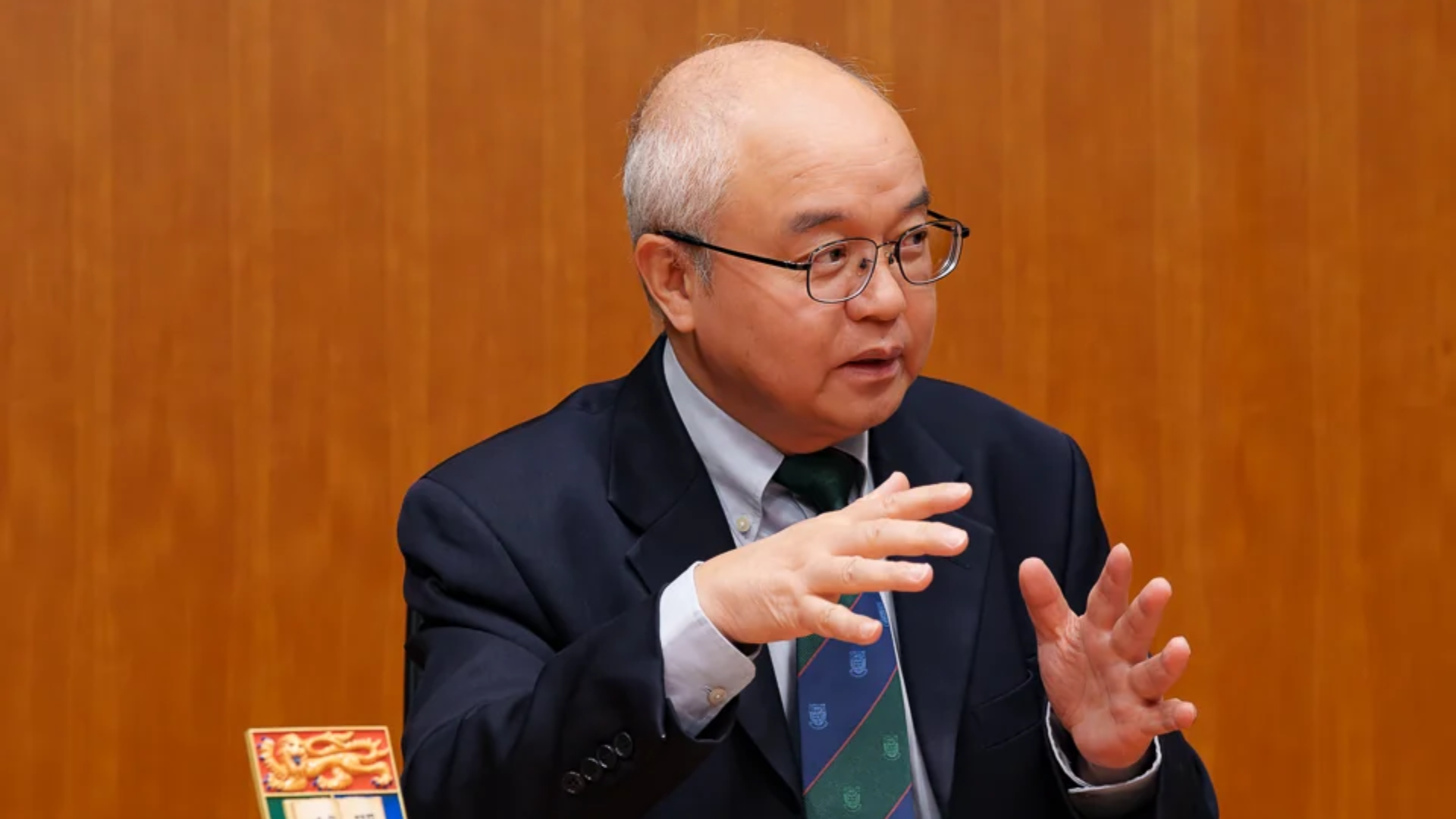
Editor’s note: This article was adapted from Professor Wang’s interview with Jiang Jiang for Inside the China Room with Jiang Jiang, recorded in Beijing on 31 October 2026 on the sidelines of the HKU Talent Forum. The Caixin interview Professor Wang mentions was published on 15 June 2026.
In a Caixin interview published on 15 June 2026, I said that universities needed to rethink their purpose in the age of artificial intelligence, and that waiting another ten years could leave us behind. A mere five months later, I realised I spoke too soon. Ten years is too generous. We need to begin within the next year or two.
But urgency does not mean abandoning everything we teach. One of the most misleading ideas about AI is that knowledge has become obsolete. Why learn algebra, physics or a language when a machine can retrieve an answer in seconds?
Because retrieving an answer is not the same as being able to judge it. If you do not understand the subject, how do you recognise a weak argument, pursue a promising idea or go beyond what the machine has offered?
Knowledge is not obsolete
I worry that we are entering an age of divergence. AI can become an extraordinarily powerful thinking partner for someone with analytical ability, broad knowledge and experience. It is available around the clock. For someone without those foundations, there is a greater risk of dependence on the answer rather than engagement with the problem.
This is not a claim that only experts benefit from AI. It can help beginners learn and perform tasks better. My concern is what happens over time if access to information is mistaken for the development of understanding. The same tool can support learning or become an excuse to stop learning.
China’s educational system is often criticised for emphasising foundations at the expense of creativity. The criticism deserves attention. But the conclusion should not be that foundations no longer matter. Creativity needs something to work with. A student cannot acquire mature judgement simply by being told to think critically.
We need to preserve rigorous learning while giving students more opportunities to question, explore and gradually develop their own judgement. This takes experience. You cannot turn someone into a creator in a day.
As a mathematician, I place particular value on a sound mathematical foundation. Beyond that, I am less interested in declaring one discipline safe from AI and another doomed. Whether you study mathematics or the humanities, the important question is how deeply you engage with it, and what that engagement enables you to understand.
Beyond the university stamp
The more uncomfortable question concerns what universities actually provide. Too often, education risks becoming a by-product of certification. The student wants a degree bearing a university’s stamp; the employer uses that stamp because it is difficult to judge an applicant’s abilities directly.
We should be honest about how much of higher education rests on this arrangement.
Imagine that employers become better able to assess a person’s knowledge, reasoning and experience directly, with AI helping them do so. Such assessments would need scrutiny; I am not suggesting that a machine can already measure someone’s worth in a few minutes. But if credentials become less useful as a shortcut, what are universities offering instead?
Our answer cannot simply be a more prestigious certificate. It has to be education.
I think successful higher education will become more vertical: students will need to pursue a subject deeply enough to encounter difficult problems, test their assumptions and develop something beyond a standard answer. Breadth remains necessary. It supplies the knowledge and perspectives from which judgement grows. But breadth without depth can leave students familiar with many subjects and capable in none.
For a student choosing a major, my advice is therefore not to chase the latest prediction about which profession will survive. Find a direction in which you can develop serious analytical ability. Learn enough to ask better questions, and then keep going. The aim is not merely to survive the AI age. It is to excel in it.
Talent changes the map
My confidence in education’s capacity to change lives is rooted in experience. I entered the University of Science and Technology of China in 1978. Even at that excellent institution, we could not offer every mathematics course we needed, including some foundational subjects.
Over time, professors acquired new knowledge, researchers trained overseas returned, and the capacity to teach and conduct research grew. What had once depended heavily on learning from elsewhere became increasingly self-sustaining. That change shapes my optimism about China’s scientific future.
Talent is not permanently attached to a particular country or institution. Students themselves help make a university excellent. A gathering of ambitious, capable young people changes the environment around them. Established reputations matter, but they are not destiny.
For Hong Kong, the opportunity is to attract scholars from everywhere, not only Chinese researchers returning from overseas. Our international character and the use of English in academic exchange help. So does a research environment that, in my experience, gives scholars considerable room to pursue what interests them, rather than constantly compete for another academic title.
That room matters. Recruiting talent is not simply about bringing distinguished names through the door. People need an environment in which they can do the work they came to do.
That is also why I regard efforts to cut off scientific exchanges as a mistake. China’s growing capacity gives me confidence that its research will continue to develop. But shutting talented people out is a poor way for any country to strengthen its own science.
AI makes the future of research harder to predict, including in my own field. I cannot confidently tell you what mathematics will look like in five years. That uncertainty is a reason to rethink education, not to give up on it.
At the end of my podcast conversation with Jiang Jiang, I was invited to recommend something. I chose neither a mathematics book nor an AI tool. I recommended paying attention to Hefei, where I was born, and visiting Huangshan, where my parents came from.
I remember when people regarded Hefei’s location as a disadvantage for a university. Its subsequent transformation is a reminder to be careful about assuming where opportunity belongs. We should be equally careful about deciding what today’s students can become.
Related Topics
Related News