

Research & Discovery
Hidden Leaf Cycles in the Amazon Could Reshape Carbon Estimates, Nature Study Finds
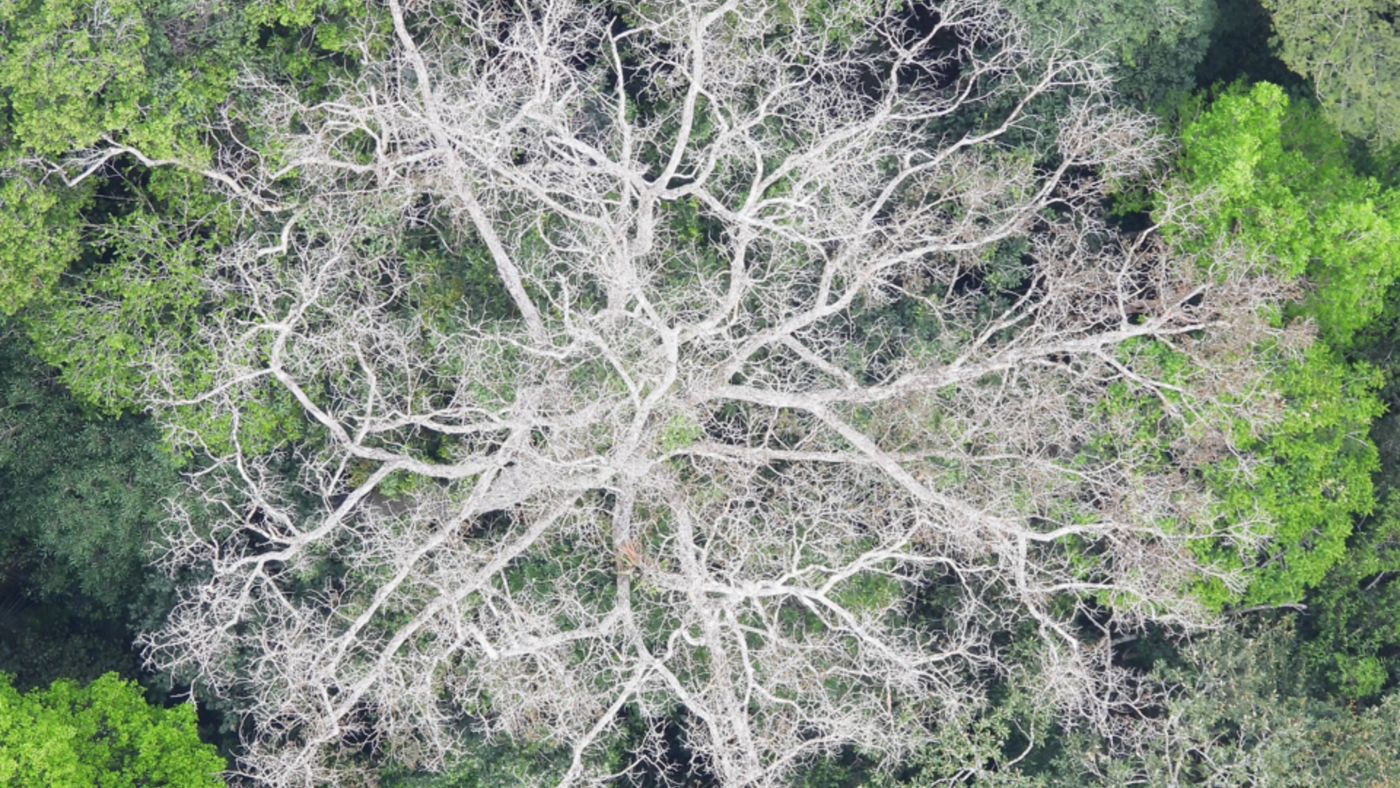
From space, the Amazon rainforest appears as an unbroken sea of green. But a study just published in Nature by researchers at The University of Hong Kong reveals that, within this seemingly consistent canopy, trees are continuously shedding and regrowing leaves in seasonal patterns that have largely escaped detection.
Amazon trees do not follow the familiar temperate pattern of autumn colour and winter bareness. Instead, they shed older leaves and grow new ones at different times. Although the rainforest appears green throughout the year at broader spatial scales, individual tree crowns can experience pronounced seasonal leaf loss. Conventional satellites tend to register only that surface greenness, making the underlying turnover difficult to track.
To overcome this, the research team, including Professor Jin Wu of HKU’s School of Biological Sciences and HKU postdoctoral researcher Dr Guangqin Song as first author, combined machine learning with high-resolution Sentinel-2 satellite imagery to map monthly changes in the proportion of leafless canopy across the basin.
The results show that 75.4% of mapped Amazon forests undergo substantial seasonal changes in leaflessness, including areas long considered evergreen. Across 70% of the Amazon, seasonal leaf loss precedes canopy greening by at least three months, indicating that different regions follow distinct schedules of leaf replacement.
This matters because leaves of different ages do not photosynthesise equally. Photosynthetic capacity changes as leaves develop, mature, and age, so two patches of forest that look identically green from above may in fact be taking in very different amounts of carbon. When the researchers incorporated leaf loss, renewal and ageing into their models, the estimated annual photosynthetic carbon uptake across the Amazon differed by 9.4% from conventional estimates, a gap equivalent to roughly 1.42 billion tonnes of carbon per year.
The researchers also found that hydroclimate is the strongest predictor of the timing gap between leaf loss and greening, followed by soil properties and light availability. Greater seasonal water stress was associated with a wider separation between the two cycles.
When leaf turnover and leaf age dynamics were incorporated into photosynthesis models, simulations of seasonal photosynthetic activity improved across 79.9% of Amazon forests, validated against independent satellite observations. Ground-based measurements further supported these findings. The 9.4% difference represents a gap between model estimates rather than a directly measured change in carbon storage, but it underscores how overlooked biological processes can ripple through global carbon calculations.
“By mapping both leaflessness and greenness, we can now distinguish different seasonal strategies across the basin and better understand what they mean for forest function,” Dr Song said.
The study builds on Professor Wu’s 2016 paper in Science, which linked leaf age to seasonal photosynthesis at Amazon research sites, and extends this understanding to the entire Amazon basin.
“If we want to predict the future of the Amazon's carbon sink, we need models that reflect the real biological rhythms of the forest,” Professor Wu said.
Related Topics
Related News