
Research & Discovery
More Typhoons, Drier Air? HKU-ICL Team Solves Climate Modelling Mystery
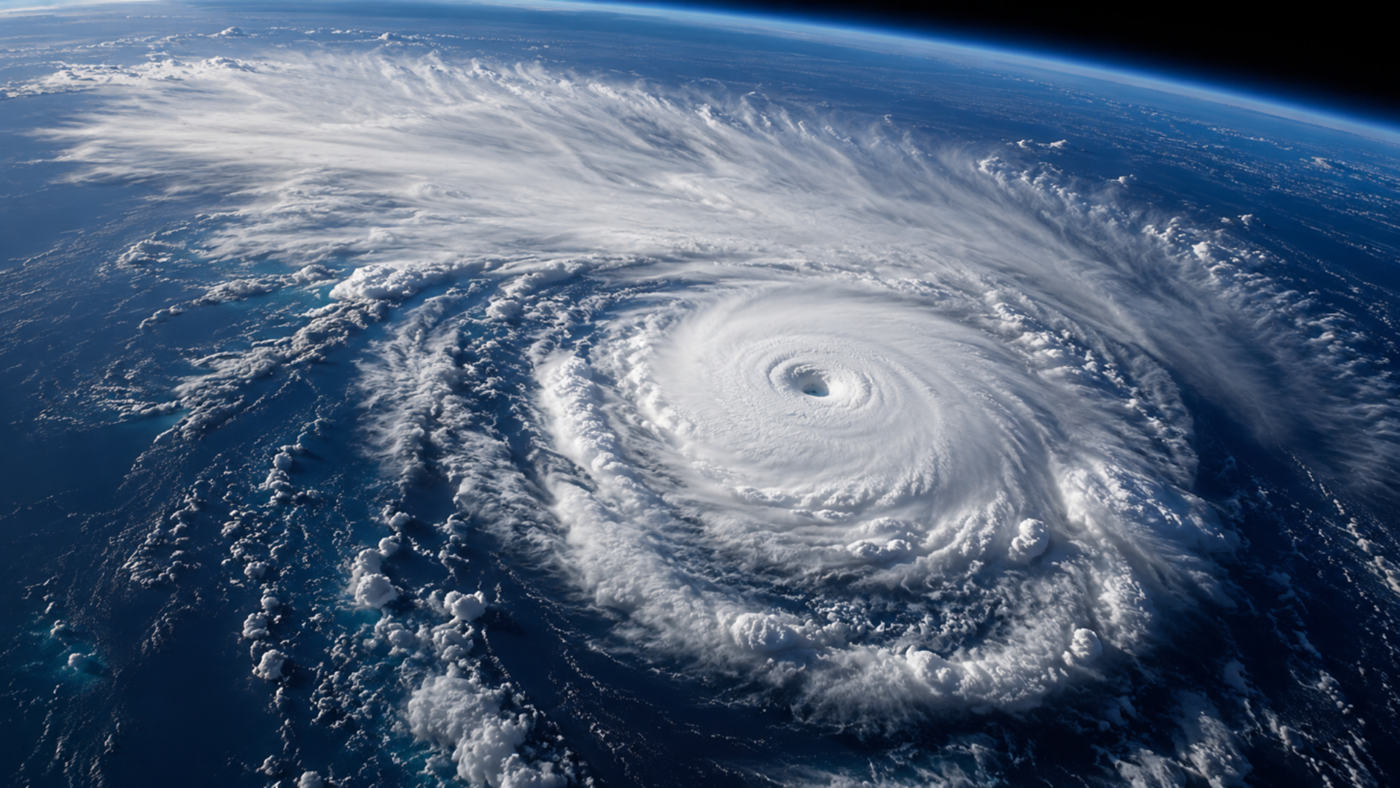
As the earth warms, many scientists expected climate change to bring more intense rainfall from typhoons and hurricanes. But close analysis of climate modelling projections reveals a curious phenomenon, as many models project rainfall increases far lower than the underlying physics would seem to suggest.
A new study led by researchers from HKU and Imperial College London may have found the missing piece of the puzzle: increasing atmospheric dryness. Published in the prestigious journal Nature Geoscience, the paper shows that, while a warmer atmosphere can hold more moisture, it paradoxically also becomes drier in ways that suppress rainfall.
The tipping point
Generally, rainfall occurs as water vapour condenses into cloud droplets, coalesces into raindrops, and – after reaching a saturation point – falls to the ground.
In a warming climate, however, the atmosphere’s moisture-holding capacity increases exponentially. Thus, even if relative humidity remains constant, the gap to “complete saturation” widens significantly, meaning the air functionally becomes drier.
To reach these findings, the team, consisting of Professor Dazhi Xi and Dr Jianan Chen from the HKU Department of Earth and Planetary Sciences and Professor Ralf Toumi from ICL, analysed climate simulations, satellite observations, and other data.
Notably, although atmospheric dryness dominates in some climate models, this framework does not rule out an increase in precipitation efficiency if future storm intensification outweighs the suppressive effect of atmospheric dryness.
Coastal protection
The study’s findings have important practical implications, the authors say. For coastal communities, disaster managers, and infrastructure planners, more accurate rainfall projections from future hurricanes and typhoons are critical for flood protection, evacuation planning, and climate resilience. By accounting for the effect of atmospheric dryness, the new framework could improve rainfall and flood-risk assessments and support better-informed climate adaptation planning.
The study also notes that global climate models do not fully capture some fine-scale processes. Future high-resolution simulations will therefore be needed to refine the projections.
Nevertheless, multiple datasets and models consistently show that greater atmospheric dryness reduces rainfall efficiency. This negative correlation underscores the importance of incorporating atmospheric dryness into future climate projections.
Related Topics
Related News