
HKU Today
HKU SMASH Table Tennis Team Takes Silver in World Humanoid Robot Games
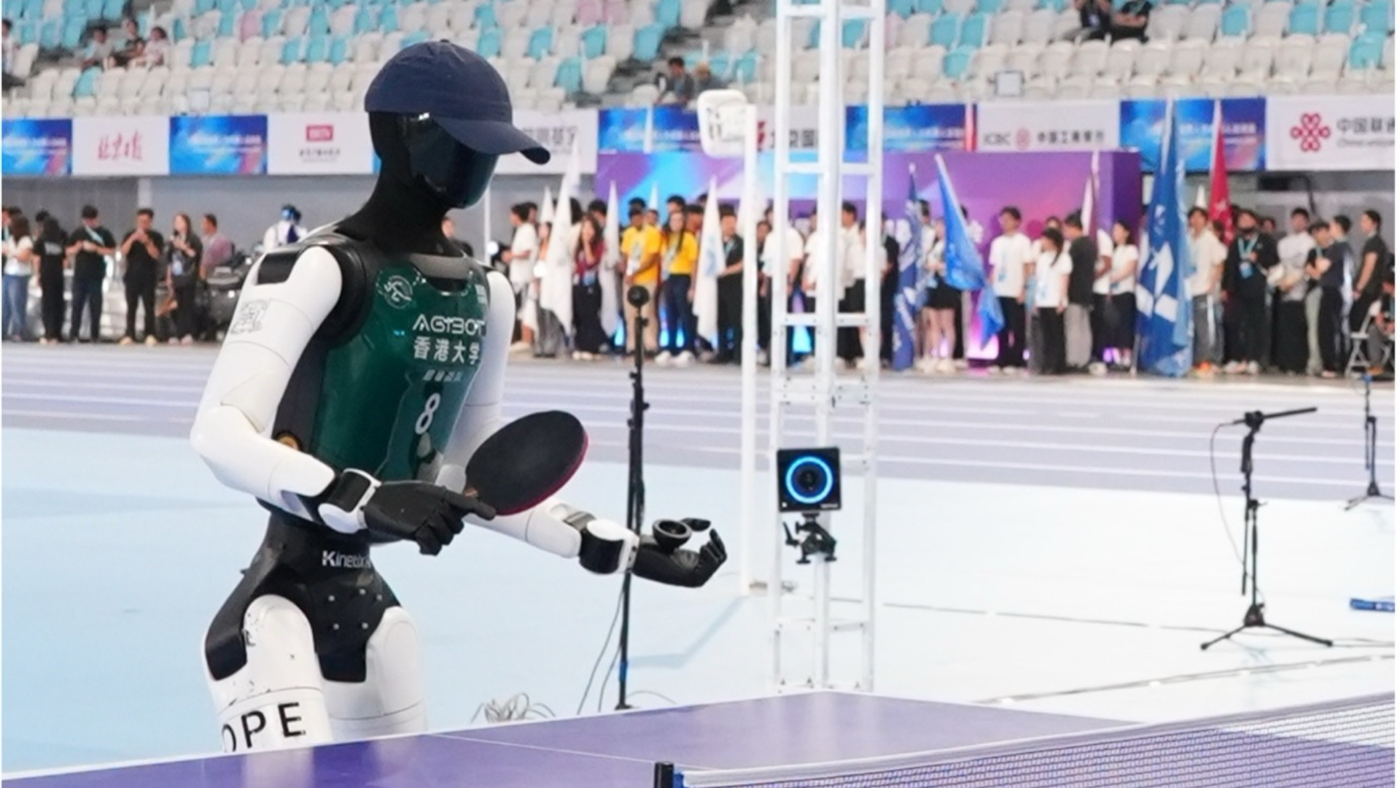
The HKU SMASH Team won silver in the table tennis event at the second World Humanoid Robot Games in Beijing, reaching the final of a competition that tests whether humanoid robots can anticipate and return a fast-moving ball without remote control.
Led by Professor Ping Luo, Associate Director (AI Research and Tech Transfer) of HKU’s School of Computing and Data Science (CDS), the team advanced to the final on 25 August after defeating a joint team from Shanghai Jiao Tong University and the Shanghai Innovation Institute, as well as Shenzhen University, before ultimately securing the silver medal.
SMASH is a young research group whose members are mainly HKU doctoral students. Its system brings together visual perception, ball-trajectory prediction, motion planning and whole-body control. Rather than relying on overhead cameras or motion-capture equipment, the robot uses egocentric onboard perception to estimate both the ball’s and the robot’s state in real time.
The team says their robot has achieved rallies of more than 100 consecutive shots with human players, thanks in part to the use of large-scale human-motion data to preserve coordinated, natural-looking movement while placing the racket accurately.
That precision matters in table tennis, where a light ball travels quickly and each return requires a new decision. But it could also unlock new frontiers in medicine, services, and other fields according to Professor Luo.
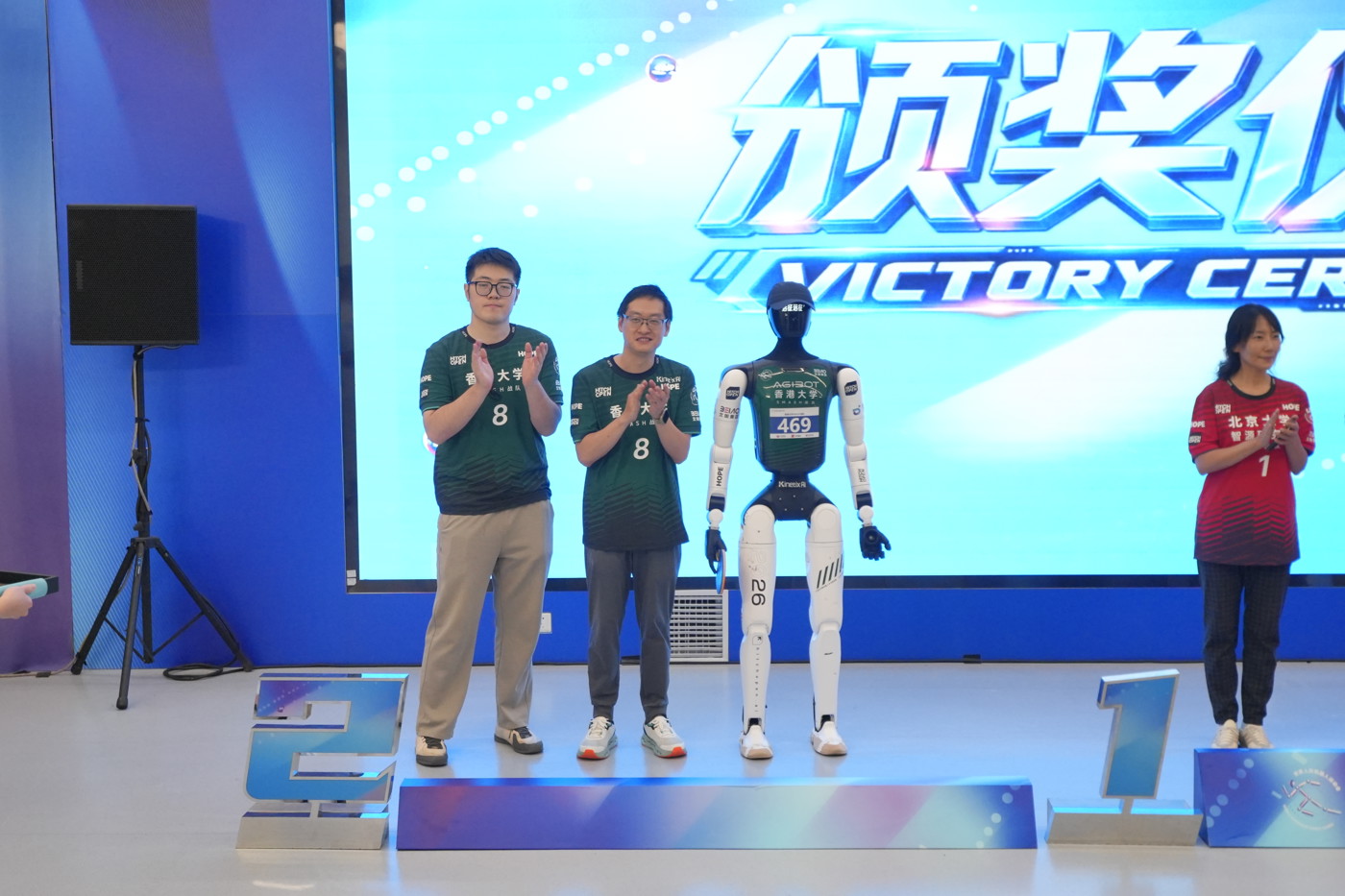
“Today, they (SMASH Team members) are using small ping pong paddles to shake up the world’s understanding of humanoid robotics,” he said. “Tomorrow, we have reason to hope that this “one brain, multiple forms” approach to embodied intelligence systems could go beyond the arena to change our lives for the better through medical applications, services, and more.”
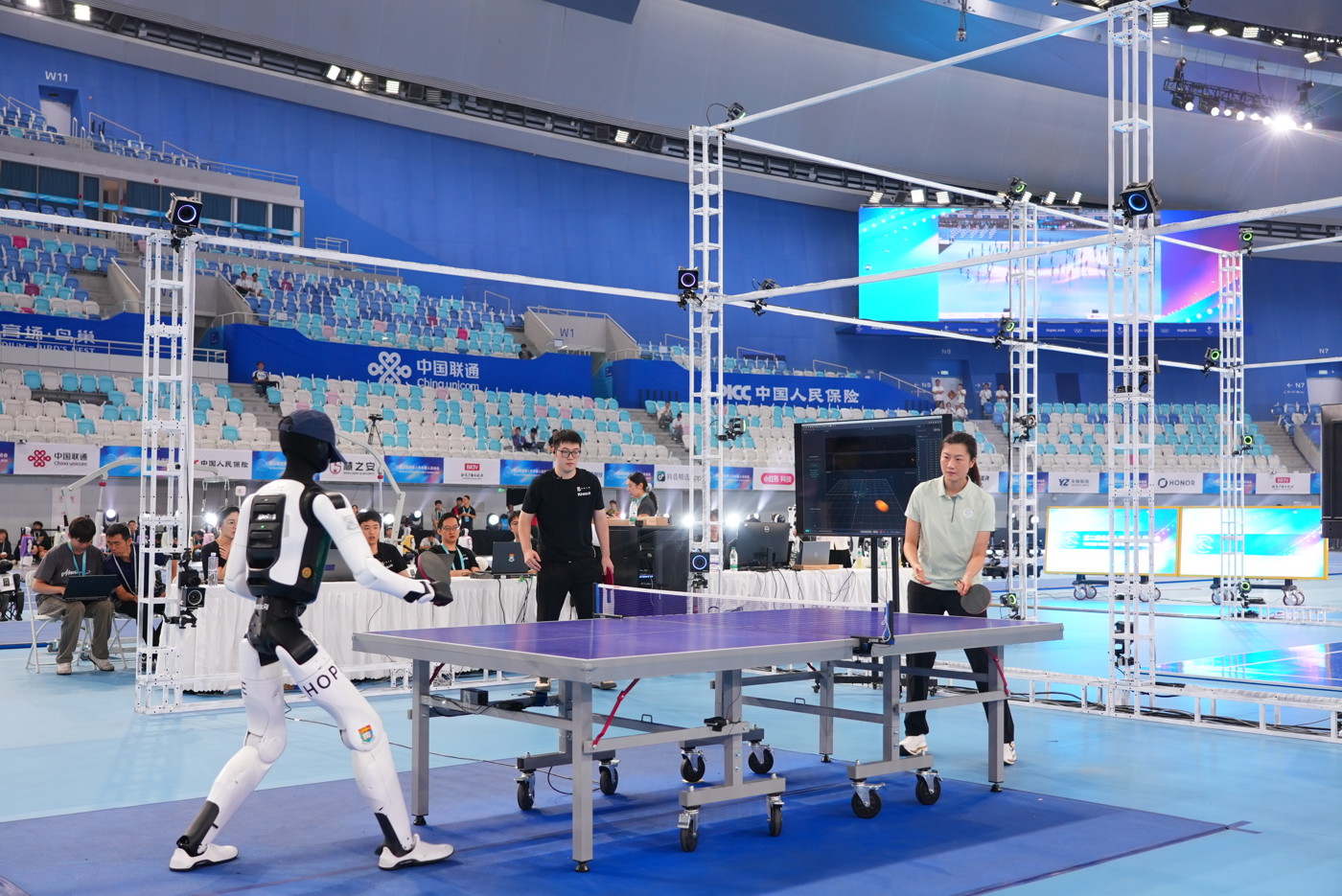
In addition to the table-tennis event, SMASH was also invited to take part in an opening-ceremony demonstration at the Games, where the robot rallied with Olympic and world table-tennis champion Ding Ning.
The Beijing result follows another recent HKU robotics success. On 23 August, HKU Robocon won its first Grand Prix at the Asia-Pacific Broadcasting Union’s Asia-Pacific Robot Contest 2026 in Hong Kong, overcoming university teams from 15 countries and regions. That student team had earned the right to represent Hong Kong, China after winning the local competition in June.
The two results came in different competitions and involved different teams, but together they show the range of robotics work and student-led engineering activity at HKU – from multi-robot coordination in a regional contest to high-speed humanoid interaction in Beijing.
Related Topics
Related News