
Research & Discovery
HKU Researchers Develop New Techniques for More Realistic Holographic Displays
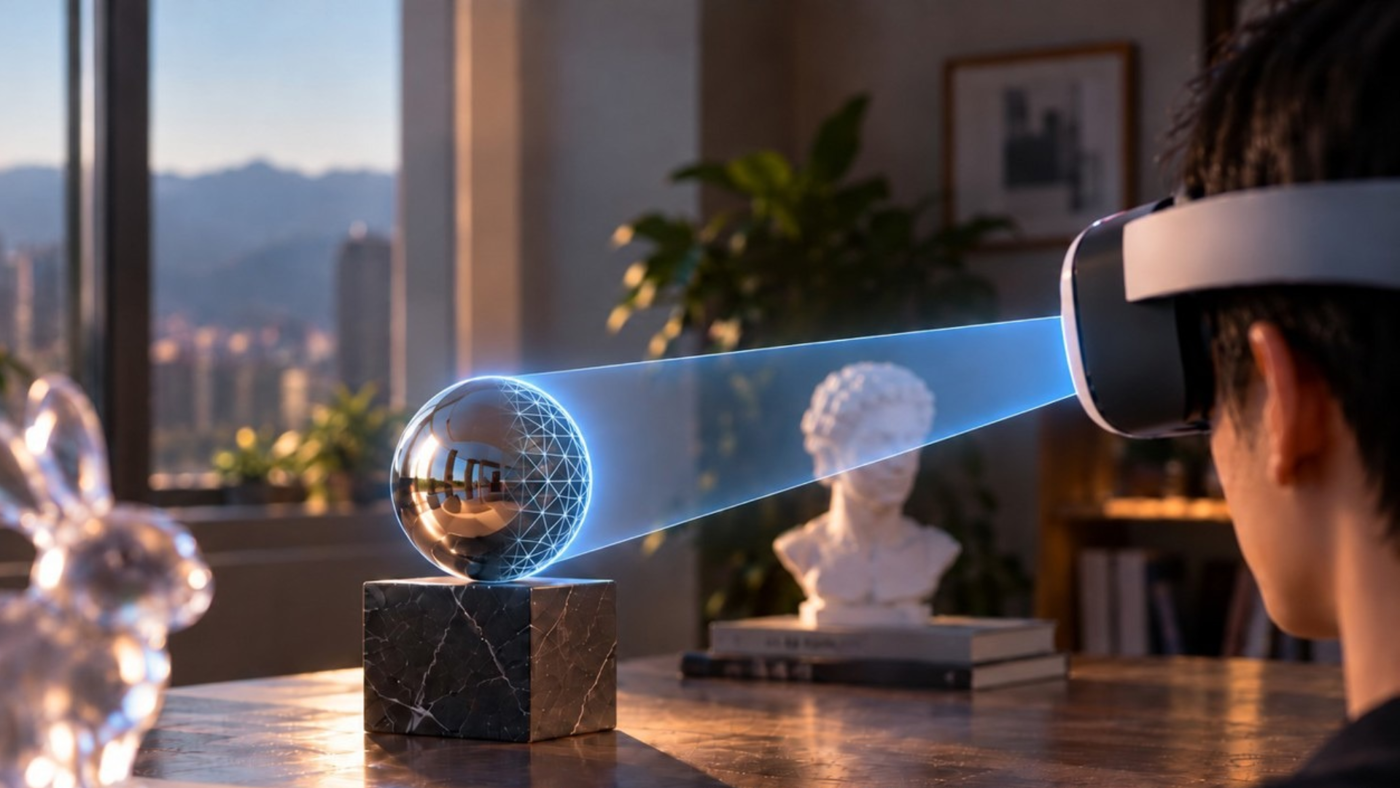
Look around your room. How much do you actually see at any given moment? Perhaps nearby objects are sharp while distant ones blur. Surfaces hidden from one angle appear from another. Highlights shift across a glossy table as you move your head. These everyday visual cues are what make a scene feel real, and they are exactly what today’s holographic displays struggle to reproduce.
A research team at The University of Hong Kong, led by Professor Yifan Evan Peng of the Department of Electrical and Computer Engineering, has developed two new techniques that bring holographic images significantly closer to this kind of natural visual experience.
The first, published in Nature Communications, starts from the same polygon meshes used to build 3D models in animation, engineering, and scientific visualisation. By working directly with these surface descriptions rather than converting them into flat images first, the method preserves the scene's geometry and depth throughout the hologram generation process. AI-based calibration then compensates for imperfections in the physical display system. In laboratory tests, the approach produced smoother changes in focus, clearer image detail, and correct visibility of objects from different viewing positions.
“Using meshes allows us to retain the 3D structure of a scene throughout hologram generation,” said Mr Xiangyu Meng, co-first author of both studies.
The second technique, called HoloPathTracer, tackles a different challenge: how light interacts with materials. Mirrors reflect, glass bends light, and glossy surfaces scatter it in different directions. By combining path tracing, a standard computer graphics technique for following light through a virtual scene, with wave optics, the method can reproduce reflections, refractions, shifting highlights, and indirect illumination alongside natural changes in focus and viewpoint. The study was published in ACM Transactions on Graphics and presented at ACM SIGGRAPH 2026, one of the leading international conferences in computer graphics.
"HoloPathTracer further models how light physically interacts with scene geometry and materials," said Mr Wenbin Zhou, co-first author of both studies.
Together, the two approaches address complementary parts of the same goal: turning detailed digital worlds into convincing three-dimensional visual experiences. The mesh-based method provides a calibrated route from familiar 3D models to holographic images, while HoloPathTracer extends what those images can show.
The work remains at the research-prototype stage, the team says. Real-time consumer applications will require faster computation and further advances in the devices that shape light in holographic displays.
Nevertheless, they believe their tech could have major implications for holography development. “We believe this direction could help enable more natural and visually realistic holographic experiences for future VR and AR systems,” said Professor Peng.
The header image was generated by AI for illustrative purposes.
Related Topics
Related News