
People
The Science Behind Buying the Wrong Thing
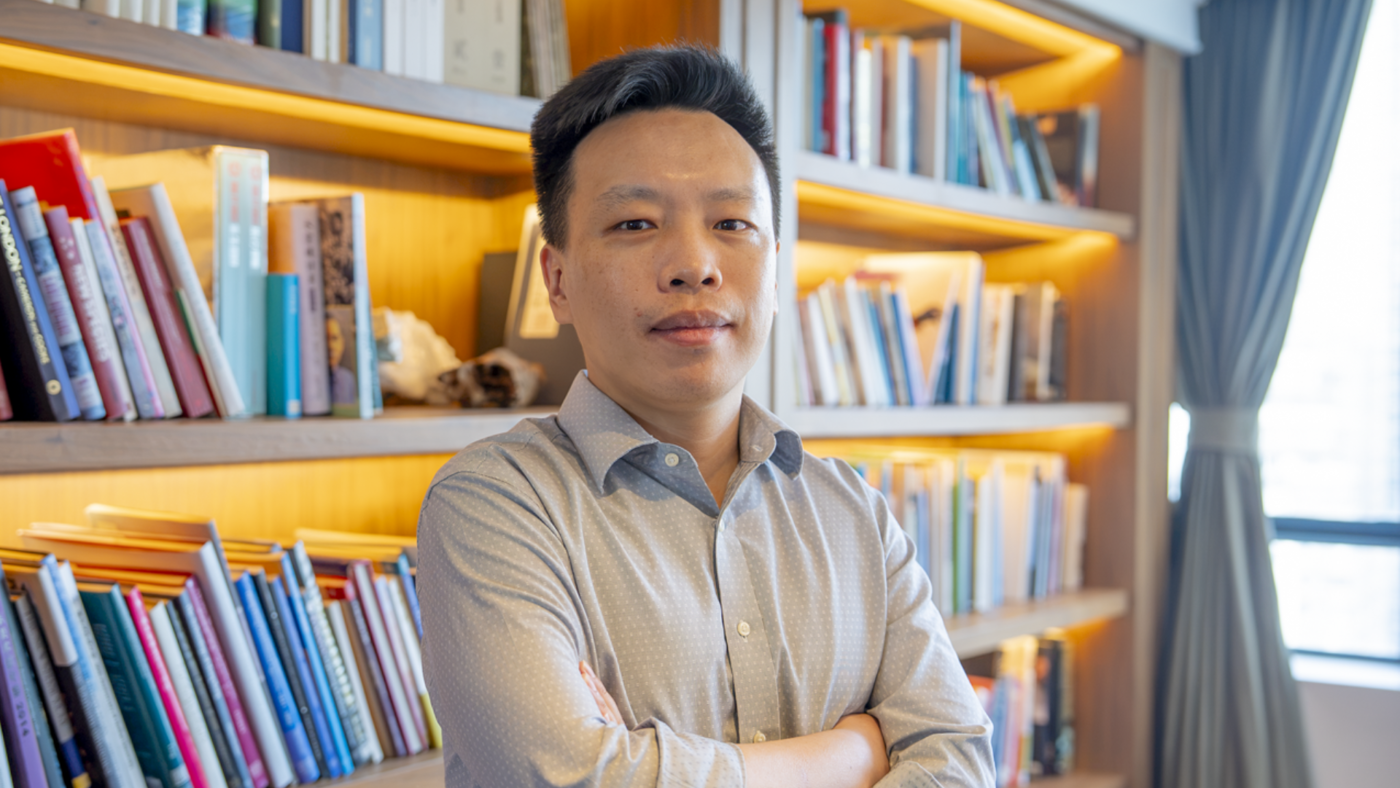
When HKU Professor Michael He Jia goes to the market, he’s looking for more than just groceries.
As the Deputy Area Head of Marketing at HKU Business School, Professor Jia has spent years trying to understand what drives consumer decision-making, and why so many of us make seemingly irrational purchasing decisions. That work has earned him widespread recognition – including the HKU Business School Outstanding Researcher Award (2025) and honours from the American Marketing Association – while highlighting how academic research can have a real impact on marketing strategies.
“Marketing research is more than just creating a buzz; it’s about understanding human behaviour at a fundamental level”, Professor Jia says. “Marketing is about making the world a better place by making consumers happy and encouraging them to do good for society and the environment.”
Professor Jia’s research is driven by a simple question: How do consumers make decisions in real life, often with limited cognitive resources? His work shows that people often ignore the calculations needed for coupons that aren’t built into the price and instead focus on the prices they see, a phenomenon called “final price neglect.” This mental shortcut causes shoppers to overlook the true final cost after discounts, leading to choices that might not be fully rational but are actually based on how the information is shown.
For example, Professor Jia ran an experiment where consumers saw two power banks that vary in battery capacity and price, under one of two different presentations of the same promotion — one with a direct discount on the price tag, and the other with a coupon that applies at checkout.
The results showed that small differences in how the deals are presented can change what people prefer. When the discount is clearly shown on the price tag, they tend to pick the cheaper option based on the displayed final prices. But when a coupon is involved, they often pick the more expensive option, based on the original prices, because they do not bother calculating the final prices. “This shows how small changes in how a promotion is shown can lead to very different shopping choices,” Professor Jia explains.
This research is especially useful in the busy shopping environment in big cities, not limited to Hong Kong, where people are always making quick decisions. Understanding these small biases helps shoppers make smarter choices and guides stores to create clearer, fairer promotions. “Our goal is to help shoppers make better decisions and help companies design promotions that are both effective and responsible,” Professor Jia says.
His work also shows how important it is for academics and businesses to work together. Ideally, by teaming up with different companies, Professor Jia hopes to improve how promotions are made and to promote good social values — challenging the idea that marketing is only about increasing sales. Instead, it’s about shaping how people see and act in society in a positive way.
“Understanding these biases not only helps consumers but also gives companies the insights they need to develop clearer, more responsible marketing”, he says. He adds that his work shows that behind every successful promotion is a careful look at how people think and decide — something that can benefit society as a whole.
Related Topics
Related News