
Leadership
AI Can Make Us More Capable. It Cannot Tell Us What Progress Means.
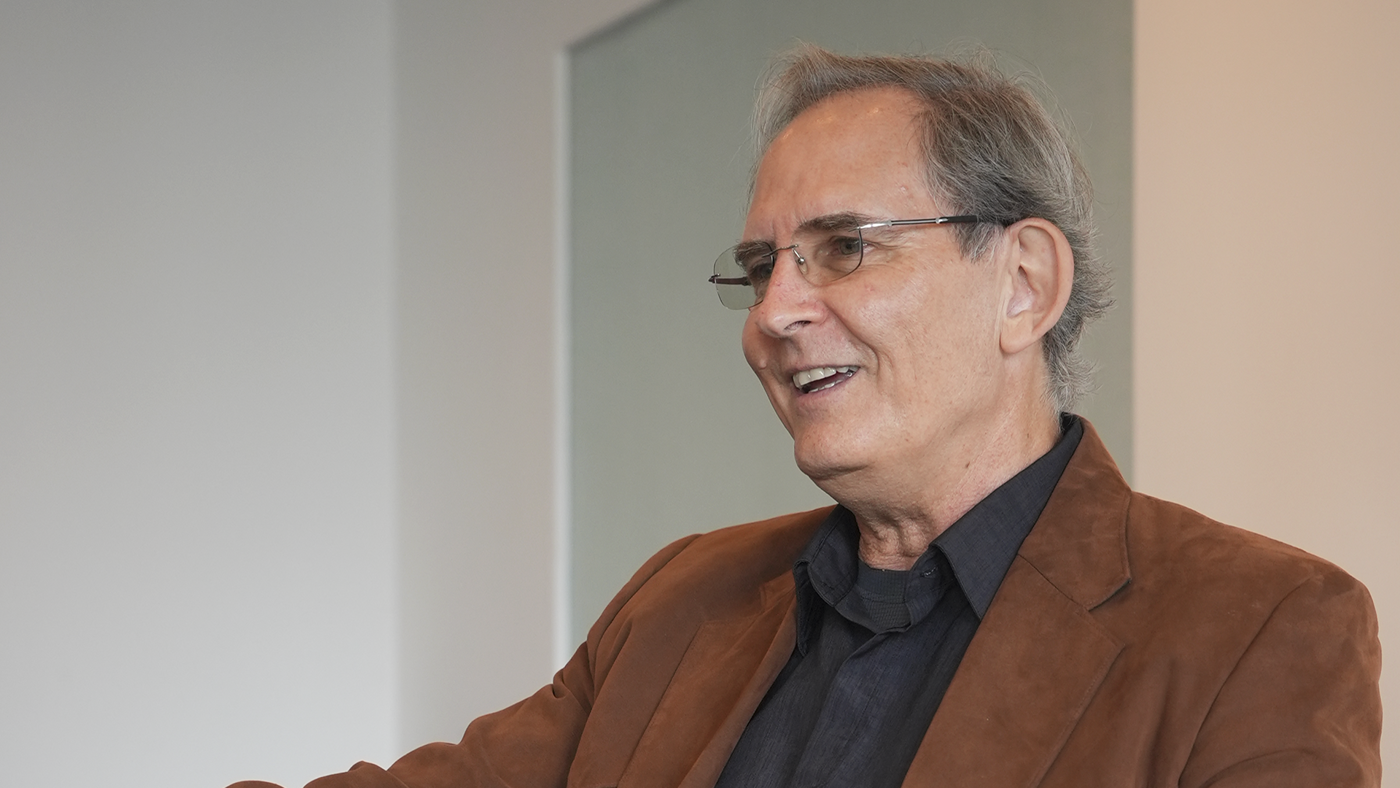
This opinion piece was written by Professor Jay Siegel, Vice-President and Pro-Vice-Chancellor (Teaching and Learning), The University of Hong Kong.
Artificial intelligence has brought us to a moment of extraordinary possibility. It can detect faint signals in oceans of noise, recognise patterns beyond unaided human attention, and help design experiments that could otherwise take years. It can make systems more efficient, open paths in science and medicine, and widen access to tools once reserved for specialists.
Statistics, optimisation and control theory can help us use information and resources better. But as we become increasingly impressed by what these systems can do, we should pause over a simpler and more difficult question: what do we mean by progress?
At the 2026 Inclusion Conference on the Bund in Shanghai on 10 September, I argued that several distinctions are easily blurred in our excitement about AI. Knowledge is not wisdom. Productivity is not accomplishment. Continuing education is not lifelong learning. And the wealth of nations is not necessarily the welfare of society.
Knowing does not ensure wisdom. Being more productive does not ensure that anyone’s life is more meaningful. An economy can grow even though people become less able to act, contribute, belong and take responsibility for the world around them. Indeed, wisdom, meaning, and societal responsibility are the hallmarks of a great society.
There is no society without people. Human beings do not merely supply data, labour or consumer demand to a system; they are the reason a society exists. The welfare of society must therefore be human-centred and inclusive. It must ask whether people are better able to live purposeful lives, not only whether processes are faster, cheaper or more predictable.
AI cannot answer these questions for us. Although, AI can process information at a scale that no person can match. AI cannot tell us what is worth knowing, which goals deserve to be optimised, what we owe one another, or what kind of society we wish to become.
The cost we must learn to see
Human societies are right to value efficiency. Better tools have reduced drudgery, improved health, extended communication and solved problems once thought beyond reach. An AI system that helps a doctor identify a subtle signal in an image, a researcher detect a promising pattern, or a city use energy more intelligently can be a genuine public good.
But efficiency is not fulfilment. A system may perform a task faster than a person, yet leave unanswered whether removing the person makes the larger human system better. It may lower one visible cost while raising others that are harder to count: the loss of an early opportunity for a young worker to develop judgment; the weakening of a professional community; or the erosion of trust when no one is clearly accountable for a decision.
These are not romantic objections to change. Work has always changed with technology. But substitution is not a sufficient measure of success. A cheaper system tells us something important. It does not tell us everything important.
History should make us wary of that error. We are often skilled at calculating the immediate cost of a new technology and poor at anticipating its longer-term consequences. Benefits are concrete and immediate; unintended effects emerge later, unevenly and sometimes far from the first decision.
Consider chlorine. Modern water treatment made dense urban life safer and reduced waterborne disease, yet later generations have had to manage trade-offs outside its original promise. Petroleum’s exceptional energy density powered industrialisation, mobility and prosperity. But its combustion costs—to climate, public health and the future—were not fully priced into the earlier economic bargain. We enjoyed the benefits as they accumulated; we now confront how to pay for remediation.
The point is not that these innovations were mistakes. It is that progress can solve one problem while creating another, and that we are tempted to call a technology successful before we have measured its full social cost.
This is the discipline we need for AI. When a system promises greater efficiency, we should ask not only what it saves, but what it may cost over time. What dependencies might it create? Which inequalities could it deepen? Who will be responsible when a high-stakes decision is wrong? Which skills, relationships and sources of human confidence might be diminished? What safeguards will be necessary, and have we planned and paid for them before the costs are passed to others?
The potential dehumanisation of work and public life belongs in that calculation. I do not mean simply that machines are used. I mean the gradual treatment of people as replaceable inputs; the loss of meaningful participation in decisions that shape their lives; the weakening of agency, responsibility and recognition. If automation leaves people less able to develop competence, exercise judgment, contribute to their communities or find purpose in their work, those are not incidental effects. They are social costs.
We should be willing to bake such costs into our economic models. Not every human good converts neatly into a price, and difficulty of measurement is not a reason to declare a cost nonexistent. We already make choices about what to count. The more responsible choice is to count what matters to human welfare, including the conditions that allow people to remain active authors of their own lives.
Education is practice, not performance
This is why education has a distinctive responsibility in the age of AI. Universities must ensure that students understand and use new tools well. They should learn how to work with AI, recognise its strengths and limitations, and participate intelligently in an economy being reshaped by it.
But that is only the beginning. Education is not the delivery of information, and it is not a performance staged for credits, examinations or diplomas. Its deeper purpose is to help people become capable of exercising agency.
Agency means accepting personal responsibility. It means developing the daily habit of asking: What do I know? What do I not know? What evidence would change my mind? What is my responsibility in this decision? What will this choice mean for someone else? It is not acquired at graduation, but practised in laboratories, classrooms, workplaces, families and communities.
This is why continuing education is not lifelong learning. Lifelong learning is not the endless acquisition of credentials or technical updates. It involves curiosity, self-knowledge, intellectual humility and a willingness to revise one’s understanding. It means learning how to learn, and why one should care.
If AI can retrieve, summarise and generate information at remarkable speed, the human task becomes more important, not less. Students need to learn how knowledge is made, tested and connected to consequences. They need to distinguish an answer from an explanation, correlation from cause, evidence from assertion, and technical possibility from wisdom. They need the confidence to say: I do not yet know; I need better evidence (data); this is the wrong question; this decision requires more than a prediction…
That kind of education does not compete with AI. It gives people the capacity to use AI without surrendering judgment to it.
At HKU, our task is neither to stand apart from these technologies nor to suggest that they will solve education’s challenges for us. It is to bring the University’s strengths in research, teaching and interdisciplinary collaboration to the work of using AI responsibly. Our role is not merely to prepare students for the labour market as it is, but to prepare them to participate in shaping the world as it will be.
A future we choose together
There is good reason for optimism. Human beings have repeatedly solved problems once thought intractable, built institutions, discovered new forms of cooperation and changed course when old ways were failing. AI can become part of that story. It can help us see more, test more and achieve more.
But it will not tell us what human flourishing requires. It will not determine how we distribute opportunity, protect dignity or sustain the relationships that make a society more than a collection of efficient transactions.
We must ask difficult questions early, while the answers can still shape the systems being built. Are we using AI to enlarge human capability, or merely to reduce headcount? Are we creating new ways for people to learn and contribute, or making it easier to treat them as costs? Are we measuring success only in output and speed, or also in trust, opportunity, responsibility, understanding and shared purpose?
These questions do not belong to technologists alone. They belong to educators, policymakers, employers, students, families and citizens. The future can be bright—not because AI makes our choices for us, but because we remain capable of making better choices together.
Related Topics
Related News