
Newsroom
HKUMed pioneers ‘SUPPORT+’ app for home-based palliative cancer care, nurses support symptom monitoring and help reduce hospitalisations
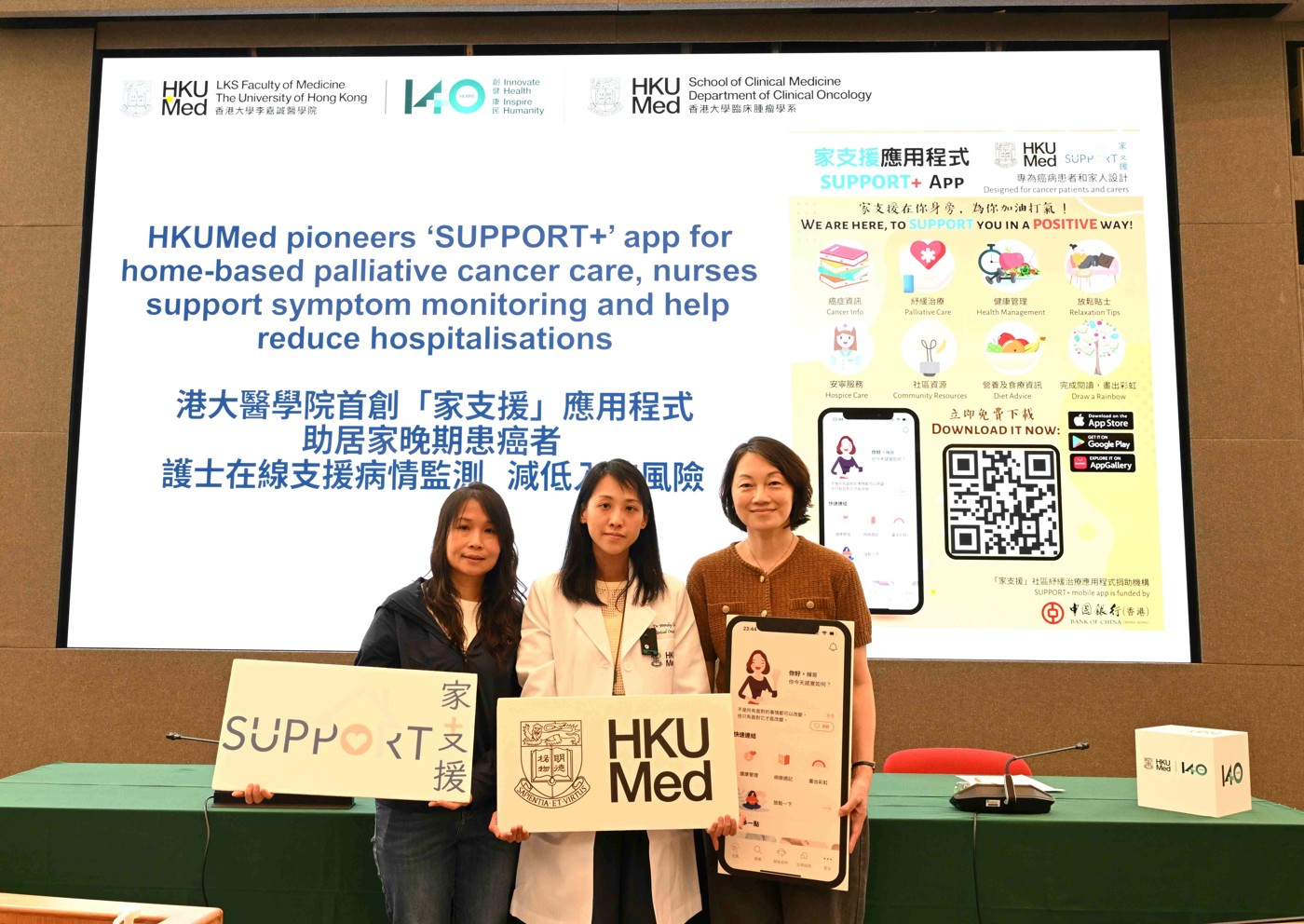
The Department of Clinical Oncology, Centre of Cancer Medicine, School of Clinical Medicine, LKS Faculty of Medicine of the University of Hong Kong (HKUMed), has developed SUPPORT+, Hong Kong’s first integrated cancer health management application (app). Designed for patients with advanced cancer, the app enables continuous symptom monitoring at home and provides timely nurse-led support to help reduce the need for emergency visits and unplanned hospital admissions. To evaluate the clinical effectiveness of SUPPORT+, a HKUMed-led research team collaborated with six public hospitals to conduct a large-scale randomised controlled trial between 2023 and 2025. The study found that the digital platform effectively helped patients maintain their quality of life, improved self-management confidence, and significantly reduced unplanned hospitalisations. The findings were verbally presented at ASCO (American Society of Clinical Oncology) Annual Meeting 2026 and were published in the journal JAMA Network Open [link to the publication].
Hong Kong’s first integrated cancer self-management app for palliative care
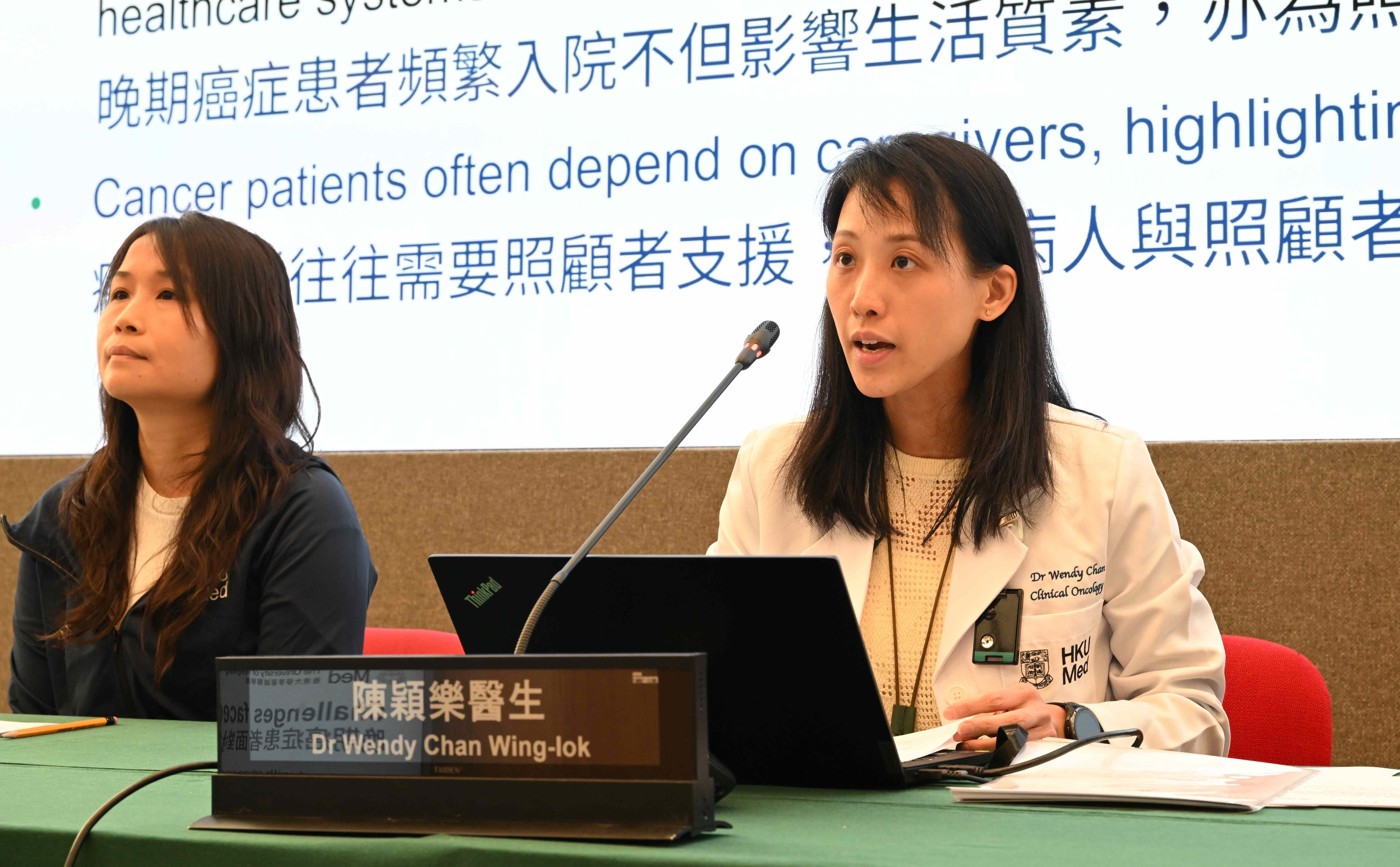
Dr Wendy Chan Wing-lok, Clinical Associate Professor of Practice in the Department of Clinical Oncology, Centre of Cancer Medicine, School of Clinical Medicine, HKUMed, stated, ‘Many patients with advanced cancer receive palliative care in the community and home settings. They often experience a wide range of physical, psychological and social challenges that affect their quality of life and daily functioning. If symptoms worsen between scheduled clinic visits, delays in recognising and addressing these symptoms may result in missed opportunities for early intervention, potentially leading to deterioration of health, emergency visits and unplanned hospital admissions.’
To address this gap, Dr Chan and the team developed SUPPORT+, a community-based mobile app for palliative care that incorporates the Integrated Palliative Outcome Scale (IPOS), a validated tool for assessing the outcomes and quality of palliative care. Designed to support patients with advanced cancer, their families and other caregivers, SUPPORT+ provides information on cancer management, palliative care and end-of-life services, while equipping users with practical knowledge and skills necessary for home-based care. Through the platform, users can record their physical and psychological symptoms every week, communicate with healthcare professionals online, and receive timely advice and support. This facilitates effective symptom monitoring and management, helping to reduce the risk of health deterioration and unplanned hospitalisations.
Dr Chan highlighted that while digital health tools are increasingly being adopted in cancer care, patients receiving palliative care have distinct needs. They are generally older, experience more dynamic symptom changes, and often rely on family members or other caregivers to monitor their conditions and communicate with healthcare teams. Therefore, stronger clinical evidence is required to support the adoption of digital technologies in this population.
SUPPORT+ improves home-based care and reduces hospitalisations
Between January 2023 and February 2025, the research team recruited 1,214 patients with advanced cancer from six public hospitals providing palliative care services in Hong Kong. The median age of participants was 78, and all had stopped receiving anticancer treatment while receiving community-based palliative care. They were followed for 18 weeks and were randomly allocated to one of two groups: 624 patients received usual care alone, while 590 received SUPPORT+ service in addition to usual care. Patients or their caregivers completed weekly symptom assessments through the app. Based on the responses, the system provided automated symptom-specific self-management guidance in real time. If severe symptoms were identified, an automatic alert was triggered and sent to dedicated nurses, who followed up within one or two working days.
The study found that patients using SUPPORT+ were better able to maintain their health-related quality of life over the 18-week follow-up period and achieved significantly greater improvements in self-efficacy, a measure of confidence in managing one’s health. The improvement rate was 13.3% higher than that of the control group, suggesting that digital health tools can strengthen patients’ ability and confidence to participate in their own care. Patients using SUPPORT+ also experienced fewer unplanned hospitalisations, with a lower proportion of patients requiring unplanned admissions: 17.2% in the intervention group versus 28.5% in the control group. The average length of hospital stay decreased from 7.3 days to 3.4 days. These findings suggest that earlier detection of symptom deterioration and timely intervention can help reduce hospital admissions and shorten hospital stays. No significant differences were observed between the groups in emergency department visits or overall survival.
Dr Chan said, ‘By providing symptom self-assessment, symptom tracking and nurse-led support, SUPPORT+ enables patients and caregivers to monitor and manage health issues more effectively at home. Our study demonstrates that this patient-centred digital care model can strengthen community palliative care services, improve confidence in self-care, facilitate collaboration between healthcare and community care providers, and reduce avoidable hospital use. As Hong Kong’s population continues to age and the number of cancer patients increases, innovative digital health solutions will play an increasingly important role in advancing cancer and palliative care services and improving home-based care for patients and their families.’
About the research team
The study was led by Dr Wendy Chan Wing-lok, Clinical Associate Professor of Practice, Department of Clinical Oncology, Centre of Cancer Medicine, School of Clinical Medicine, HKUMed, in collaboration with team members from Pamela Youde Nethersole Eastern Hospital, Princess Margaret Hospital, Tuen Mun Hospital, Queen Mary Hospital, Haven of Hope Hospital, and Queen Elizabeth Hospital.
Acknowledgements
The study was supported by the Health and Medical Research Fund of the Health Bureau, the Government of the HKSAR. The SUPPORT+ mobile application was fully sponsored by the Bank of China (Hong Kong) Centenary Charity Programme.
Media Enquiries
Please contact LKS Faculty of Medicine of the University of Hong Kong by email (medmedia@hku.hk).
Related Topics
Related News