
People
What Makes a Hong Konger?
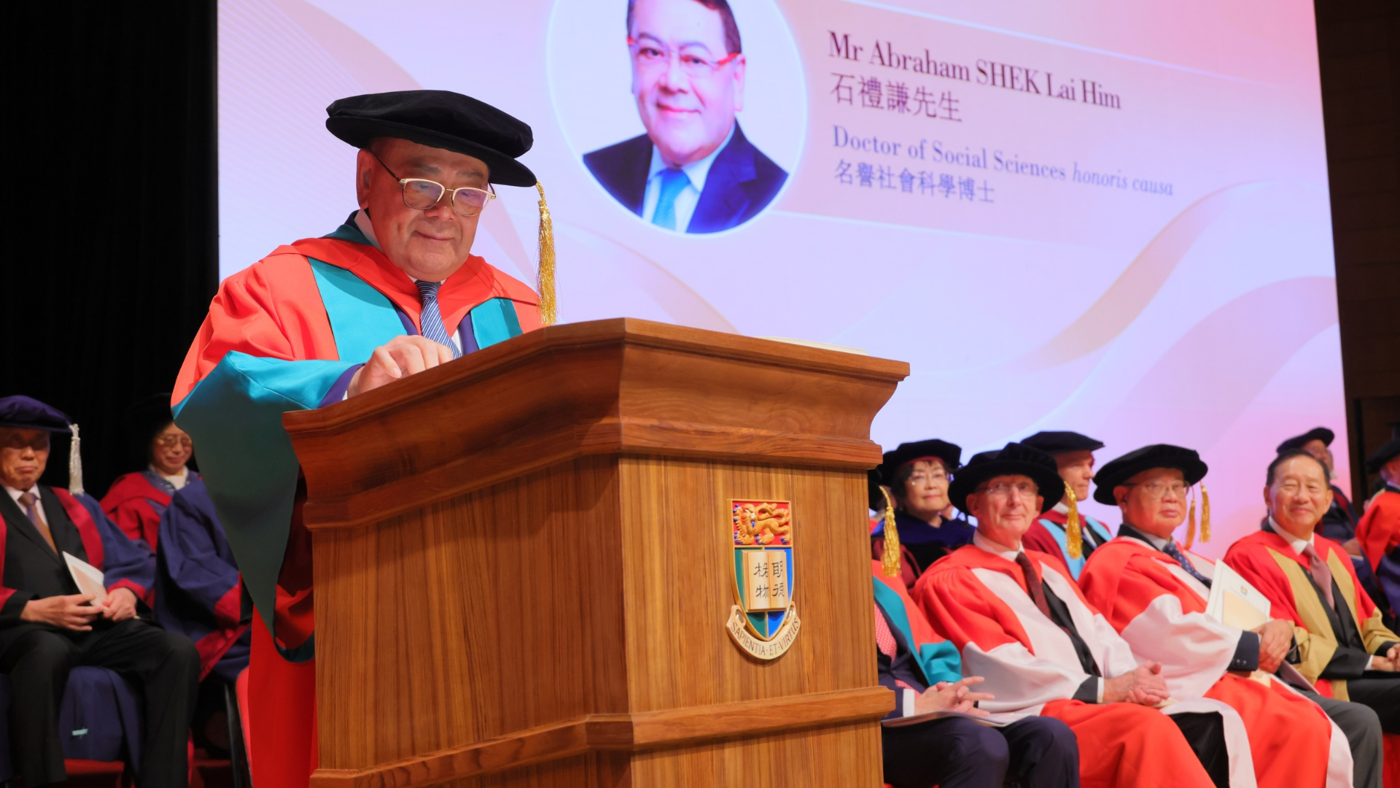
What makes a Hong Konger?
Is it their birthplace? Language? Ethnicity? Religion? Politics?
The answer is unlikely to be any of the above.
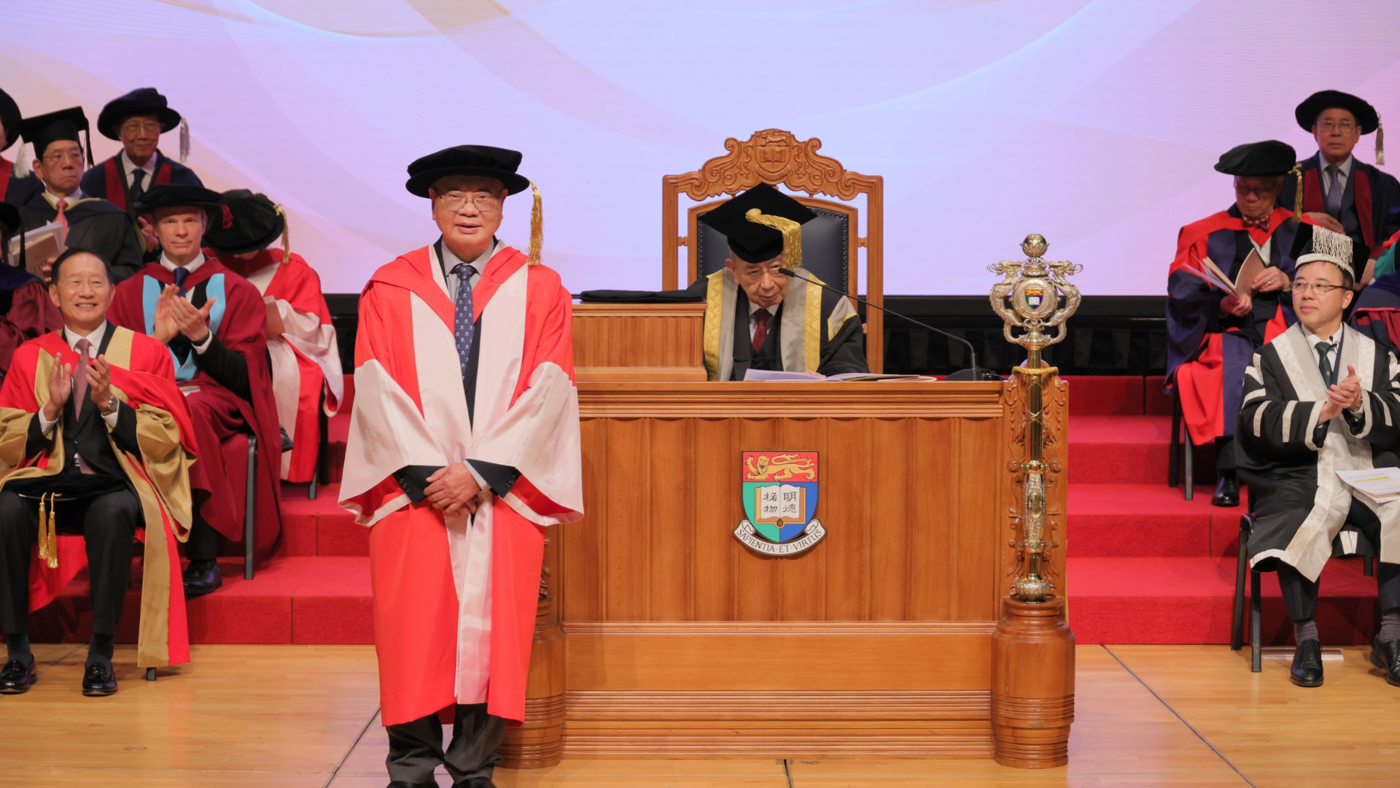
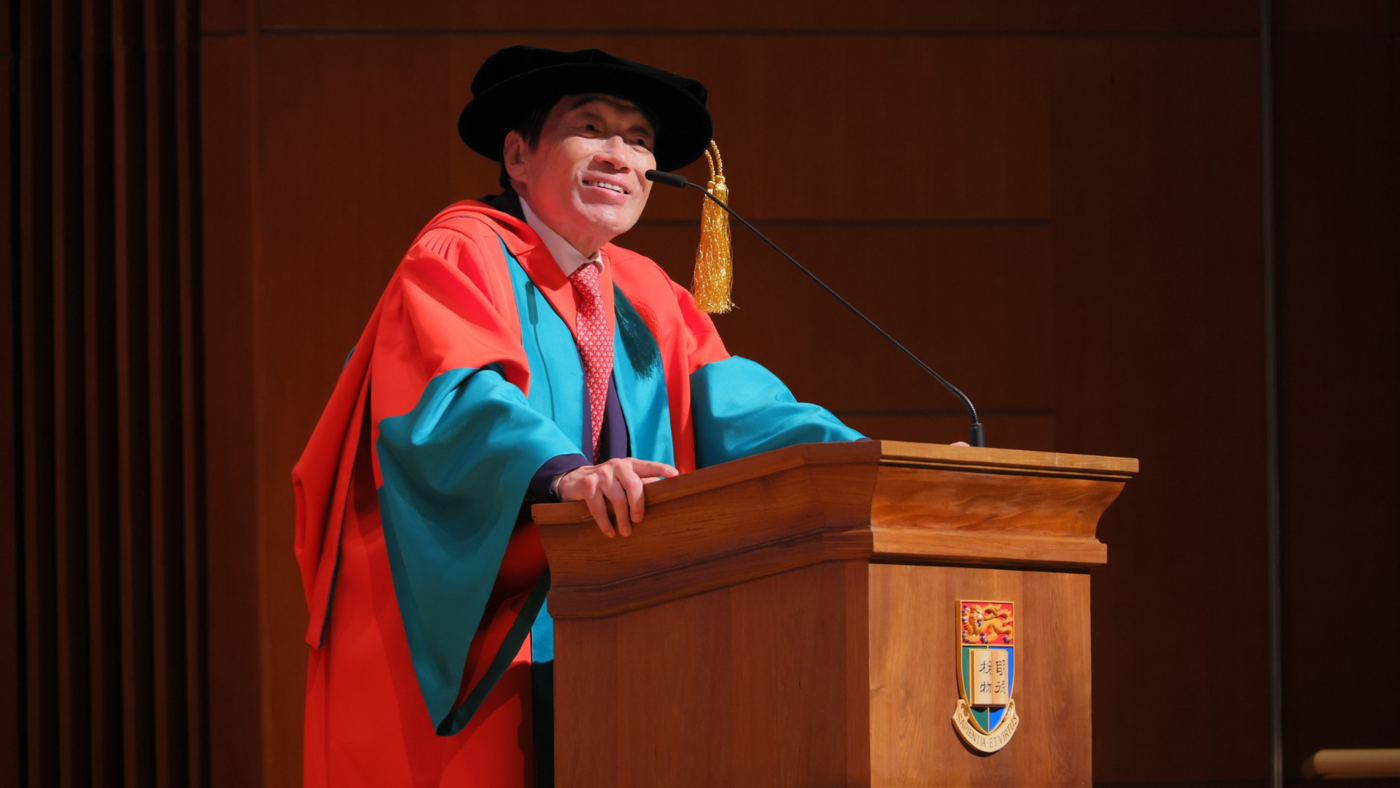
To answer this question, we should look no further than the life of the man that we are here to honour today. A business leader whose career mirrors the dramatic transformations to our city. An educator whose values and beliefs echo those that have made our city great. And a man of public service whose career embodies the Lion Rock spirit.
Mr. Abraham Shek was born in Macau in 1945, the youngest of five siblings. His father passed away when he was one.
His mother brought her children to Hong Kong, where they were crammed into a modest room in Wan Chai.
Yet his childhood was filled with happy memories, with hope – not self-pity.
“It was the best of times. It was the worst of times.”
In his words, “in the 1940s and 1950s, one hardly felt poor because everybody was poor, but everybody had hope.”
To make ends meet, his mother worked tirelessly in a range of jobs, including tutoring. For him, she had three valuable lessons:
Education changes lives.
The truth matters, even if unpleasant.
Being a good person can be more important than doing the right thing.
What is right or wrong depends on circumstances and factors beyond one’s control. Being a good or bad person, on the other hand, is something that one can and should control for.
These three lessons became central to his worldview, which was also anchored in the teachings of Christ: “Surely goodness and mercy shall follow me all the days of my life.” (Psalm 23)
The young Mr. Shek attended St Joseph's Primary School, followed by Queen's College.
These years were most memorable – they were rigorous, competitive, and stimulating, thanks to outstanding teachers. They gave him not just knowledge, but a true sense of belonging.
Upon graduation, he knew he had to study abroad. The most affordable option by far was Australia. He jumped through many a hoop to enroll into the University of Sydney, where he earned a Bachelor of Arts in 1969 and Diploma in Education in 1970. He would pay off his fees by working summer jobs, including as a cleaner in factories. These experiences deepened his commitment to self-learning, self-reliance, and sensitivity to the plight of the underprivileged and vulnerable.
Despite his Australia education, he never forgot from whence he came.
He did not regard Hong Kong as a place to leave behind. He saw it as a home to which he must return. The lingering effects of White Australia Policy also amplified his conviction that Australia was not home.
Soon after returning, Mr. Shek joined Swire Shipping as an executive trainee and worked there for seven years, where he was first exposed to the intricacies of shipping. The late Mr. CH Tung, then recruited him to Hong Kong Export Lines, helmed by CY, CH’s father. Here, he witnessed the emergence of container-based shipping.
In looking back at this period, Mr. Shek would credit the broader socioeconomic undercurrents for his early successes. After the events of 1967, Governor Maclehose implemented a series of structural reforms aimed at stimulating economic development and reviving public confidence. His story was not an isolated instance, but testament to the collective striving through which the people of Hong Kong built their careers.
Soon, Mr. Shek cultivated a reputation for being a hard-hitting negotiator and highly skillful taskmaster. With work at two leading family corporations under his belt, Shek joined the Kowloon-Canton Railway, where he became its first Commercial Director. He oversaw the railway’s expansion into Northwestern New Territories, construction of the light rail, and funding of electrification.
He was convinced that it was untenable to burden ordinary citizens with ever-rising fares. He thus focused on improving affordability and innovating the railway’s fare strategy, as well as diversifying the revenue streams.
In the face of uncertainty induced by the 1984 Sino-British Joint Declaration, he brought in property developers and courted investors to integrate transportation and development.
Mr. Shek was later headhunted to the Land Development Corporation, where he served as its Chief Executive. He saw urban renewal not merely as commercial redevelopment, but as a matter of human dignity. He insisted upon fair compensation and compassionate treatment of those who had to make way for new developments and creatively sought pathways through which compensation could support new home ownership.
Successful development entailed more than just construction. It was anchored in dignity. Private, clean toilets and personal space for each new apartment.
Working with limited public capital, he had to resort to joint ventures and partnerships, whilst maintaining prudence in how funds were deployed.
Mr. Shek was the quintessential business trailblazer – inventive, disciplined, and bound by the imperative of keeping the peace amongst disparate stakeholders. Yet he was also unafraid of speaking truth to power, resisting impractical proposals and championing humane resolutions to conflicts of interest.
At age 55, he retired – only for a few months.
In 2000, Mr. Shek was the Legislative Council as a representative of the real estate and construction industry. He was widely sought after by the industry heavyweights as a consensus candidate – even though, in his words, “he had never done much politics”. An understatement, perhaps.
Yet he did not construe his responsibilities narrowly. He believed the representation of a sector did not relief one of the wider duties towards the people of Hong Kong as a whole.
Mr. Shek drew joy and strength from listening carefully to those who approached him, mediating between those harbouring different views, calibrating feasible solutions, and speaking up candidly at times when institutions fell short.
In Rudyard Kipling’s words, he talked with crowds and kept his virtue, walked with Kings without losing the common touch.
He operated within the political establishment, whilst keeping many a friend in the opposition.
When asked for his guiding principles, he would repeatedly bring up two terms – “One Country, Two Systems” and “procedural justice”.
To uphold the distinctive vitality, judicial independence, and institutional autonomy of Hong Kong, whilst advancing the interests of China as the country deepened its opening-up and reform.
To preserve the rulings of institutions, even if one disagreed with their substance, in virtue of their being procedurally good. The good of institutions must take precedent over the rightness of incidental results.
As Chairman of the Public Accounts Committee, he presided over public expenditure with razor-sharp rigor. He resisted populist pressures whilst demanding reforms to address the anxieties of our city’s restless youth. He firmly held that peers could disagree over everything in politics yet remain friends in private – so long as they were morally decent.
Education remained his deepest calling. If we are to achieve a just society where one’s birth does not determine how one dies, then we must have a sound and open education system.
In 2014, Mr. Shek took up his appointment to the Council of this university. He believed universities must never become places of dogma or conformity. He believed Hong Kong universities would serve as engines of social mobility. He believes in this very university, and that with wisdom and virtue, we can decisively shape what lies ahead for Hong Kong.
True to the motto of lifelong learning, Mr. Shek read for and graduated with a Juris Doctor degree from the City University of Hong Kong, in 2022.
Yet a cosmopolitan city also requires a secondary education broad enough to cater to youth from all corners of our world. It must also be affordable, whilst fostering an international outlook and serving students who cannot be accommodated by the local system.
In May 2015, Mr. Shek took over the Chairmanship of the English Schools Foundation. That year, I graduated from Island School and received the Chairman’s Award from him.
I remain most grateful to him for his wisdom and counsel over the years.
With an insider’s view on primary and secondary education, Mr. Shek also pressed for the greater inclusion of ethnic minorities, many of whom proudly call this city their home and have contributed immense volumes towards Hong Kong today.
They, like Mr. Shek, deserve a round of applause.
Mr. Pro-Chancellor, recipients of this past degree are marked by incredible success.
Yet Mr. Shek confided to me over dinner, “I’d rather be a happy person, a good person, than a successful person.”
Perhaps the two are not mutually exclusive.
Or perhaps because the success of outcomes, right or wrong, as with most things in life, is contingent upon luck and not always in our control.
What is in our control, however, is the thought that goes into our choices – good or bad.
He noted, “Everyone has the right to make choices. If you deny them the right to make choices, you are denying them a most fundamental opportunity.”
Mr. Shek has not been one to shy away from tough choices and drastic changes.
His life brings together many identities. A businessman. An institution-builder. An urban developer. A legislator. A university servant. An educator. But above all, formed by our city’s hardships, sustained by our city’s hopes, uplifted by our city’s opportunities, devoted to making our city a better place for all, and driven by the values that make our city great, he is a bona fide “Hong Kong boy”.
So allow me to conclude with the following lines from 獅子山下: 人生不免崎嶇 難以絕無掛慮 既是同舟 在獅子山下且共濟 拋棄區分求共對。
Related Topics
Related News