
People
A Window Into the World’s Biodiversity
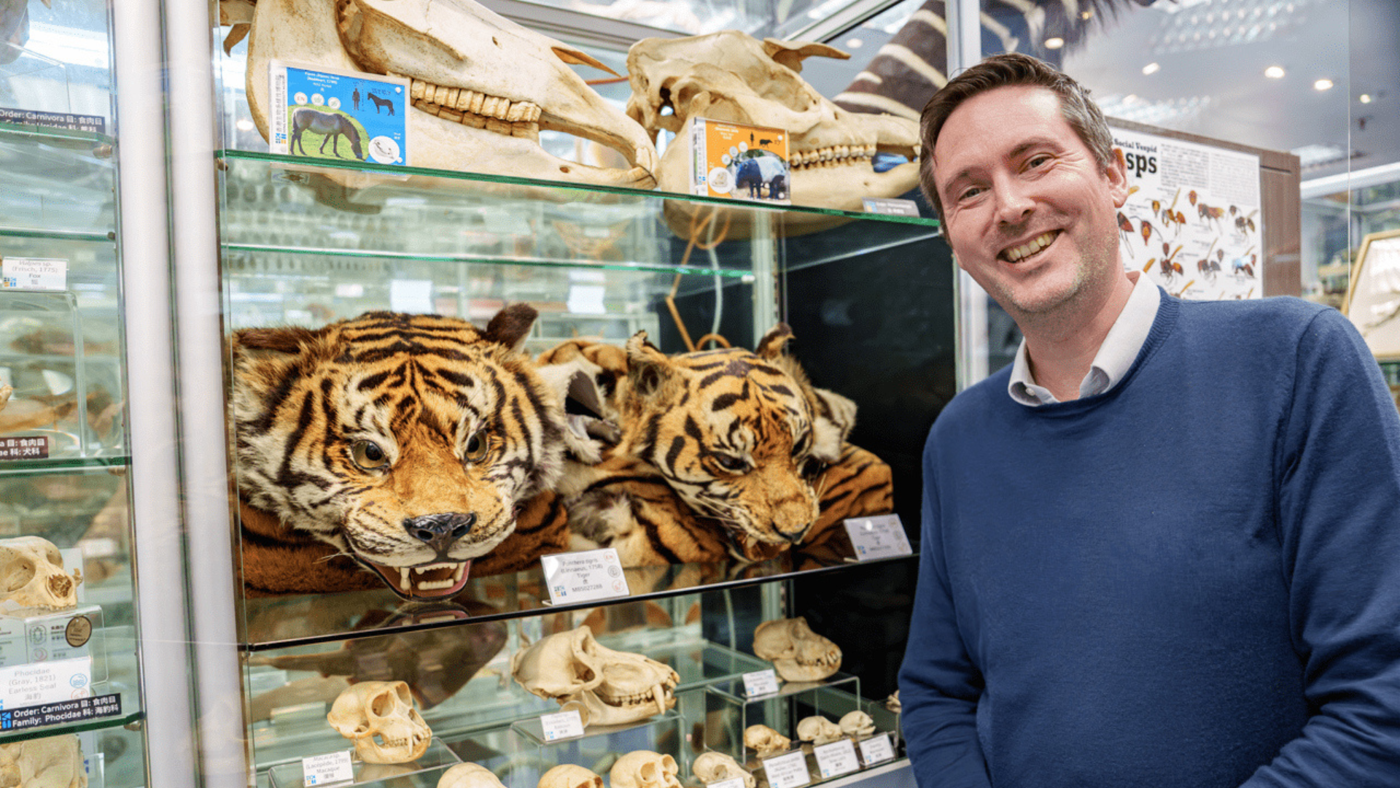
When Professor Benoit Guénard opened the Hong Kong Biodiversity Museum in May 2021, it was a leap of faith.
There was little reason to expect the launch to be a success. The space was small and the location – tucked away on the second floor of the University of Hong Kong’s Kadoorie Biological Sciences Building – was out of the way. The opening exhibits, drawn from an eclectic collection of former teaching materials Professor Guénard had rejuvenated after years storage, but also focused on often-overlooked species like ants, flies and wasps.
It turns out he needn’t have worried. The museum, the only institution of its kind in the Greater Bay Area, was fully booked for the entirety of its first year. Five years in, it’s drawn some 75,000 visitors from Hong Kong, the Chinese mainland, and farther afield – including Japan, South Korea, India and Australia.
They come to see HKBM’s growing collection of specimens, but also because of strong word of mouth. “The majority of people who come here do so because another person recommended it to them,” says Professor Guénard. “We all have access to photos and videos of nature these days, but there’s still nothing like seeing these specimens in person.”
“Everyone knows what the Mona Lisa looks like, but people still line up to see it. It’s that feeling of reality, the detail, that you can’t get elsewhere.”
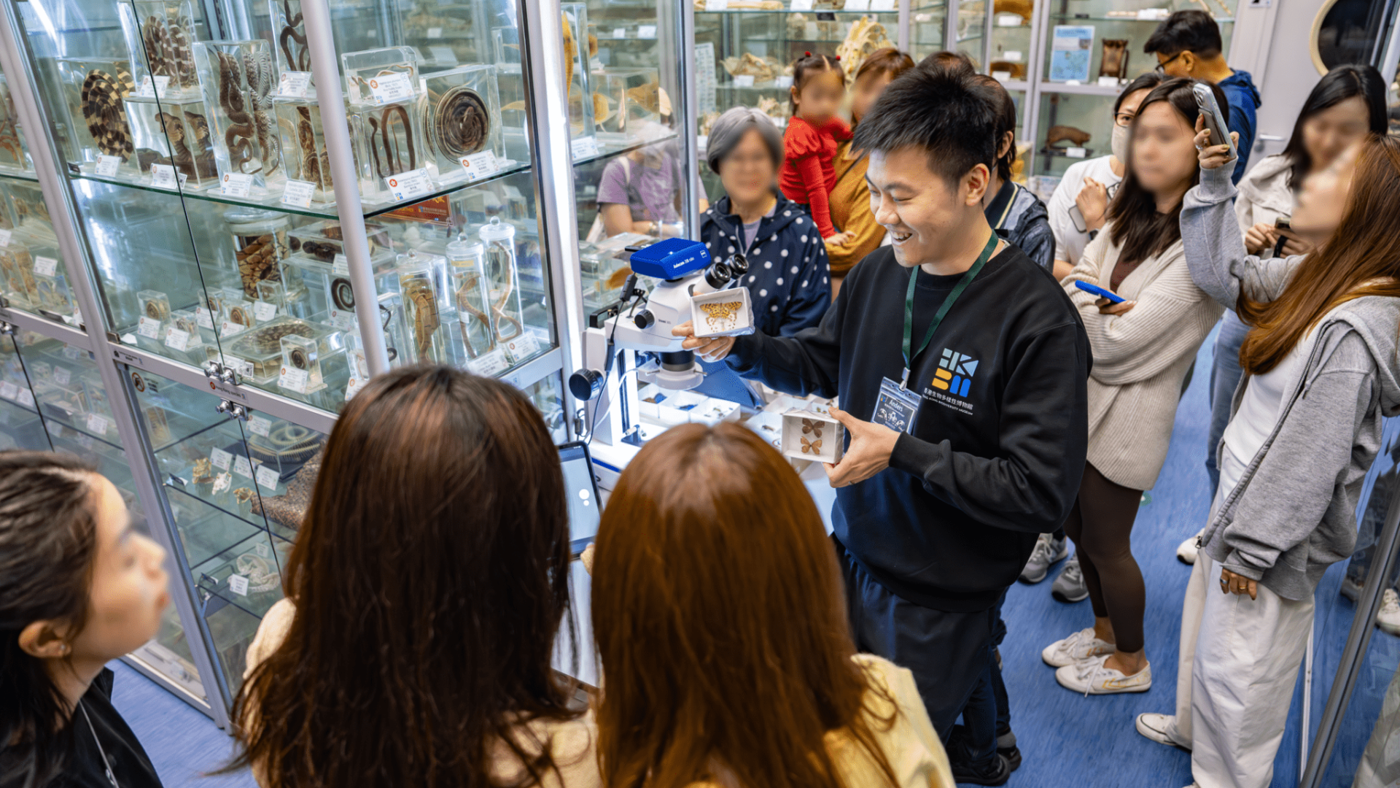
HKBM staff lead a tour of the museum.
From scratch
The mention of the Mona Lisa elicits a sheepish smile from Professor Guénard, who quickly adds that HKBM isn’t on the Louvre’s level yet.
Nevertheless, it’s hard not to be impressed by what he and his team have built in such a short time. When Professor Guénard joined HKU in 2014, the museum was essentially a closet, stuffed with decades-old specimens that had been collected to use in teaching demonstrations.
Although Professor Guénard was immediately struck by the potential of the collection, he largely set his idea for a museum aside during his first six years at the University. Then, in late 2020, armed with a grant from Hong Kong’s Environment and Conservation Fund that allowed him to hire a couple of employees, he set to work.
The first priority was figuring out what was even in the collection. There was no archive or database of the specimens gathered by University staff over the years, and identifying all 10,000 specimens took the team six months of work.
Finally, in May 2021, the Museum was ready for launch. “I had no idea how the public would react,” Professor Guénard recalls. “It was the middle of Covid, and most nature lovers in Hong Kong prefer to visit places like the Kadoorie Farm and Botanic Garden or Ocean Park. Would there really be a similar interest in dead specimens?”
The answer was a resounding yes. With the exception of a short closure in 2022 due to Covid – which the team used to rethink the layout of the exhibitions – HKBM has routinely been booked to capacity ever since.
“I think many people are enthusiastic about nature,” Professor Guénard says. “The most common word I hear from visitors is ‘wow!’ It’s almost overwhelming to see how much biodiversity there is in the world.”
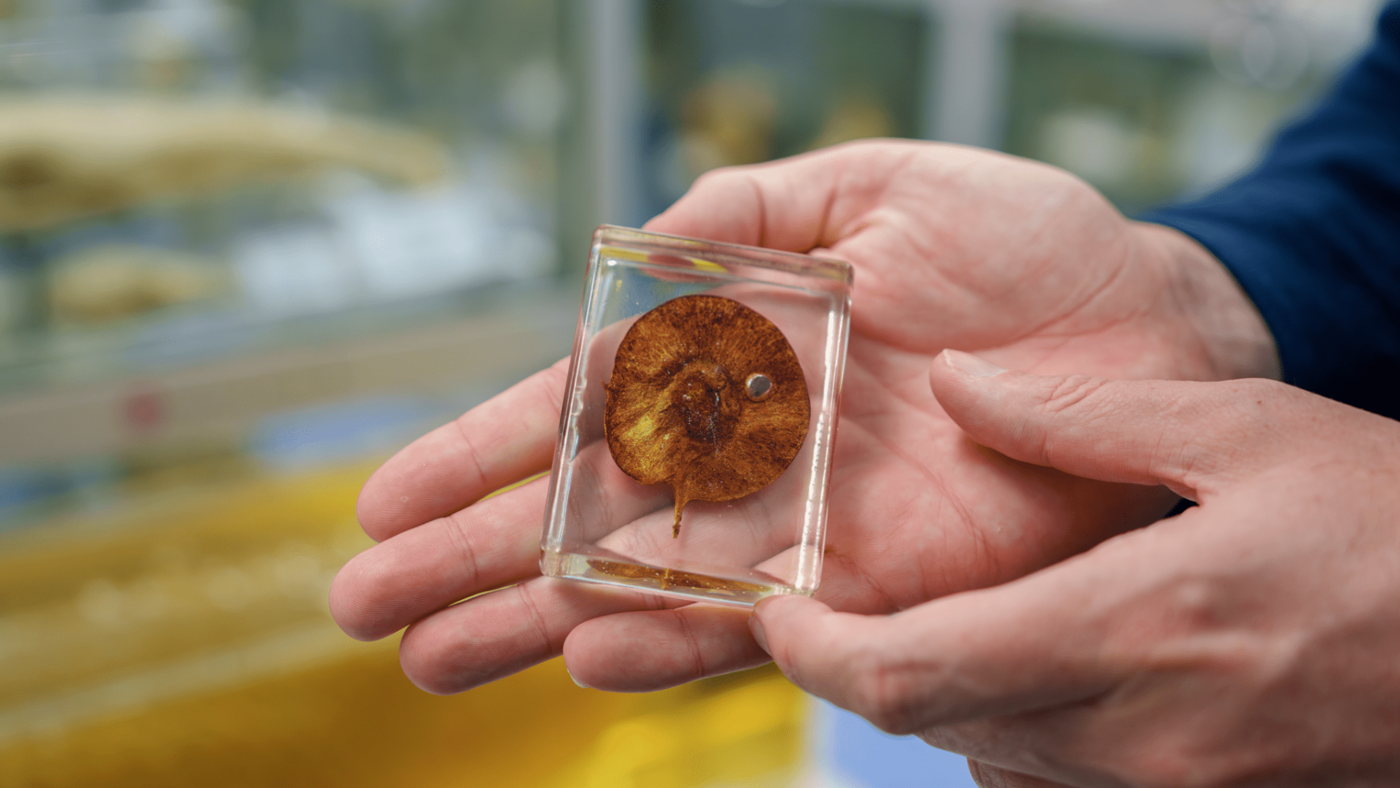
Professor Guénard shows off a sample at the Hong Kong Biodiversity Museum..
A scientific method
The HKBM team is particularly proud of their commitment to accurately telling the story of the natural world – not just well-known “charismatic” animals like big cats or hawks, but also those that tend to get short shrift in popular culture, such as wasps, ants, and even seeds.
“In the entertainment world, there’s a tendency to only present ‘cute’ things,” Professor Guénard says. “But we present everything. People – especially parents – like that mix of accuracy and seriousness.”
That means large displays dedicated to the important role of insects – Professor Guénard’s own specialty and a topic he feels strongly about.
Many members of the public fear or dislike insects, he notes. This has contributed to their rapid population decline in recent years, as few speak up to protect them in the face of threats from deforestation, climate change and invasive species.
Key to fixing that, he believes, is educating the public. “You cannot expect people to change their behaviour toward nature without knowledge,” he says. “(Hatred) is not due to an excess of knowledge, but the lack of knowledge. If you don’t know anything about the species that surround us, how wonderful and spectacular they can be, it’s hard to value them.”
Scientists, too, can benefit from the Museum’s collection. Because many of the specimens date back decades, the collection acts as a kind of “biobank,” hosting and protecting historic DNA for researchers to use.
“Each specimen is a source of information,” Professor Guénard says. “You can extract their DNA and measure them. The information you get essentially allows you to travel through time, seeing how species become larger or smaller in response to environmental changes.”
As an example, he points to work done by his former PhD student Roger Lee – now an assistant professor at Lingnan University – who sampled ant communities in Hong Kong in 2015 and 2016, then compared them to samples taken in the 1990s by another former HKU PhD student, John Fellowes.
“We were only able to do this because (Fellowes) kept his specimens,” Professor Guénard says.
“Museums are a window into the past.”
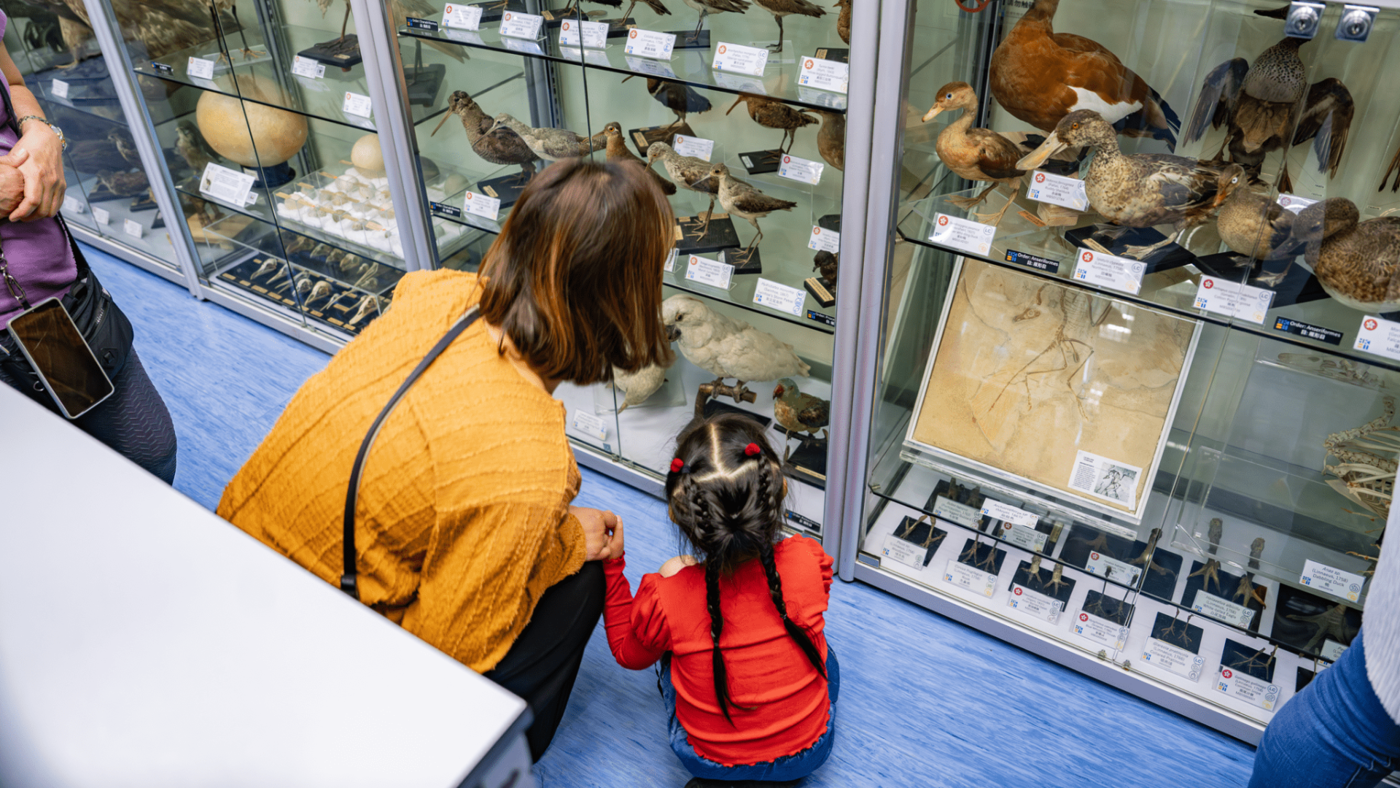
Visitors explore the Hong Kong Biodiversity Museum.
High hopes
So what does the future hold for HKBM? Looking past the fifth anniversary, Professor Guénard has big ambitions. Already, the collection has grown from roughly 10,000 to nearly 60,000 specimens, with about 7,000 on display at any given time.
Those numbers hint at the biggest challenges he faces: funding and space. While HKBM continues to offer free tours to visitors from around the world – they had their first group from India in March – it is beginning to hit capacity, especially as the collection continues to grow.
“The second-most popular comment I hear after “wow!” is “Too bad you don’t have more space,” Professor Guénard jokes.
The team has adapted to this reality by organising traveling shows with partners in and around Hong Kong. These exhibitions highlight parts of the collection while reaching audiences that might not visit the Museum. They’ve also built an active social media presence, with over 500 posts designed to educate the public on a variety of different topics related to biodiversity.
Still, the long-term goal is a larger, more permanent exhibition space. “I think Hong Kong deserves a natural history museum,” Professor Guénard says, citing demand from schools and members of the public in Hong Kong, as well as in the surrounding region. “That’s what this adventure has proven to me, and to other people as well.”
This article was first posted on HKU’s ESG blog. The original can be found here.
Related Topics
Related News