
Research & Discovery
HKUMed Research Reveals New Trends in Omicron Transmission
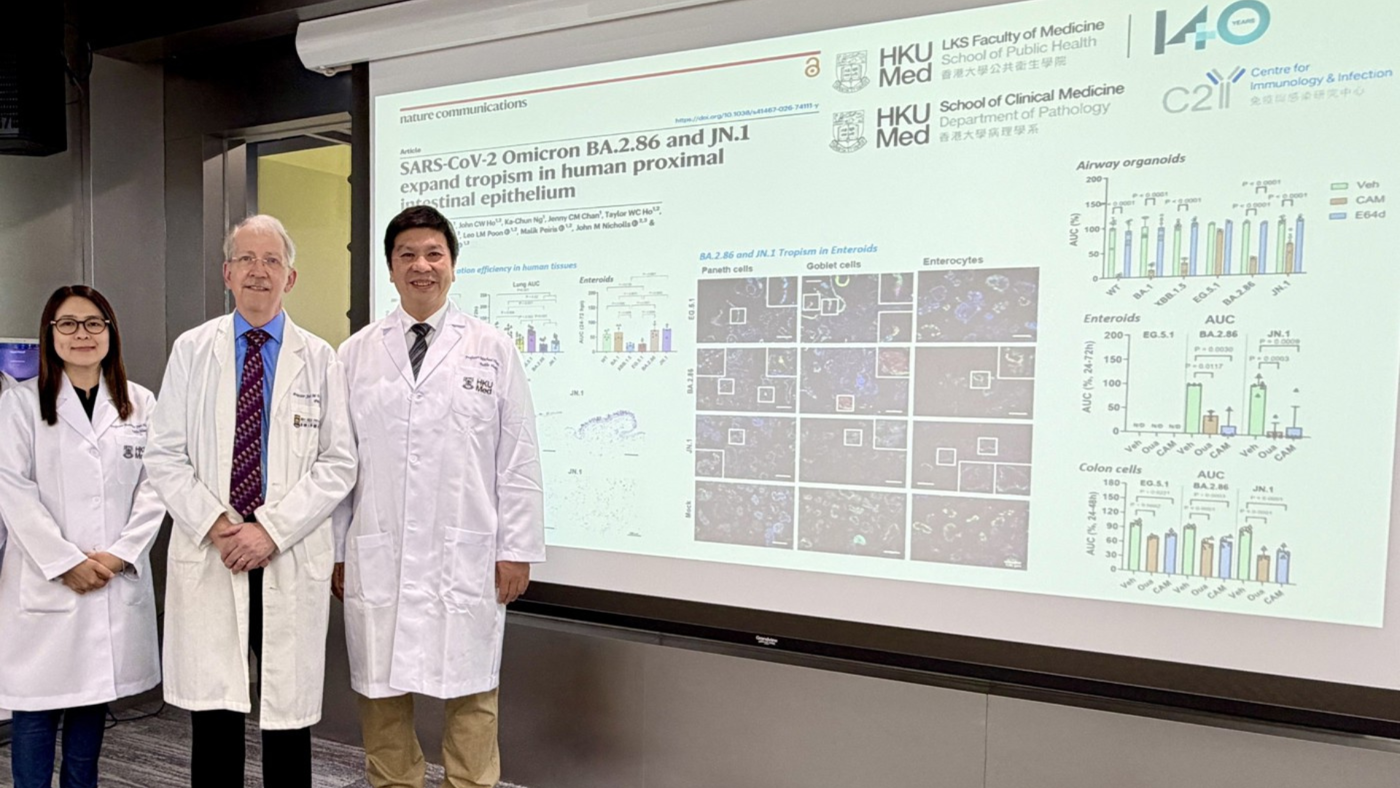
A research team from the School of Public Health at the Li Ka Shing Faculty of Medicine (HKUMed) has uncovered distinct biological strategies employed by emerging Omicron sublineages, as some variants target the lungs, while others show signs of enhanced adaptation to the intestines.
While variants such as XBB.1.5 and EG.5.1 are optimised for respiratory spread and may pose a higher risk of severe lung disease, others, like BA.2.86 and JN.1, show enhanced adaptation to the human gut, potentially opening alternative transmission routes.
The findings, published in the prestigious journal Nature Communications, point to the importance of characterising and surveilling emerging Covid variants to safeguard public health and help better prepare for future epidemics or pandemics.
To observe viral behaviour, the team used controlled laboratory models mimicking human tissues, including bronchial and lung explants, airway organoids, and intestinal enteroids, to compare variants from BA.1 to JN.1.
They found that XBB.1.5 and EG.5.1 replicate efficiently in respiratory tissues. In contrast, BA.2.86 and JN.1 replicate less efficiently in the airways but more effectively in certain intestinal tissues. Notably, JN.1 triggers low levels of inflammation in gut tissue, which could allow the virus to persist asymptomatically and increase the risk of faecal transmission.
HKUMed Professor Michael Chan Chi-wai, who led the study with Professor Kenrie Hui Pui-yan as first author, emphasised that, as immunity from vaccines and previous infections wanes, understanding these evolving behaviours is critical for public health planning.
“Since new variants can develop from existing lineages... it is very important to continue to monitor and study these emerging strains,” Professor Chan said.
Related Topics
Related News