
People
Diving Into the Deep, Dark World of Hong Kong’s Black Corals
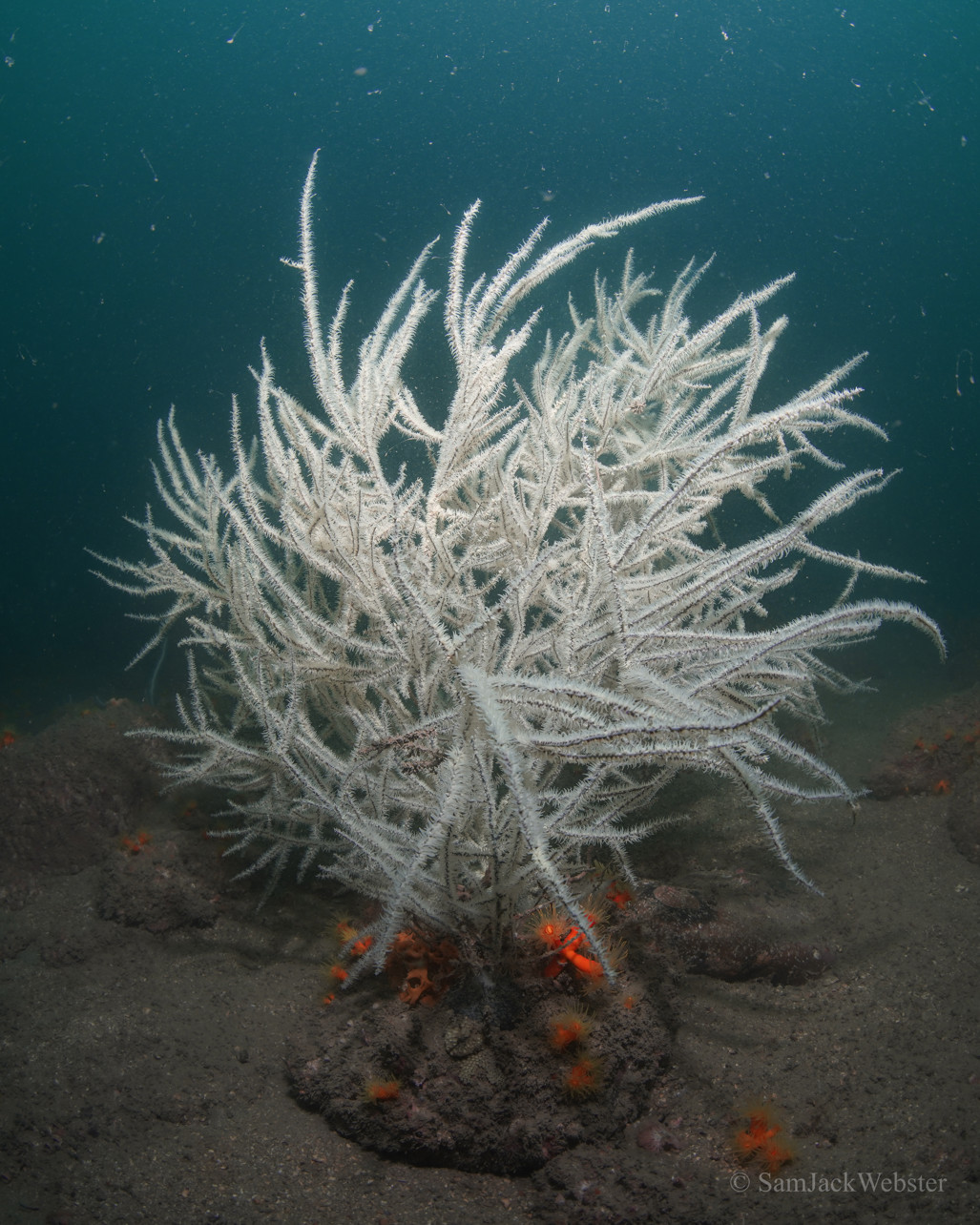
We’ve all seen hard corals, the colourful marine structures that thrive in shallow waters with plenty of sunlight. But what about their darker, weirder cousin, the black coral?
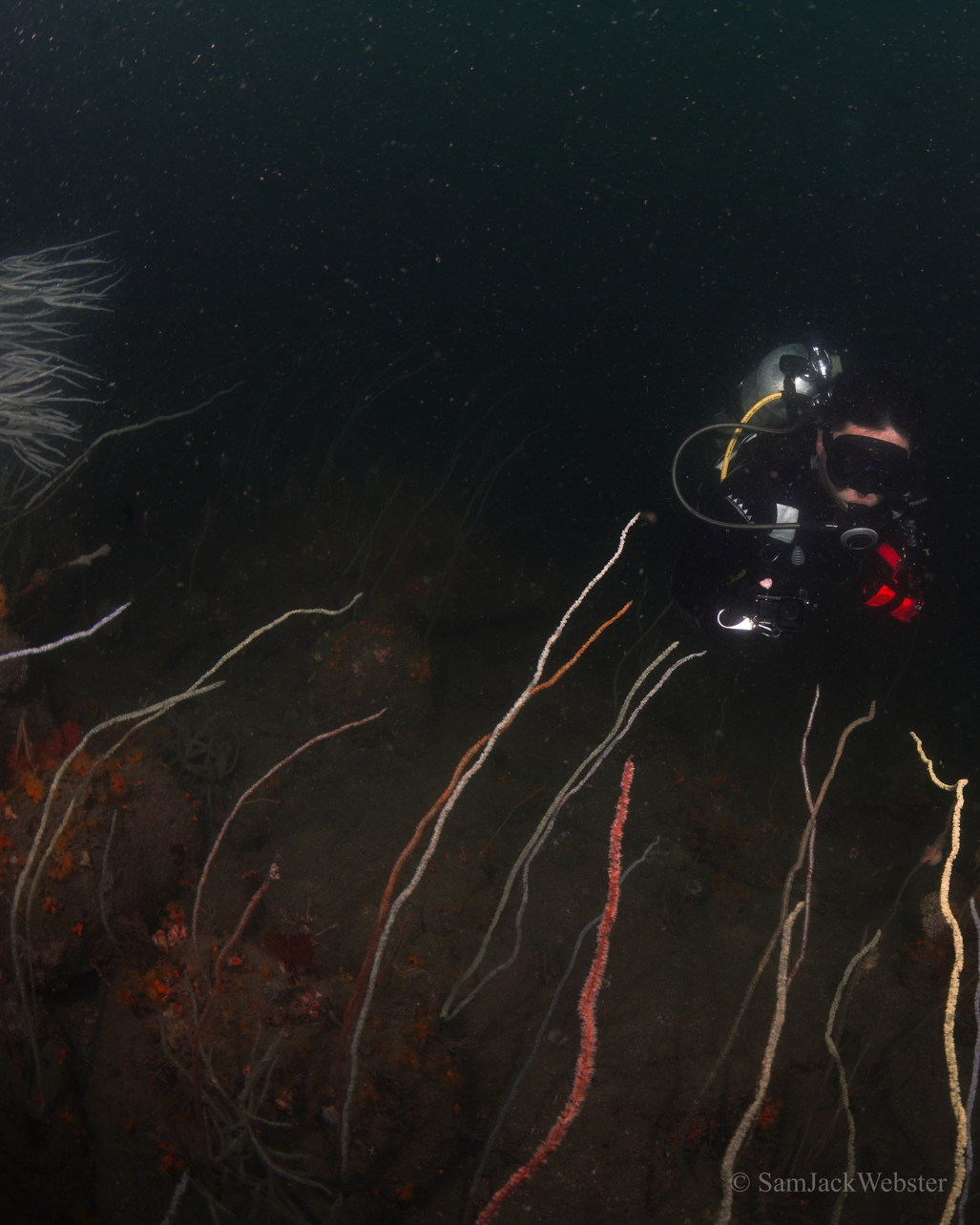
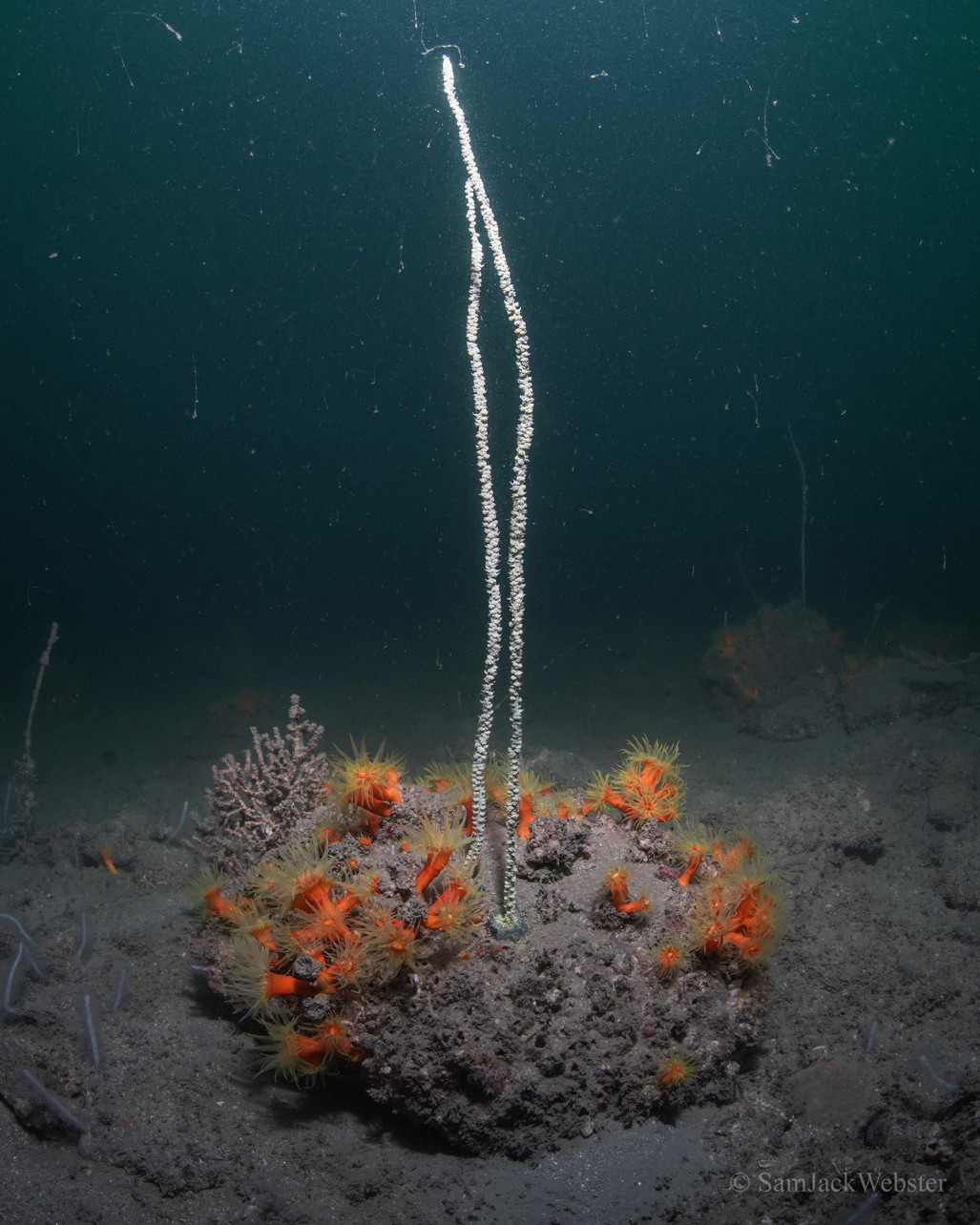
Soft, spindly, and almost alien in their appearance, black corals don’t rely on photosynthesis, meaning they are usually found 50 metres or more below sea level. But in Hong Kong’s cloudy, sediment-heavy waters, they can be found in waters as shallow as 5 meters, and as deep as 30 metres – if you have the courage to look.
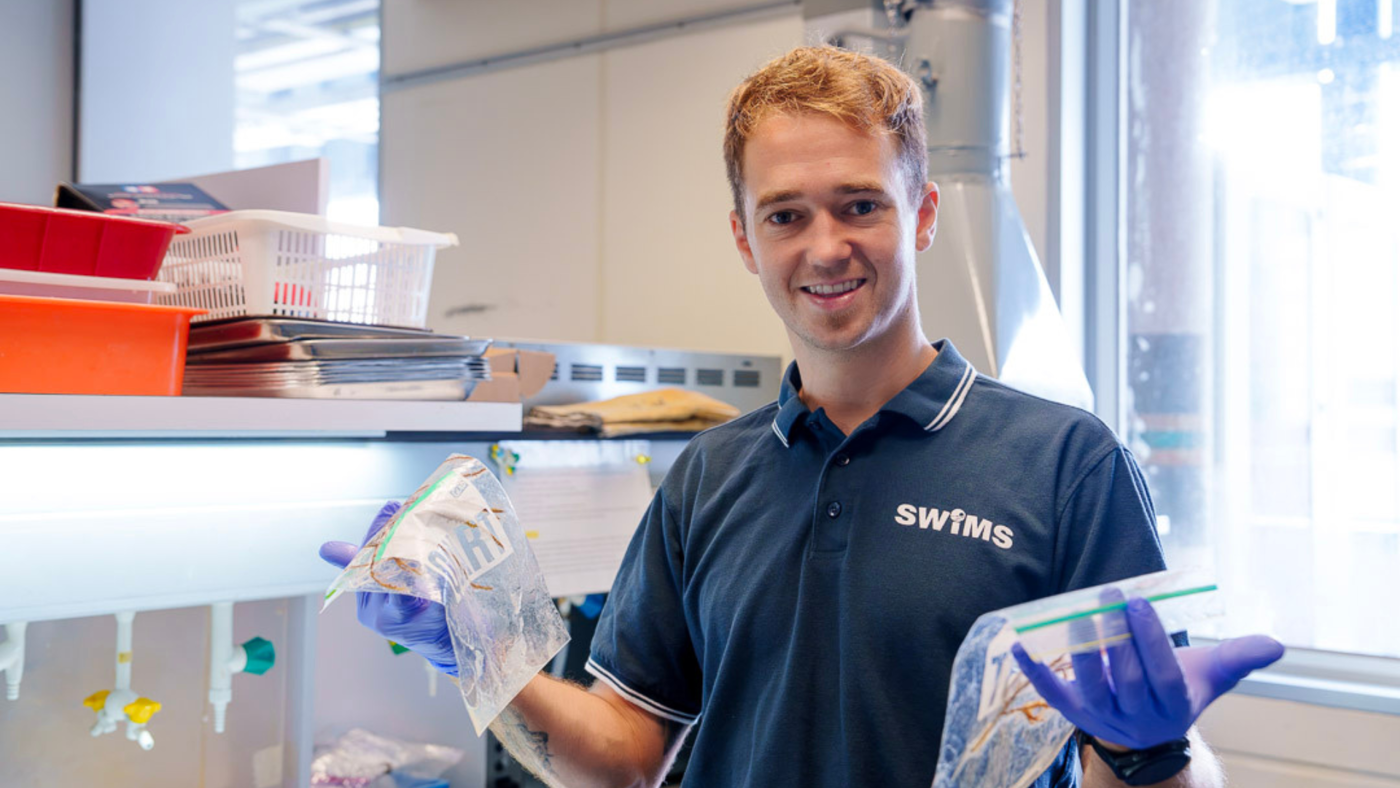
“When you descend past 10 metres, it’s dark and turbid and not somewhere you'd choose to linger,” says Mr Sam Webster, an experienced diver and PhD student in HKU’s School of Biological Sciences. “But when you reach the seafloor you find black corals everywhere, giant forests of them.”
Despite the prevalence of black corals in Hong Kong, very little research has been done on them. That’s something Mr Webster is trying to change. A member of the Swire Institute of Marine Science (SWIMS), he sees the relative lack of prior studies as a blank canvas to be filled.
“Because no one has researched them, I can ask the big questions,” he says. “What do they feed on? What’s their distribution around Hong Kong? How do they coexist? And how do other species associate with them?
Black forests
Hong Kong is one of the few places on earth where black corals are known to exist in accessible, shallow depths. Despite this, they are little known locally.
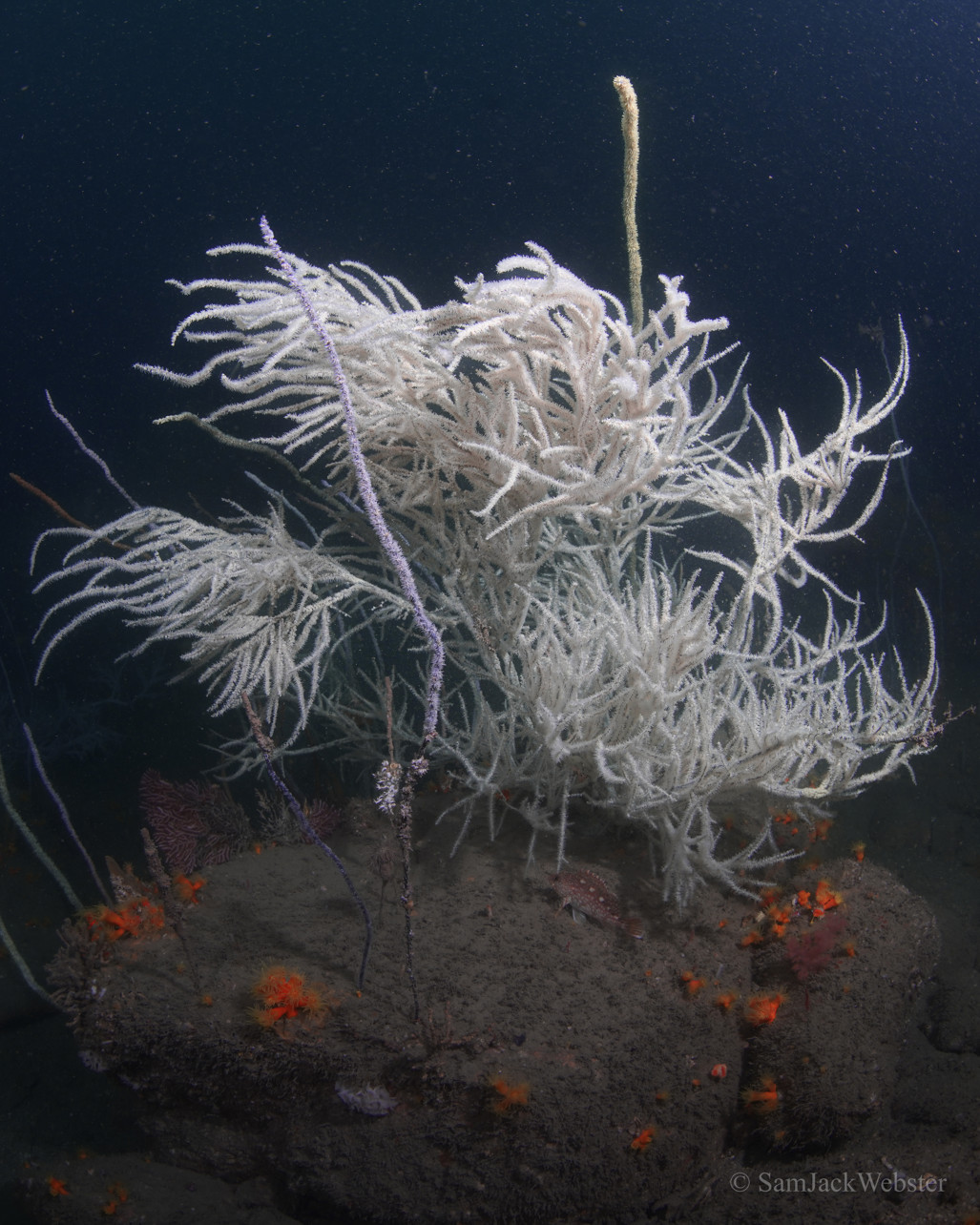
“You find them in the east, in the south, almost everywhere you look,” says Mr Webster. But the most impressive black coral sites are in the deep waters off Hong Kong’s southernmost islands.
There, deep waters and strong currents have combined to produce a “seriously impressive” forest of black corals.
While most people are familiar with hard corals from documentaries like Blue Planet, thriving in the deep, dark habitats where black corals are found requires very different survival strategies. Hard corals are rigid and colourful and rely on photosynthesis for their survival. But black corals flex and move with the deep currents. They’re also suspension feeders, surviving on particles in the water.
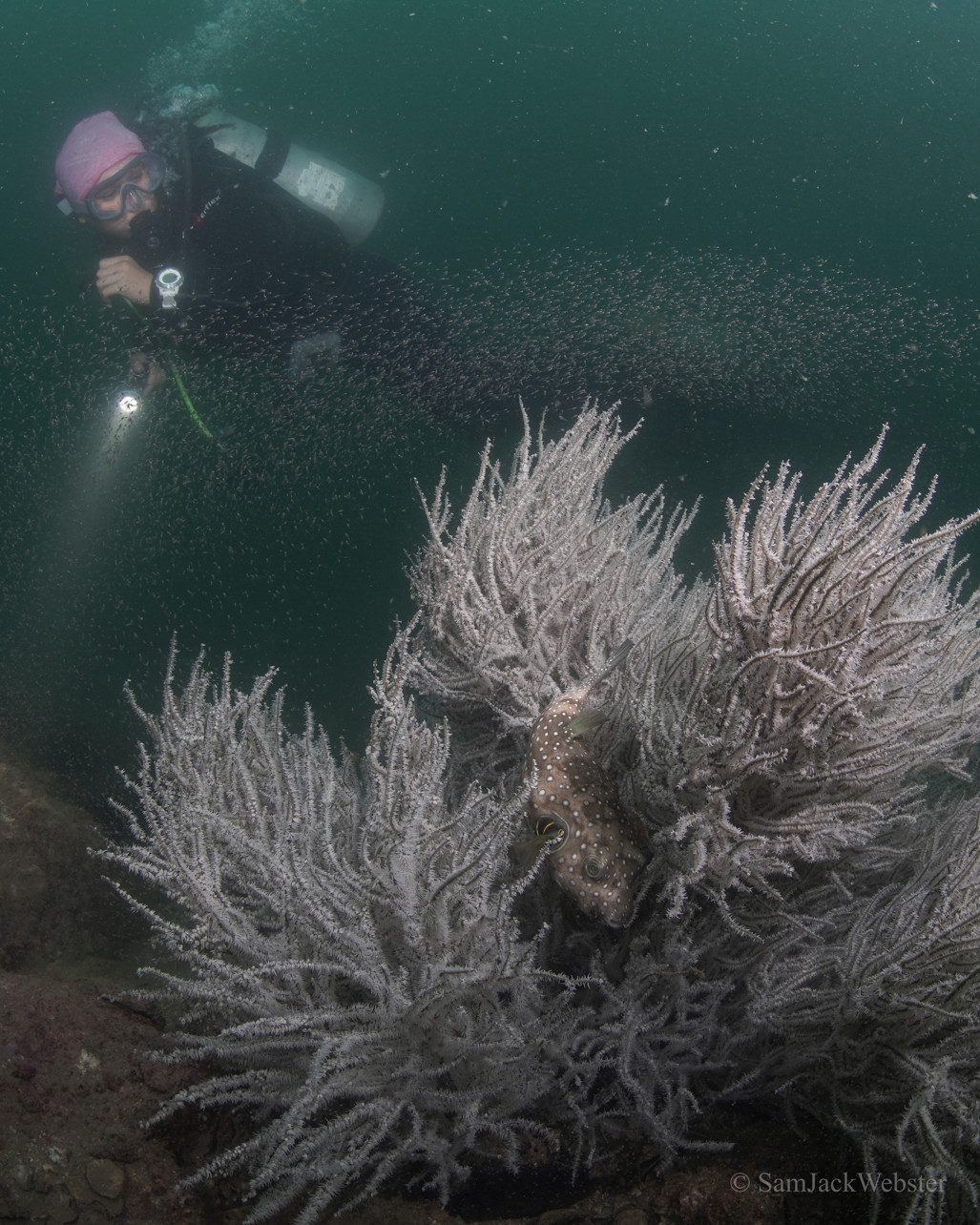
Black corals do share one important thing with hard corals, however: Both are extremely important to marine ecosystems, offering vital habitats for fish and invertebrates.
“They’re ecosystem engineers,” explains Mr Webster.
Off the map
Diving 20 to 30 metres beneath the surface is a challenge even in the best of conditions. In Hong Kong, where water clarity at 15 metres can be equivalent to 150 metres in clear water ecosystems, it’s like descending into the abyss.
That’s one reason why the region’s black corals remain understudied, but it’s also what drew Mr Webster to the topic.
For a self-described adventurer like Mr Webster, the chance to answer some of the most basic and important ecological and evolutionary questions about Hong Kong’s black corals was exciting. “It’s interesting because it’s not been done before,” he says. “People don’t know what’s down there.”
Take Hong Kong’s southern islands, for example. The surrounding seafloor is dotted with large boulders extending from the shoreline down to 60 meters below the surface, which discouraged the trawling that destroyed so many of Hong Kong’s other black coral forests – meaning that its black coral forests might be among the oldest forests of any kind in Hong Kong.
One of Mr Webster’s long-term goals is to completely characterise a black coral forest in Hong Kong — in other words, fully mapping and describing it. That would require answering a whole host of questions, including how black corals interact with other local species. This is especially pressing because black corals do not face the same climate risks as hard corals, meaning that as climate instability increases, black corals are likely to shape future coral reef communities.
Those are all long-term projects, however. In the meantime, Mr Webster is working on another project: photographing Hong Kong’s black corals and sharing them with the public on social media. It’s not a scientific project, but a way to showcase what he sees on his dives.
“We have these crazy communities living in darkness,” he says. “It’s a forest on the sea floor that’s untouched and unstudied. Few people have been there before. If I’m surprised by what I see down there, I’m sure others will be as well.”
For more about black corals, including photos, follow @samjackwebster on Instagram!
Related Topics
Related News